Description
Light, flavorful, and surprisingly satisfying—this healthy vegetable soup proves that simple ingredients can create something truly comforting.
Prep Time: 10 minutes | Cook Time: 30 minutes | Total Time: 40 minutes | Servings: 6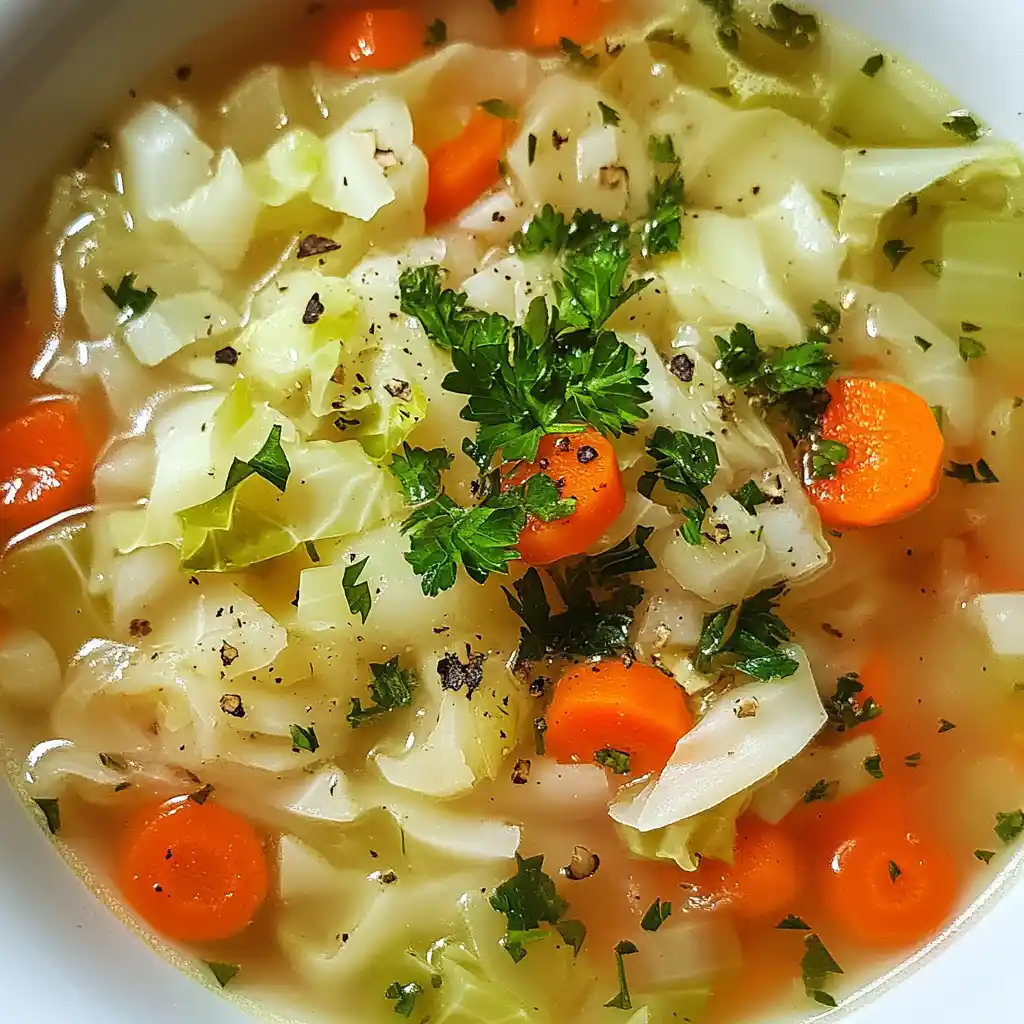
Ingredients
- 1 small head of cabbage, shredded (about 4–5 cups—green or savoy works great)
- 2 carrots, peeled and diced (keep them uniform for even cooking)
- 1 onion, chopped (yellow or white onion works best)
- 2 cloves garlic, minced (fresh only, please)
- 6 cups vegetable broth (use low-sodium so you control the salt)
- 1 can (14 oz) diced tomatoes (San Marzano are worth it if you can find them)
- 1 tsp dried thyme (or 1 tablespoon fresh if you have it)
- Salt and pepper to taste (start with ½ tsp salt and adjust)
- 2 tbsp oil for sautéing (olive oil or any neutral oil)
- Fresh parsley, chopped for garnish (don’t skip this—it adds brightness)
Instructions
- Heat 2 tablespoons of oil in a large pot over medium heat. Don’t go higher or you’ll burn the garlic later. Add the chopped onion and sauté for about 3-4 minutes until it’s soft and starting to turn translucent. This builds the flavor base.
- Add the minced garlic and cook for just 30 seconds until it smells amazing. Don’t let it brown or it’ll taste bitter. Garlic burns fast, so keep stirring.
- Toss in the diced carrots and cook for another 3-4 minutes, stirring occasionally. You want them to start softening and maybe get a tiny bit of color on the edges. This step adds depth that dumping everything in together doesn’t achieve.
- Pour in the vegetable broth and bring to a simmer. Once it’s bubbling gently, you’re ready for the next step.
- Stir in the shredded cabbage, diced tomatoes (juice and all), and dried thyme. Season with salt and pepper—I usually start with ½ teaspoon of salt because you can always add more. Every broth has different sodium levels, so taste as you go.
- Let the soup simmer uncovered for 20-25 minutes, stirring occasionally, until the cabbage is tender but still has a little bite to it. Don’t overcook or the cabbage gets sulfurous and mushy. Set a timer so you don’t forget about it.
- Taste and adjust your seasoning—it probably needs more salt and pepper than you think. The vegetables absorb flavor as they cook. If it tastes flat, add a pinch more salt and maybe a squeeze of lemon juice for brightness.
- Ladle into bowls and shower with fresh chopped parsley. Serve this spring cabbage soup hot with some crusty bread for dipping. The soup tastes even better the next day!
Nutrition Information (Per Serving):
- Calories: 95
- Carbohydrates: 14g
- Protein: 3g
- Fat: 4g
- Fiber: 4g
- Sodium: 680mg
- Vitamin C: 60% DV (cabbage is loaded with this)
- Vitamin K: 45% DV
- Vitamin A: 50% DV (from the carrots)
This healthy cabbage soup is incredibly nutrient-dense while being low in calories—you can eat huge bowls guilt-free and feel satisfied.
Notes:
- Don’t skip the sautéing step. Building flavor with onions, garlic, and carrots first makes all the difference.
- Keep the heat at medium when sautéing. High heat burns the garlic and makes it bitter.
- The cabbage should be tender but still have a slight bite. Overcooked cabbage tastes sulfurous.
- Taste and adjust seasoning at the end. The vegetables absorb a lot of salt as they cook.
- Every vegetable broth has different sodium levels. Start with less salt and add more as needed.
- Fresh parsley isn’t just for looks—it adds a brightness that makes the soup taste fresh and vibrant.
Storage Tips:
- Store in an airtight container in the fridge for up to 5 days.
- The soup tastes even better the next day after the flavors have melded together.
- The cabbage continues to soften as it sits, so it’ll be more tender on day 2 or 3.
- Freeze in portions for up to 3 months. The texture changes slightly but it’s still delicious.
- Reheat gently on the stove or in the microwave. Add a splash of broth if it’s too thick.
Serving Suggestions:
- With Crusty Bread: Serve with toasted sourdough or French bread for dipping into the broth.
- Over Rice: Ladle the soup over cooked rice for a more filling meal that stretches the servings.
- As a Side: Serve alongside grilled cheese sandwiches for the ultimate comfort food combo.
- For Meal Prep: Portion into containers for easy grab-and-go lunches all week long.
Mix It Up (Recipe Variations):
Hearty Cabbage Soup: Add a 15 oz can of white beans or chickpeas in the last 10 minutes of cooking for extra protein and substance. Makes it feel like a complete meal.
Spicy Cabbage Soup: Add ½ teaspoon red pepper flakes with the garlic or stir in hot sauce at the end. Perfect for cold nights when you want something warming with a kick.
Italian-Style Cabbage Soup: Use Italian seasoning instead of thyme, add chopped zucchini, and finish with grated Parmesan cheese. Tastes like Italian wedding soup without the meatballs.
Asian-Inspired Cabbage Soup: Skip the tomatoes and thyme. Add grated ginger with the garlic, season with soy sauce instead of salt, and finish with a drizzle of sesame oil and sliced green onions. Completely different flavor profile but equally delicious.
What Makes This Recipe Special:
This gentle cooking technique preserves the fresh, spring-like quality of the vegetables instead of overcooking them into mush. The layered approach—sautéing aromatics first, then building with broth and vegetables—creates depth of flavor that makes this taste like it’s been simmering all day when it really only takes 30 minutes. It’s comfort food that doesn’t weigh you down, perfect for transitioning between seasons when you want something nourishing but not heavy.