
Ever wonder why restaurant Kung Pao chicken tastes perfectly balanced—sweet, savory, spicy, and tangy—while homemade versions are either bland or swimming in too much sauce? I used to think Chinese stir-fries required a commercial wok and secret techniques until I discovered this foolproof Kung Pao chicken recipe. Now my weeknight dinners feature tender chicken with crunchy peanuts in glossy sauce that my family likes better than takeout, and honestly, the fact that it takes 20 minutes makes me feel like I’ve been wasting money on delivery for years.
Here’s the Thing About This Dish
What makes this Kung Pao chicken recipe work is the way high heat creates that signature “wok hei” (breath of the wok) while the sauce balances salty, sweet, sour, and spicy flavors perfectly. Here’s what I’ve learned: most people either cook at too low heat (resulting in steamed, gray chicken) or add sauce too early (resulting in boiled instead of stir-fried). But when you prep everything ahead, use screaming hot heat, and add sauce at the right moment, you’re creating actual restaurant-quality texture and flavor. It’s honestly that simple—high heat, quick cooking, balanced sauce. No wok or special equipment required.
What You’ll Need (And My Shopping Tips)
Good boneless, skinless chicken breasts should be fresh and uniform in size for even cooking. I learned this after buying chicken that cooked unevenly—some pieces dry, some undercooked. Cut them into bite-sized pieces about 3/4 inch—too small and they’ll dry out, too large and they won’t cook through in time.
Soy sauce should be low-sodium so you can control the salt level—regular soy sauce makes everything way too salty. Hoisin sauce adds that dark, sweet complexity you recognize from Chinese restaurants. According to Serious Eats’ guide to Chinese sauces, hoisin is essential for authentic flavor. Rice vinegar provides tang—don’t substitute with white vinegar, which is too harsh.
Cornstarch thickens the sauce and creates that glossy coating. Vegetable oil (or peanut oil) has the high smoke point necessary for stir-frying. Fresh garlic and ginger are absolutely essential—jarred versions taste sharp and chemical. Unsalted roasted peanuts add crunch—use unsalted so you can control seasoning.
Dried red chilies (often called Chinese dried chilies or Sichuan peppers) provide the signature heat and flavor—don’t substitute with crushed red pepper flakes, which taste completely different. Find them at Asian markets or online. Green onions add freshness and color at the end.
Let’s Make This Together
This is where stir-frying success happens: prep EVERYTHING before you start cooking. Stir-fries move fast and you won’t have time to chop or measure once cooking begins. Dice your chicken into uniform 3/4-inch pieces and set aside. Mince 3 cloves of garlic and 1-inch piece of fresh ginger. Slice your green onions. Measure out your peanuts and dried chilies. Set everything near the stove.
In a small bowl, whisk together 1/4 cup soy sauce, 2 tablespoons hoisin sauce, 1 tablespoon rice vinegar, 1 tablespoon cornstarch, 1/2 teaspoon sugar, and 1/4 cup water until smooth with no cornstarch lumps. This is your sauce—set it aside. Here’s where I used to mess up: I’d leave cornstarch lumps and end up with clumpy sauce. Whisk thoroughly.
Heat 2 tablespoons of vegetable oil in a wok or large skillet over HIGH heat until the oil is almost smoking. This takes about 2 minutes—the pan needs to be screaming hot. Add the diced chicken in a single layer (work in batches if your pan isn’t big enough to avoid crowding). Let it sit undisturbed for 1-2 minutes to get a sear, then stir-fry for 3-4 minutes total until browned and just cooked through. Here’s my secret: don’t move it constantly—let it develop that golden crust. Remove chicken to a plate.
Add a bit more oil to the same wok if it looks dry. Add the minced garlic and ginger, stir-frying for about 30 seconds until fragrant but not brown. The hot oil will make them sizzle immediately. Add the dried red chilies (I use 4-6 depending on heat preference) and peanuts. Stir-fry for 1-2 minutes until the peanuts toast slightly and everything smells amazing. Those chilies will darken and become aromatic—that’s what you want.
Return the cooked chicken to the wok. Give your sauce a quick stir (cornstarch settles) and pour it over everything. Stir constantly for 1-2 minutes—the sauce will bubble, thicken, and turn glossy, coating every piece of chicken. It should look shiny and cling to the chicken, not pool at the bottom. Toss in the sliced green onions during the last 30 seconds and give everything a final stir.
Serve immediately over cooked white rice. Kung Pao chicken waits for no one—the magic is in eating it fresh and hot when the chicken is tender and the sauce is perfectly glazed.
This whole thing takes about 20 minutes if you’ve prepped everything, which means Chinese takeout at home on a weeknight. Check out my Orange Chicken for another restaurant-style Chinese dish that’s just as easy and addictive.
When Things Go Sideways (And They Will)
Chicken is rubbery and overcooked? You cooked it at too low heat or for too long. In reality, I’ve learned that chicken needs HIGH heat and quick cooking—about 4 minutes total. If it’s already rubbery, there’s no fix, but next time use higher heat and watch the clock carefully.
Sauce is watery and won’t thicken? You didn’t whisk the cornstarch properly, added too much water, or didn’t cook it long enough. Don’t panic—simmer uncovered for another minute or two to reduce and thicken. Every brand of soy sauce has different thickness, so adjust as needed.
Not spicy enough? You used too few chilies or removed the seeds (which contain most of the heat). This goes from mild to spicy fast—next time use more dried chilies or add a pinch of crushed red pepper flakes. Around here, we’ve discovered that fresh chilies work too if you can’t find dried.
Everything tastes flat and bland? You underseasoned or used old spices. This dish should be bold and complex—the balance of salty, sweet, sour, and spicy is what makes it special. Taste the sauce before adding to the chicken and adjust salt or vinegar as needed.
When I’m Feeling Creative
Cashew Kung Pao Chicken: Replace peanuts with cashews for a richer, buttery version. Around special occasions, this feels fancier and less takeout-y.
Vegetable-Loaded Kung Pao: Add bell peppers, zucchini, or snap peas with the garlic and ginger. When I’m trying to eat more vegetables, this turns it into a complete one-pan meal.
Extra Spicy Kung Pao: Use 8-10 dried chilies and add 1/2 teaspoon of Sichuan peppercorns for authentic numbing heat. This has been a total game-changer for anyone who loves serious spice.
Kung Pao Shrimp: Replace chicken with 1 lb peeled shrimp—they cook even faster (2-3 minutes total). Fair warning: shrimp go from perfect to rubbery in seconds, so watch carefully.
What Makes This Recipe Special
Kung Pao chicken (also spelled Gong Bao) is named after Ding Baozhen, a Qing Dynasty official whose title was Gōng Bǎo (Palace Guardian). According to Wikipedia’s guide to Kung Pao chicken, the dish originated in Sichuan province and became popular worldwide as Chinese cuisine spread. The technique of stir-frying over high heat with a balance of flavors and textures—tender chicken, crunchy peanuts, spicy chilies—represents the complexity that makes Sichuan cooking so beloved. What sets this recipe apart is how it recreates restaurant results at home using accessible ingredients and a regular skillet, proving that your favorite Chinese takeout dishes don’t require specialized equipment or hard-to-find ingredients, just proper technique and high heat.
Questions I Always Get
Can I make this Kung Pao chicken less spicy?
Absolutely! Reduce the dried chilies to 2-3 or remove them entirely for mild Kung Pao. You’ll still get all the other flavors without the heat. Every dried chili has different heat levels, so start conservative and add more next time if you want it spicier.
What if I can’t find dried red chilies?
You can substitute with 1/2-1 teaspoon crushed red pepper flakes, though the flavor won’t be quite as authentic. Asian markets always have dried chilies, or order them online. Around here, we’ve discovered that even dried cayenne peppers work in a pinch.
Can I use chicken thighs instead of breasts?
Yes! Thighs stay juicier and have more flavor. Cut them the same size as you would breasts. They might take an extra minute to cook through. I actually prefer thighs for stir-fries because they’re more forgiving if you accidentally overcook slightly.
Why is my sauce not glossy like restaurant Kung Pao?
Your heat probably wasn’t high enough, or you didn’t stir the cornstarch mixture before adding (it settles). The high heat and cornstarch create that signature glossy coating. Also make sure you’re not using too much liquid in the sauce.
Can I make this ahead of time?
You can prep all ingredients ahead and store separately in the fridge, then stir-fry fresh. Cooked Kung Pao doesn’t reheat well—the chicken gets rubbery and the sauce gets gloppy. This dish is best served immediately after cooking.
What’s the best rice to serve with Kung Pao chicken?
Plain steamed white jasmine or long-grain rice is traditional and lets the bold chicken shine. Fried rice works too if you want something more flavorful. I always make extra rice because the sauce is too good to waste.
Before You Head to the Kitchen
I couldn’t resist sharing this because Kung Pao chicken shouldn’t be takeout-only food, and this recipe proves you can make authentic Chinese stir-fry at home that tastes better and costs less than delivery. The best weeknight dinners are when bold flavors come together in 20 minutes. You’ve got this—it’s just chicken, heat, and confidence!
Print
Kung Pao Chicken
Description
This authentic Kung Pao chicken features tender chicken with crunchy peanuts and dried chilies in a glossy, sweet-savory-spicy sauce for a restaurant-quality Chinese dish ready in 20 minutes.
Prep Time: 10 minutes | Cook Time: 10 minutes | Total Time: 20 minutes | Servings: 4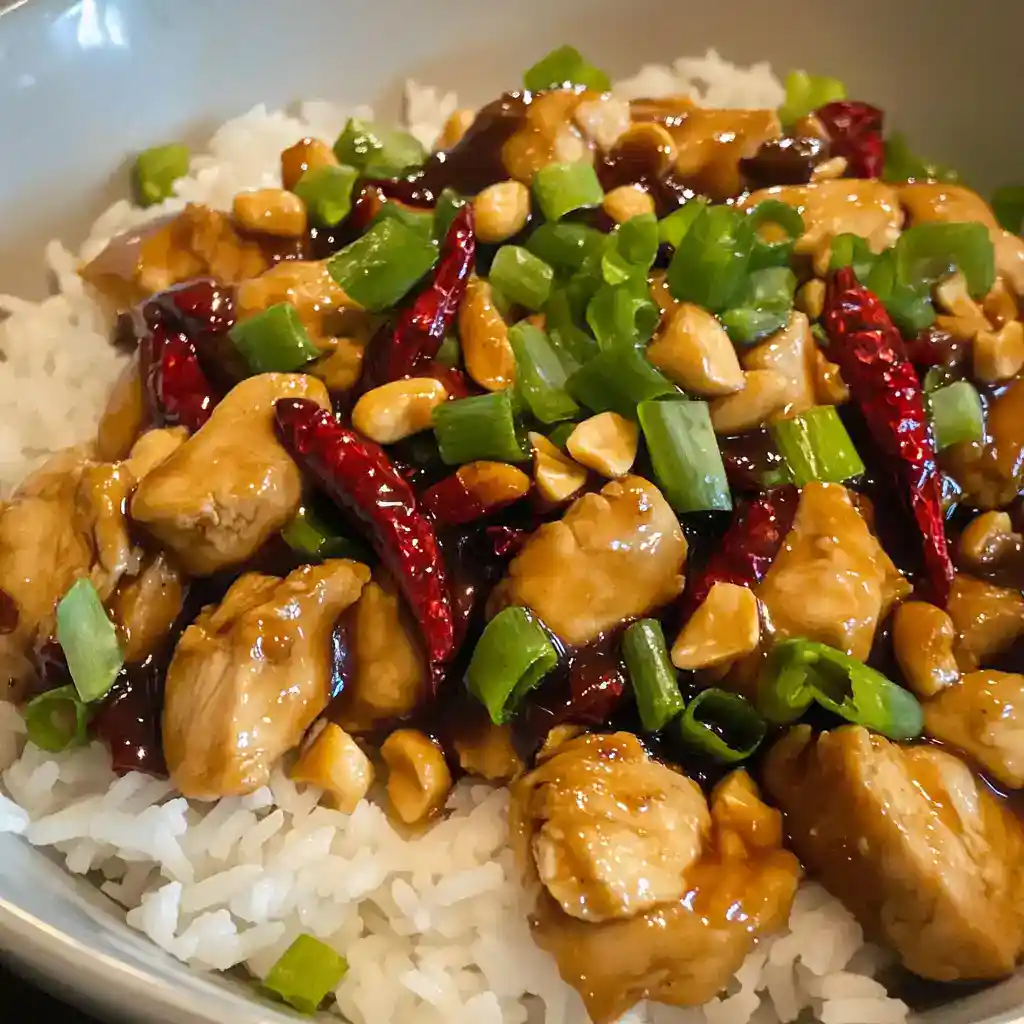
Ingredients
For the Chicken:
- 1 lb boneless, skinless chicken breasts, diced into 3/4-inch pieces
- 2 tablespoons vegetable oil (peanut oil works great)
For the Sauce:
- 1/4 cup soy sauce (low-sodium preferred)
- 2 tablespoons hoisin sauce (adds sweet-savory depth)
- 1 tablespoon rice vinegar (not white vinegar—they’re different)
- 1 tablespoon cornstarch (this makes it glossy)
- 1/2 teaspoon sugar
- 1/4 cup water
For Stir-Frying:
- 3 cloves garlic, minced (fresh, not jarred)
- 1-inch piece fresh ginger, minced (about 1 tablespoon)
- 1/2 cup unsalted roasted peanuts
- 4–6 dried red chilies (adjust for heat preference)
- 2 green onions, sliced
For Serving:
- Cooked white rice (jasmine or long-grain)
Instructions
- PREP EVERYTHING FIRST (mise en place is crucial for stir-fries): Dice chicken into uniform 3/4-inch pieces. Mince garlic and ginger. Slice green onions. Measure out peanuts and dried chilies. Have everything ready near the stove.
- In a small bowl, whisk together soy sauce, hoisin sauce, rice vinegar, cornstarch, sugar, and water until completely smooth with no cornstarch lumps. Set aside.
- Heat 2 tablespoons vegetable oil in a wok or large skillet over HIGH heat until almost smoking—this takes about 2 minutes. The pan needs to be very hot.
- Add the diced chicken in a single layer (work in batches if needed to avoid crowding). Let it sit undisturbed for 1-2 minutes to sear, then stir-fry for 3-4 minutes total until golden brown and just cooked through. Remove to a plate.
- Add a bit more oil to the wok if it looks dry. Add minced garlic and ginger, stirring constantly for about 30 seconds until fragrant but not brown. The hot oil will make them sizzle immediately.
- Add dried red chilies and peanuts. Stir-fry for 1-2 minutes until the peanuts are lightly toasted and everything smells amazing. The chilies will darken slightly—this is good.
- Return the cooked chicken to the wok. Give your sauce a quick stir (cornstarch settles), then pour it over everything.
- Stir constantly for 1-2 minutes. The sauce will bubble vigorously, thicken, and turn glossy, coating every piece of chicken. It should cling to the chicken, not pool at the bottom.
- Add the sliced green onions and toss everything together for 30 seconds.
- Serve immediately over hot cooked white rice. Kung Pao chicken is best eaten fresh when the chicken is tender and sauce is perfectly glazed!
Nutrition Information (Per Serving):
- Calories: 340
- Carbohydrates: 15g
- Protein: 30g
- Fat: 18g
- Fiber: 2g
- Sodium: 980mg
- Iron: 2.1mg (12% DV)
- Vitamin C: 5mg (6% DV)
This Kung Pao chicken provides excellent protein, healthy fats from peanuts, and bold flavors—all while being naturally low-carb before adding rice.
Notes:
- HIGH HEAT is crucial. This is a stir-fry, not a sauté. Your pan should be almost smoking hot.
- Prep everything before you start cooking. Once you begin, everything moves fast and you won’t have time to chop or measure.
- Don’t crowd the pan. Cook chicken in batches if needed. Crowded chicken steams instead of searing.
- Every dried chili has different heat. Start with 4 chilies, taste, and adjust next time.
- The sauce should be glossy, not watery. If it’s too thin, simmer longer. If too thick, add a splash of water.
Storage Tips:
Kung Pao chicken is best served immediately. Leftovers can be stored in an airtight container in the fridge for up to 3 days, but the chicken gets tougher and sauce gets gloppy when reheated. Reheat gently in a skillet over medium heat with a splash of water—don’t microwave or the chicken becomes rubbery. Honestly, this is one of those dishes that’s so good fresh that there are rarely leftovers. Don’t freeze stir-fried chicken—the texture becomes unpleasant when thawed.
Serving Suggestions:
- Classic Chinese Dinner: Serve over steamed white rice with stir-fried vegetables on the side
- Takeout-Style Spread: Pair with fried rice, egg rolls, and hot and sour soup
- Meal Prep: Portion over rice in containers for easy grab-and-go lunches
- Low-Carb Option: Serve over cauliflower rice instead of white rice
Mix It Up (Recipe Variations):
Cashew Kung Pao Chicken: Replace peanuts with cashews for a richer, buttery version that feels more upscale and special.
Vegetable-Loaded Kung Pao: Add 1 cup each diced bell peppers and zucchini with the garlic for a more veggie-forward meal.
Extra Spicy Kung Pao: Use 8-10 dried chilies and add 1/2 teaspoon Sichuan peppercorns for authentic numbing heat from Sichuan cuisine.
Kung Pao Shrimp: Replace chicken with 1 lb peeled shrimp—cook for only 2-3 minutes total as they cook much faster than chicken.
What Makes This Recipe Special:
This Kung Pao chicken honors the Sichuan culinary tradition of balancing complex flavors—má là (numbing-spicy), sweet, sour, and savory—all in one dish. Named after a Qing Dynasty official, this dish represents how regional Chinese cuisine evolved and spread worldwide, becoming a takeout favorite. By using high heat stir-frying and proper technique, you’re creating authentic “wok hei” (breath of the wok) that gives restaurant stir-fries their signature flavor and texture. It’s proof that Chinese restaurant favorites don’t require specialized equipment or years of training—just quality ingredients, proper technique, and the confidence to cook with high heat.
