
Ever wonder why Chinese restaurant vegetables taste so much better than anything you make at home? I used to think you needed a wok and professional training to make authentic Chinese radish bowl until I discovered this ridiculously simple recipe. Now my family requests this Asian vegetable dish at least twice a week, and I’m pretty sure my picky-eater son thinks I’m hiding meat in there somewhere (if only he knew it’s just radish cooked really, really well).
Here’s the Thing About This Recipe
What makes this Chinese radish stir fry work is the combination of savory sauces and proper cooking technique that transforms bland radish into something incredibly flavorful. Most people have never even tried Chinese radish (also called daikon or lo bok) because they don’t know what to do with it. The secret to authentic restaurant taste isn’t fancy equipment—it’s all about building flavor with garlic, ginger, and that perfect sauce ratio, then cooking the radish until it’s tender and sweet. It’s honestly that simple, no wok flipping skills required.
What You’ll Need (And My Shopping Tips)
Good Chinese radish is worth hunting down at your local Asian market—don’t settle for those sad, dried-out ones at regular grocery stores. I learned this after buying terrible radish twice that tasted bitter and woody. Look for daikon that’s heavy for its size, firm when you squeeze it gently, and has smooth, unblemished skin. The radish should be white or cream-colored, not yellowish. Around here, we’ve discovered that Asian markets have the freshest ones at the best prices.
Fresh Chinese radish should feel dense and crisp. According to Bon Appétit’s guide to daikon radish, the vegetable should snap cleanly when you break it and smell mildly sweet, not pungent. If it bends instead of snaps, it’s old and will taste bitter.
For the sauces, don’t cheap out on soy sauce—use a good quality one like Kikkoman or San-J. The oyster sauce adds that deep umami flavor that makes Chinese food taste like Chinese food (Lee Kum Kee is my go-to brand). Sesame oil should be toasted sesame oil, not the regular kind, because it has way more flavor. I always keep fresh garlic and ginger on hand because the jarred stuff just doesn’t compare. Green onions should be bright green and firm, not wilted or slimy.
Let’s Make This Together
Start by peeling your Chinese radish and slicing it thin—about ¼-inch thick works perfectly. Here’s where I used to mess up—cutting them too thick means they take forever to cook and stay crunchy in a bad way. Uniform slices cook evenly, so take an extra minute to get them right.
In a bowl, whisk together your soy sauce, oyster sauce, sesame oil, minced garlic, grated ginger, water, and black pepper. Give it a taste—you want savory, slightly sweet, and aromatic all at once. This is your flavor base, so make sure it tastes good before you cook.
Heat your vegetable oil in a large pan or skillet over medium heat. Don’t crank it to high or you’ll burn the garlic later. Add those radish slices and sauté them for about 5 minutes, stirring occasionally. They should start to soften slightly and get a tiny bit of color on the edges.
Now for the fun part—pour that sauce mixture over the radish and stir everything together so each slice is coated. Cover the pan and let it cook for 8-10 minutes, stirring once or twice, until the radish is tender when you poke it with a fork. Here’s my secret that I learned from my Chinese neighbor: the radish should be translucent and almost jammy when it’s done, not crunchy like raw radish.
Sprinkle those chopped green onions on top right before serving. The heat will soften them slightly but they’ll still have that fresh onion bite. Serve your Chinese radish bowl hot as a side dish or pile it over steamed rice for a simple meal. This pairs beautifully with other Asian dishes like this Garlic Bok Choy from the collection—they’re perfect together.
If This Happens, Don’t Panic
Radish turned out too salty? You probably used regular soy sauce instead of low-sodium, or your oyster sauce was super salty. This is totally fixable—add a tablespoon of water and a tiny pinch of sugar to balance it out. I always taste my sauce before adding it to the pan now because different brands vary wildly in saltiness.
Radish still crunchy after cooking time? Don’t panic, just add a splash more water, cover, and cook for another 5 minutes. If this happens (and it will if your radish slices were too thick), the extra steam will soften them up. Some radishes are just naturally denser than others.
Sauce evaporated and radish looks dry? Next time add a bit more water or keep the heat lower. If it’s already dry, pour in 2-3 tablespoons of water and stir well to create more sauce. I always keep extra water nearby just in case.
When I’m Feeling Creative
Spicy Chinese Radish Bowl: Add a teaspoon of chili oil or a few slices of fresh red chili when I want some heat. My brother lives for this version and puts it on everything.
Sweet and Savory Radish: Add a tablespoon of brown sugar or honey to the sauce mixture. Around the holidays when I’m serving this to guests who might not love vegetables, this sweeter version wins everyone over.
Mushroom Radish Bowl: Toss in some sliced shiitake mushrooms along with the radish for extra umami and a meatier texture. This makes it feel more substantial as a main dish.
Protein-Packed Version: Add some cubed firm tofu or sliced chicken breast in the last 5 minutes of cooking for a complete one-pan meal. Perfect for when you’re too lazy to cook multiple dishes.
What Makes This Recipe Special
Chinese radish, or daikon, has been a staple vegetable in Asian cuisine for thousands of years. According to Wikipedia’s entry on daikon, it’s been cultivated in East Asia since ancient times and is valued for its mild flavor and versatility in cooking. What sets this Chinese radish bowl apart is the braising technique—starting with a quick sauté to develop flavor, then covering and steaming with sauce until the radish becomes tender and sweet. Traditional Cantonese home cooking often features daikon prepared this way because the vegetable soaks up all those savory flavors beautifully. The radish transforms from sharp and peppery to mild and almost sweet, with a texture that’s tender but not mushy.
Things People Ask Me About This Recipe
Can I make this Chinese radish stir fry ahead of time?
Yes! It actually tastes even better the next day after all the flavors have melded together. Store it in an airtight container in the fridge for up to 4 days. Reheat gently in a pan with a splash of water to keep it from drying out.
What if I can’t find Chinese radish for this Asian vegetable dish?
Regular daikon radish is the same thing—just a different name. If you absolutely can’t find either, you could use turnips as a substitute, but the flavor will be different. The texture works similarly though.
How do I know when the radish is done cooking?
It should be translucent, tender when you poke it with a fork, and almost jammy in texture. If it’s still bright white and crunchy, it needs more time. The radish releases its natural sugars as it cooks and becomes sweet.
Can I use this as a main dish instead of a side?
Absolutely! Serve it over steamed rice or noodles and maybe add some protein like tofu or chicken. I do this all the time when I want a simple, healthy dinner without a lot of dishes to wash.
Is this Chinese radish bowl vegan-friendly?
Almost! The oyster sauce typically contains oyster extract. Just swap it for vegetarian oyster sauce (made from mushrooms) and you’ve got a completely plant-based dish. The flavor is nearly identical.
What’s the best way to store leftover radish?
Keep it in an airtight container in the fridge for up to 4 days. The radish will continue to absorb the sauce as it sits, which makes it even more flavorful. Don’t freeze this—the texture gets weird and watery when thawed.
Before You Head to the Kitchen
I couldn’t resist sharing this Chinese radish bowl recipe because it’s completely changed how my family feels about eating vegetables. The best weeknight dinners are when I make this alongside some steamed rice and maybe a fried egg, and everyone cleans their plates without complaining. Give this a try and you’ll discover why daikon radish is such a beloved staple in Asian cooking!
Print
Chinese Radish Bowl
Description
Savory, tender, and surprisingly addictive—this Chinese radish stir fry proves that simple vegetables can be the star of the show.
Prep Time: 10 minutes | Cook Time: 15 minutes | Total Time: 25 minutes | Servings: 4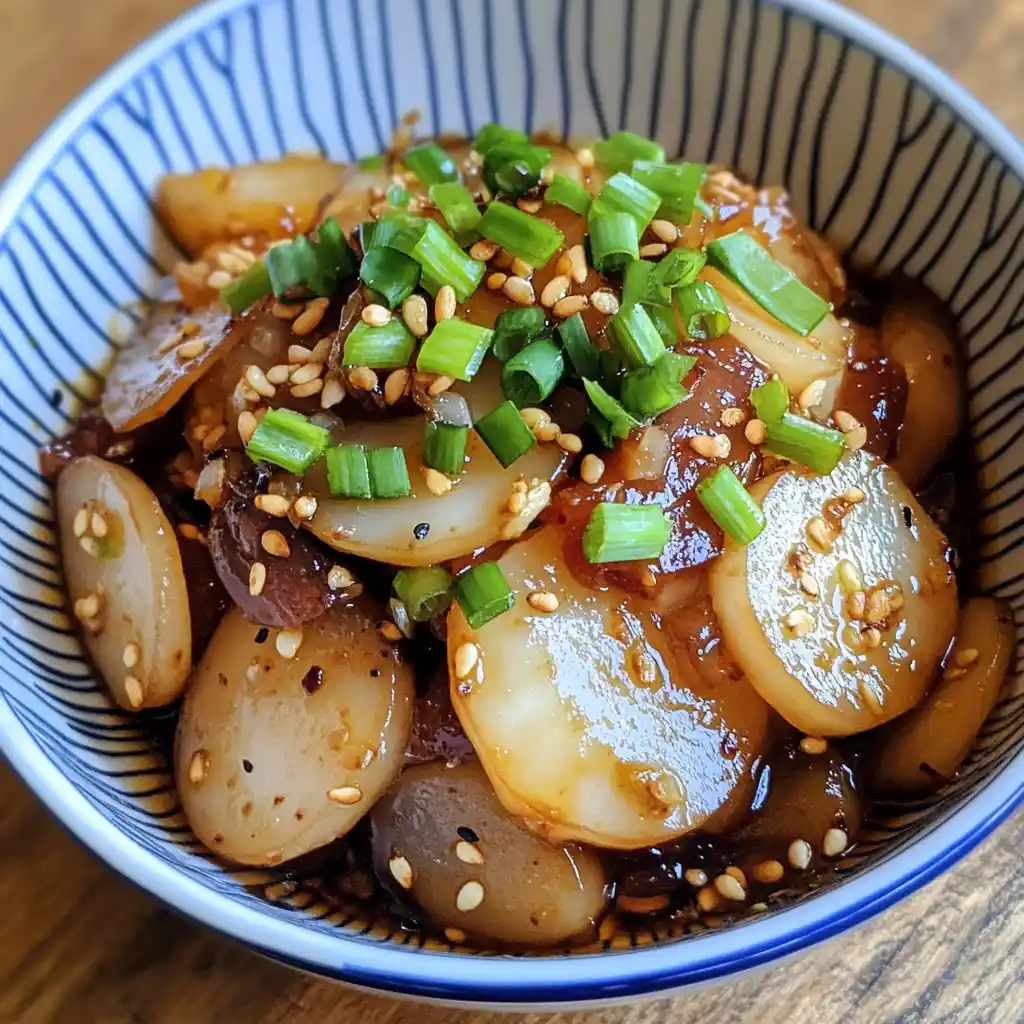
Ingredients
- 10 oz Chinese radish (daikon), peeled and thinly sliced (about ¼-inch thick slices)
- ¼ cup soy sauce (use low-sodium if you’re watching your salt)
- 2 tbsp oyster sauce (Lee Kum Kee is my favorite brand)
- 1 tbsp sesame oil (make sure it’s toasted sesame oil for flavor)
- 2 cloves garlic, minced (fresh only, please)
- 1 tsp ginger, grated (fresh ginger makes all the difference)
- ¼ cup water (keep extra on hand just in case)
- 2 green onions, chopped (save some for garnish)
- ¼ tsp black pepper (freshly ground if you have it)
- 1 tbsp vegetable oil (any neutral oil works)
Instructions
- Start by peeling your Chinese radish and slicing it into thin rounds, about ¼-inch thick. Keep them uniform so they cook evenly. Don’t skip the peeling—the skin can be tough and bitter.
- In a bowl, whisk together the soy sauce, oyster sauce, sesame oil, minced garlic, grated ginger, water, and black pepper. Give it a taste—this is your flavor base, so make sure it’s balanced and delicious before you cook.
- Heat the vegetable oil in a large pan or skillet over medium heat. Don’t go higher or you’ll burn the garlic later. Add your radish slices and sauté for about 5 minutes, stirring occasionally. They should start to soften and maybe get a tiny bit of color.
- Pour the sauce mixture over the radish and stir everything together so each slice gets coated. Make sure the sauce is distributed evenly.
- Cover the pan and let it cook for 8-10 minutes, stirring once or twice to make sure nothing sticks. The radish should become translucent and tender when you poke it with a fork. Every stove is different, so trust your judgment here.
- When the radish is tender and almost jammy in texture, sprinkle those chopped green onions on top. Give it one final stir and remove from heat.
- Serve your Chinese radish bowl hot as a side dish or pile it over steamed rice for a simple, satisfying meal. The radish should be tender, savory, and slightly sweet (if you can resist eating it straight from the pan).
Nutrition Information (Per Serving):
- Calories: 85
- Carbohydrates: 9g
- Protein: 2g
- Fat: 5g
- Fiber: 2g
- Sodium: 890mg
- Vitamin C: 30% DV (daikon is surprisingly high in vitamin C)
- Potassium: 8% DV
This Chinese radish stir fry is low in calories but high in nutrients, making it a perfect healthy side dish that doesn’t taste like health food.
Notes:
- Seriously, slice your radish evenly. Thick pieces take forever to cook and thin pieces turn to mush. Aim for about ¼-inch.
- Taste your sauce before adding it to the pan. Different brands of soy sauce and oyster sauce have different salt levels, so adjust if needed.
- The radish should be translucent and tender when done, not crunchy. If it’s still firm after 10 minutes, add a splash more water and cook longer.
- Don’t skip the ginger—it’s what makes this taste authentically Chinese instead of just salty radish.
- If you like extra sauce, double the sauce ingredients. Some people (like me) love lots of sauce to spoon over rice.
Storage Tips:
- Store leftovers in an airtight container in the fridge for up to 4 days.
- The radish continues to absorb the sauce as it sits, making it even more flavorful the next day.
- Reheat gently in a pan with a splash of water to prevent drying out. Microwave works too, but add a bit of water first.
- Don’t freeze this—the radish gets watery and weird when thawed.
Serving Suggestions:
- Over Rice: Spoon it over steamed white or brown rice with a fried egg on top for a simple, complete meal.
- As a Side Dish: Serve alongside grilled fish, roasted chicken, or tofu for a balanced dinner.
- With Noodles: Toss with rice noodles or udon for a light noodle bowl that’s ready in minutes.
- In Bento Boxes: Pack it cold or warm in lunch boxes—it tastes great at any temperature.
Mix It Up (Recipe Variations):
Spicy Chinese Radish Bowl: Add 1 teaspoon of chili oil or 2-3 slices of fresh red chili for heat. The spice complements the sweet radish beautifully.
Sweet and Savory Radish: Add 1 tablespoon of brown sugar or honey to the sauce mixture for a sweeter version that appeals to people who might be skeptical of vegetables.
Mushroom Radish Bowl: Add ½ cup sliced shiitake mushrooms along with the radish for extra umami and a meatier texture. Makes it feel more substantial.
Protein-Packed Version: Add cubed firm tofu or sliced chicken breast in the last 5 minutes of cooking for a complete one-pan meal. Perfect for lazy weeknights.
What Makes This Recipe Special:
This braising technique is traditional in Cantonese home cooking, where daikon radish is valued for its ability to absorb flavors while becoming tender and almost sweet. The method of sautéing first, then covering and steaming with sauce, transforms the sharp, peppery raw radish into something mild and comforting. It’s a perfect example of how simple cooking techniques can completely change a vegetable’s character.
