
Ever wonder why some seafood dishes taste like the spices are just sitting on top while others have flavors that penetrate every bite? I used to think making Indian crab with fresh ramps required years of spice-blending experience until I discovered this foolproof recipe. Now my family requests this aromatic, delicate dish whenever ramps are in season, and I’m pretty sure my foodie friends think I’ve been secretly studying Indian cuisine for decades (if only they knew how many times I overseasoned delicate crab meat before learning the light touch this recipe needs).
Here’s the Thing About This Recipe
What makes this Indian crab with fresh ramps work is the gentle approach to seasoning—you’re enhancing sweet, delicate crab meat and pungent wild ramps, not burying them under a mountain of spices. I learned the hard way that you can’t apply the same heavy hand you’d use with chicken or lamb when cooking seafood; the crab needs a lighter touch. This fusion of Indian spice techniques with foraged spring ramps creates something uniquely special that celebrates both traditions. It’s honestly that simple: fresh crab, those gorgeous garlicky ramps, warming spices, and the restraint to let the main ingredients shine.
What You’ll Need (And My Shopping Tips)
Good fresh crab meat is worth splurging on—look for lump or jumbo lump crab meat that’s been picked over for shells but not pasteurized into oblivion (I learned this after buying imitation crab three times and wondering why my dish tasted like the ocean’s sad cousin). You’ll need about a pound, which sounds expensive but serves four people generously for a special spring meal.
For the star ingredient, fresh ramps are essential here—these wild leeks have a brief season in early spring (usually April-May depending on your location) and bring an incredible garlicky-oniony punch that regular leeks or scallions just can’t replicate. Don’t cheap out and skip them; this dish is designed to celebrate ramp season (happens more than I’d like to admit when I try to make seasonal recipes out of season).
For the spice base, grab ghee (clarified butter that can handle high heat), cumin seeds, turmeric powder, coriander powder, and red chili powder. These warming Indian spices complement without overwhelming the delicate seafood. The ghee is traditional and adds a nutty richness you won’t get from regular butter or oil.
Fresh cilantro for garnish isn’t optional—it adds that bright, fresh counterpoint to the warming spices. If you’re curious about ramps and why foragers get so excited about them, Wikipedia has fascinating information about these wild spring onions native to North America.
You’ll also need salt to taste. I use sea salt or kosher salt for better control over seasoning delicate seafood.
Here’s How We Do This
Start by heating 2 tablespoons of ghee in a large skillet over medium heat. Here’s where I used to mess up: I’d crank the heat too high and burn the cumin seeds before they could release their aromatic oils. Keep it at a solid medium.
Add the cumin seeds to the hot ghee and let them splutter and pop for about 30 seconds—you’ll smell that incredible toasty, earthy aroma. This technique is called tempering or tadka in Indian cooking, and it blooms the spices to release maximum flavor.
Now for the fun part—add your chopped ramps (both the white bulbs and green leaves) to the skillet and sauté for about 3-4 minutes until they soften and become fragrant. The whole kitchen will smell like garlicky heaven at this point. Here’s my secret: I cook the bulbs for a minute before adding the leaves since they take longer to soften.
Stir in the turmeric powder, coriander powder, red chili powder, and salt. Cook this spice mixture for another minute, stirring constantly so nothing burns. This step cooks out the raw spice flavor and creates that gorgeous golden color. Don’t skip it or your spices will taste harsh and powdery.
Gently fold in the fresh crab meat, being careful not to break up those beautiful lumps too much. Make sure every piece gets coated with the spiced ramp mixture. Cook for 5-6 minutes, stirring occasionally and very gently—you’re just heating the crab through and letting it absorb the flavors, not cooking it from raw. Trust me on this one; overcooking crab turns it rubbery and stringy faster than you can say “expensive mistake.”
Once the crab is heated through and aromatic (you’ll know because your kitchen smells like the best Indian-fusion restaurant), remove from heat immediately. I learned this trick from my Indian cooking mentor who taught me that residual heat keeps cooking even off the burner.
Garnish generously with fresh cilantro leaves before serving. If you’re looking for another spring seasonal recipe that celebrates foraged ingredients, try this Ramp and Asparagus Risotto that uses similar seasonal timing.
Serve hot with steamed basmati rice or warm naan bread for soaking up all those incredible spiced juices (I learned this serving suggestion from my neighbor who always does the rice-and-bread double-carb situation and honestly, she’s right).
If This Happens, Don’t Panic
Crab meat turned rubbery and dry? You cooked it too long or at too high heat. In reality, I’ve learned that pre-cooked crab meat only needs 5-6 minutes to warm through and absorb flavors—any longer and you’ve gone too far.
Spices taste harsh and bitter? You probably burned them or didn’t cook them long enough after adding them. If this happens (and it will), there’s not much you can do except start over with the spice blooming step. This is totally fixable for next time—just watch your heat carefully.
Dish tastes flat despite the spices? You need more salt, probably. Crab meat is naturally sweet and delicate, so it needs adequate seasoning to bring out its flavor. I always taste and adjust salt at the end now because it makes or breaks this dish.
Ramps taste too strong and overwhelming? Next time, use a lighter hand with the ramps or substitute half of them with scallions for a milder onion flavor. Some ramp harvests are more pungent than others, so adjust to your batch.
When I’m Feeling Creative
Coconut Crab with Ramps: When I want something richer, I’ll add 1/4 cup of coconut milk at the end for a South Indian-inspired creamy version that’s absolutely luxurious.
Spicy Indian Crab: Add an extra 1/2 teaspoon of red chili powder and a minced green chili for serious heat lovers. Around special occasions, this becomes my show-off dish.
Ginger-Garlic Crab with Ramps: Add 1 tablespoon of fresh grated ginger and 2 cloves of minced garlic along with the ramps for even more aromatic complexity.
Tomato-Based Crab Masala: Stir in 1/2 cup of crushed tomatoes after the spices for a saucier version that’s perfect for soaking up with naan.
What Makes This Recipe Special
This Indian crab with fresh ramps represents a beautiful fusion of Indian spice traditions with North American foraged ingredients. Ramps are native to Appalachia and the Great Lakes region, not India, but their pungent, garlicky-onion flavor profile works perfectly with Indian aromatics like cumin, coriander, and turmeric. What makes this recipe special is the restraint—Indian seafood cooking, particularly from coastal regions like Goa and Kerala, tends to be lighter-handed with spices than meat-based curries, allowing the delicate sweetness of seafood to shine through. The technique of tempering spices in ghee (tadka) is fundamental to Indian cooking and creates deeper, more complex flavors than simply adding ground spices to a dish. Traditional Indian seafood dishes often feature local catches prepared with regional spice blends, so this adaptation honors that spirit by celebrating both the brief ramp season and quality crab meat. The history of ramps in Appalachian cuisine shows how these wild leeks have been foraged and celebrated for centuries by various cultures.
Things People Ask Me About This Recipe
Can I use frozen or canned crab meat instead of fresh?
You can, but fresh lump crab meat gives the best texture and sweetness. If using canned, drain it well and pick through for any shells. Frozen works fine—just thaw completely and pat dry before using. The quality of your crab really matters in such a simple preparation.
What if I can’t find fresh ramps for this Indian crab recipe?
Ramps have a very short season (April-May in most regions). If you can’t find them, substitute with a combination of scallions and minced garlic to approximate that garlicky-onion flavor. It won’t be exactly the same, but it’ll still be delicious.
How spicy is this dish with the red chili powder?
It’s mild to medium spice as written—noticeable warmth but not overwhelming heat. If you’re sensitive to spice, start with 1/4 teaspoon red chili powder and adjust up from there. You can always add heat, but you can’t take it away.
Can I make this Indian crab with fresh ramps ahead of time?
This is really best served immediately after cooking. Crab meat doesn’t reheat well—it gets tough and rubbery. You can prep your ramps and measure your spices ahead, but cook the dish right before serving for best results.
Is this recipe beginner-friendly?
Yes, but you need to watch your heat and timing carefully. The technique is straightforward, but working with delicate crab meat requires a gentle touch. If you can sauté vegetables and not burn spices, you can make this successfully.
What’s the best type of rice to serve with this?
Steamed basmati rice is traditional and perfect for soaking up the spiced juices. Jasmine rice works too. I cook mine simply with just water and salt to let the crab dish be the star.
One Last Thing
I couldn’t resist sharing this Indian crab with fresh ramps because it’s the recipe that taught me to embrace seasonal cooking and fusion flavors without overthinking it. The best ramp season dinners are when everyone’s gathered around the table, fighting over the last bits of crab, and someone inevitably asks “when are ramps in season again?” You don’t need to be an expert in Indian cooking or a foraging expert—just good ingredients, gentle heat, and the confidence to let simple flavors shine.
Print
Indian Crab with Fresh Ramps
Description
This elegant Indian crab with fresh ramps combines sweet, delicate crab meat with pungent wild spring ramps and warming Indian spices for a unique fusion dish that celebrates both coastal Indian seafood traditions and North American foraging culture.
Prep Time: 10 minutes | Cook Time: 12 minutes | Total Time: 22 minutes | Servings: 4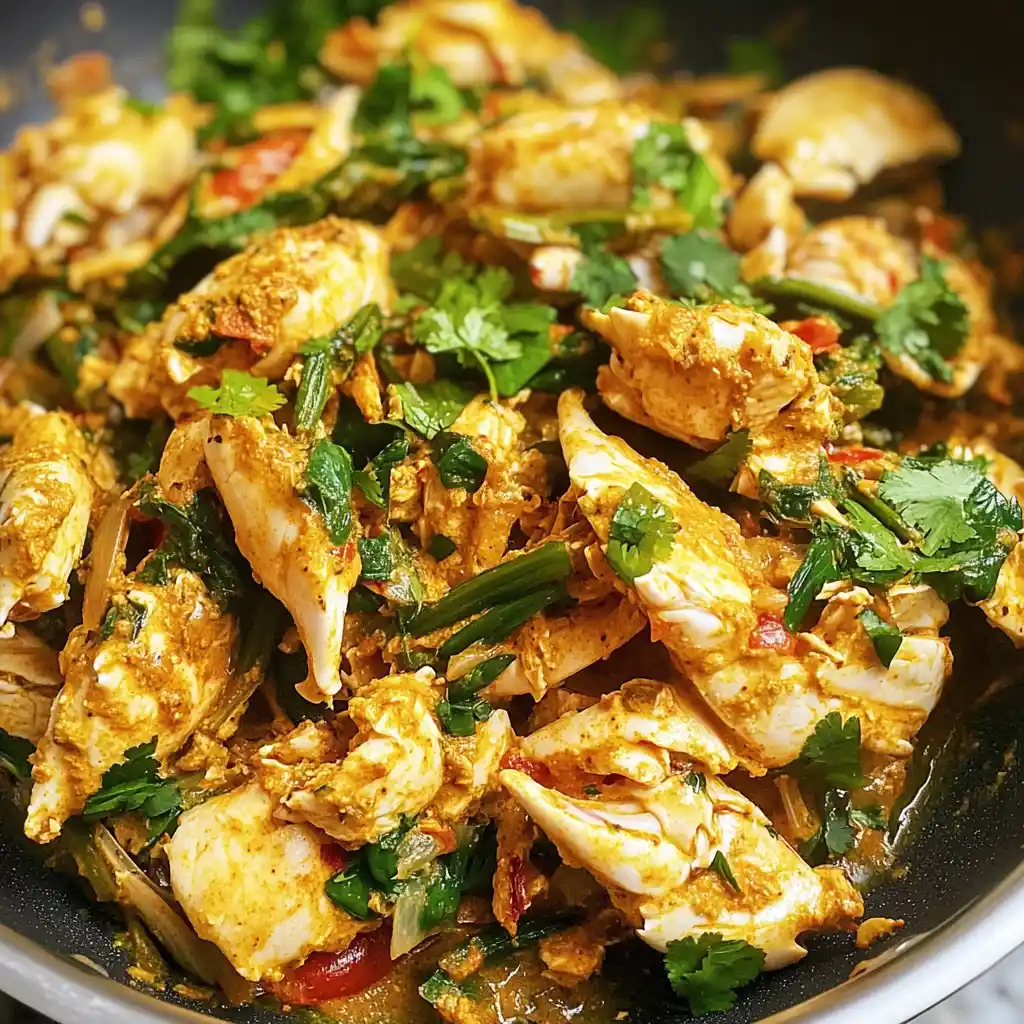
Ingredients
For the Main Dish:
- 1 lb fresh lump crab meat, picked over for shells (splurge on quality here—it matters)
- 8 oz fresh ramps, cleaned and chopped (use both white bulbs and green leaves)
- 2 tbsp ghee (clarified butter—essential for authentic flavor)
- 1 tsp cumin seeds (whole, not ground)
- 1 tsp turmeric powder
- 1 tsp coriander powder
- 1/2 tsp red chili powder (adjust for your heat preference)
- Salt to taste (start with 1/2 teaspoon)
For Garnish:
- Fresh cilantro leaves, chopped (don’t skip this—it’s essential)
For Serving:
- Steamed basmati rice or warm naan bread
Instructions
- Heat 2 tablespoons of ghee in a large skillet over medium heat (not medium-high—keep it moderate to prevent burning the spices).
- Add the cumin seeds to the hot ghee and let them splutter and pop for about 30 seconds until fragrant and toasty. This technique, called tempering or tadka, blooms the spices to release maximum flavor.
- Add the chopped ramps (I add the white bulb parts first, then the green leaves a minute later since they cook at different rates) to the skillet and sauté for about 3-4 minutes until they soften and become fragrant. Your kitchen will smell incredible at this point.
- Stir in the turmeric powder, coriander powder, red chili powder, and salt. Cook this spice mixture for another minute, stirring constantly so nothing burns. You’re cooking out the raw spice flavor and creating that gorgeous golden color.
- Gently fold in the fresh crab meat, being very careful not to break up those beautiful lumps. Make sure every piece gets coated with the spiced ramp mixture, but use a light touch—you’re not stirring pasta here.
- Cook for 5-6 minutes, stirring occasionally and gently, just until the crab is heated through and has absorbed the flavors. Don’t overcook or the crab will turn rubbery—it’s already cooked, you’re just warming and flavoring it.
- Once the crab is aromatic and warmed through, remove from heat immediately. Residual heat will keep cooking it even off the burner.
- Garnish generously with fresh chopped cilantro and serve hot with steamed basmati rice or warm naan bread for soaking up the spiced juices.
Nutrition Information (Per Serving):
- Calories: 185
- Carbohydrates: 6g
- Protein: 22g
- Fat: 8g
- Fiber: 2g
- Sodium: 420mg
- Vitamin B12: 45% DV
- Zinc: 25% DV
- Selenium: 35% DV
Crab meat is an excellent source of lean protein, vitamin B12, and essential minerals, while ramps provide vitamins A and C.
Notes:
- Use lump or jumbo lump crab meat for best texture—avoid imitation crab or heavily processed options.
- Fresh ramps are essential here—they have a brief season (April-May) and can’t really be substituted without losing the dish’s special character.
- Watch your heat carefully when blooming spices—medium heat is your friend, too high and you’ll burn everything.
- The crab is already cooked, so you’re just warming and flavoring it—5-6 minutes maximum or it gets rubbery.
- Every batch of ramps varies in pungency, so taste as you go and adjust quantities if needed.
Storage Tips:
This dish is really best served immediately. Crab meat doesn’t reheat well—it gets tough and rubbery when reheated. If you absolutely must store leftovers, keep them in an airtight container in the fridge for up to 1 day and reheat very gently on the stovetop over the lowest heat possible, adding a splash of water to prevent drying. Don’t freeze this—the crab texture will be completely ruined when thawed.
Serving Suggestions:
- Traditional Indian Style: Over steamed basmati rice with a side of cucumber raita to cool the palate
- Bread-Focused: With warm naan, roti, or paratha for scooping up every bit of the spiced mixture
- Complete Meal: Alongside sautéed greens and dal for a full Indian-inspired dinner
- Elegant Presentation: Serve in small portions as an appetizer with crispy papadum
Mix It Up (Recipe Variations):
Coconut Crab with Ramps: Add 1/4 cup of coconut milk at the end for a South Indian-inspired creamy version that’s luxurious and rich.
Extra Spicy Indian Crab: Increase red chili powder to 1 teaspoon and add 1 minced green chili for serious heat lovers.
Ginger-Garlic Crab Masala: Add 1 tablespoon fresh grated ginger and 2 cloves minced garlic along with the ramps for even more aromatic complexity.
Tomato-Based Crab Curry: Stir in 1/2 cup crushed tomatoes after the spices for a saucier version that’s perfect with naan.
What Makes This Recipe Special:
This Indian crab with fresh ramps showcases fusion cooking at its best—combining coastal Indian seafood techniques with North American foraged ingredients. The restraint in spicing honors traditional Indian seafood cooking, which uses lighter hands than meat-based curries to let delicate flavors shine. The tempering technique (tadka) of blooming spices in ghee creates complex flavors that simple spice addition can’t achieve.
