
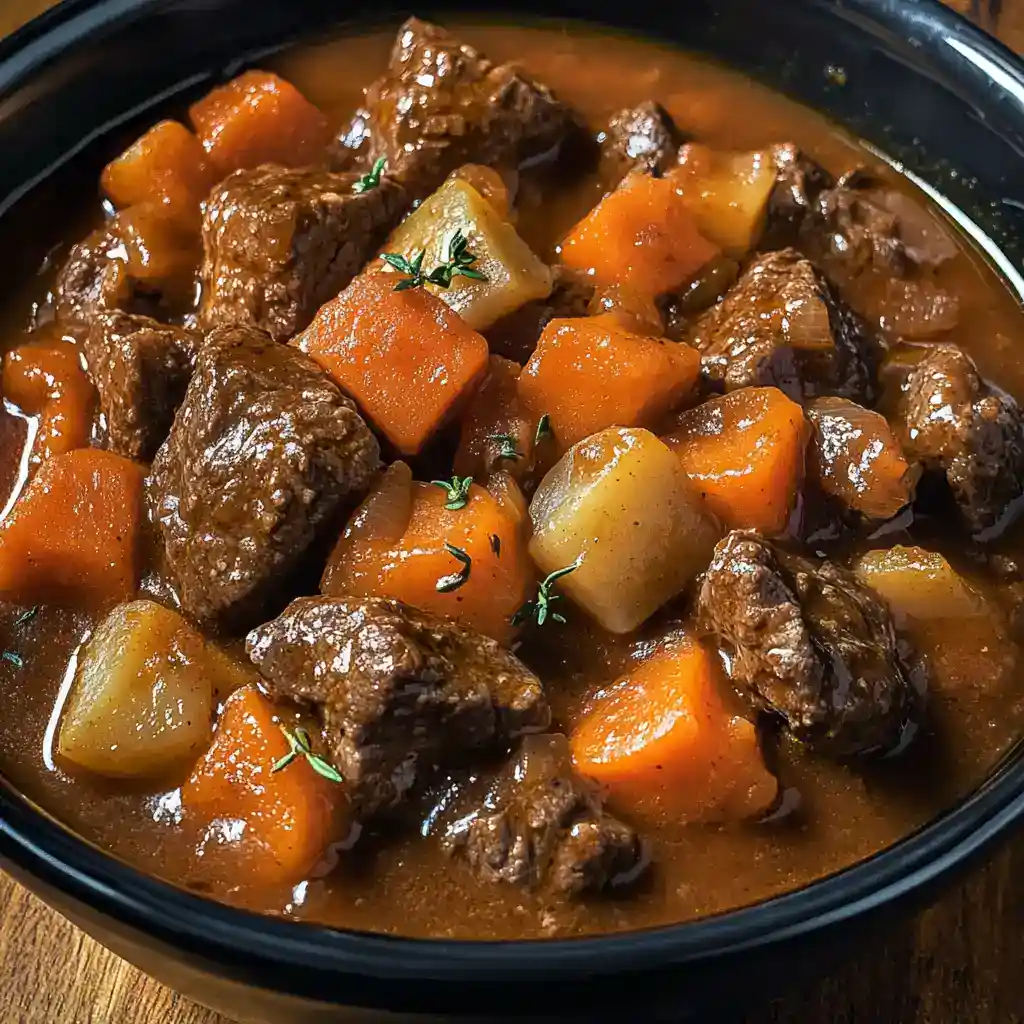
Is there any smell more comforting than a beef stew simmering on the stove on a cold afternoon? I don’t think so. The first time I made this beef and carrot stew, my neighbor knocked on the door twenty minutes into the cook time to ask what I was making. She could smell it from her front porch. That’s the power of good beef, sweet carrots, and thyme doing their slow-simmer work together — the whole neighborhood knows something good is happening in your kitchen. Now I make this every few weeks from fall through spring, and it never stops making people feel at home the moment they walk through the door.
Here’s the Thing About This Recipe
What makes this beef and carrot stew work where other simple stews taste thin or one-dimensional is the combination of diced tomatoes and beef broth as the liquid base. The tomatoes add acidity and a slight sweetness that balances the savory beef and brings out the natural sweetness of the carrots — and they thicken the broth slightly as they cook down, giving the stew more body than plain broth alone could achieve. Around here, we’ve figured out that browning the beef properly at the start is the step that separates a truly rich, deep-flavored stew from a pot of ingredients that just simmered together. That initial sear creates flavor that nothing else in the recipe can replicate. It’s honestly that simple.
What You’ll Need (And My Shopping Tips)
Beef stew meat from the chuck section is what you want — it has the right balance of fat and connective tissue that breaks down over a long, low simmer into silky, tender pieces. Beef chuck is specifically prized for braising and stewing because its collagen converts to gelatin during slow cooking, which naturally thickens the broth and creates that satisfying, rich texture. Lean stew meat — round or sirloin tip — stays tough and dry no matter how long you cook it. If you’re not sure what you have, chuck is typically labeled “beef stew meat” and is usually pre-cut into cubes at the butcher counter.
For the carrots, slice them into coins about 1/2 inch thick. Thinner and they dissolve into the stew; thicker and they won’t be completely tender when the beef is done. Four carrots sounds like a lot but they’re the sweet, tender backbone of this dish — don’t reduce them. I’ve tried scaling back thinking it would be fine and the stew immediately tasted less balanced.
The diced tomatoes add more than you might expect for a single can — they contribute body, acidity, and a slight sweetness that rounds out the beef broth. Don’t drain them; the liquid in the can is part of the flavor. If you prefer a smoother broth, use crushed tomatoes instead.
Let’s Make This Together
Heat olive oil in a large pot or Dutch oven over medium-high heat. Pat the beef cubes dry with a paper towel — moisture on the surface of the meat creates steam rather than a sear. Brown the beef in batches without crowding the pan, 2 to 3 minutes per side, until each piece has a deeply browned crust. Here’s where I used to go wrong — I’d add all the beef at once and it would release moisture, steam in the crowded pan, and turn gray instead of brown. Patience and space in the pot are the only tricks.
Remove the beef and set it aside. In the same pot, add the onion and garlic, scraping up all the browned bits from the bottom — those are pure flavor. Cook for 3 to 4 minutes until the onion is soft.
Add the sliced carrots and diced potatoes and stir for 2 to 3 minutes to coat them in the aromatics. Return the beef, then pour in the diced tomatoes with their liquid and the beef broth. Add the thyme, salt, and pepper. Bring to a boil, then immediately reduce to low. Cover and simmer for 1.5 to 2 hours, stirring occasionally, until the beef pulls apart easily with a fork.
Taste and adjust seasoning before serving. The stew should need very little — the long simmer concentrates everything into a well-seasoned, balanced broth.
For another deeply comforting beef braise in the same tradition, check out this Beef and Potato Stew from Station Recipes — a classic herb-forward version that’s a natural companion to this carrot-forward stew.
If This Happens, Don’t Panic
Beef is tough after 2 hours? It needs more time or the cut was too lean. Chuck needs the full time to break down — give it another 30 to 45 minutes on the lowest heat setting. True tenderness happens when you can pull a piece apart with two forks with almost no resistance.
Broth is too thin? Mash a few potato pieces against the side of the pot and stir them in — the starch thickens the broth quickly and naturally. Alternatively, remove the lid and let it simmer uncovered for 15 minutes to reduce and concentrate.
Carrots are mushy but beef isn’t tender yet? They were cut too thin or the simmer was too vigorous. For future batches, cut carrots into slightly thicker pieces — about 3/4 inch — and keep the heat at the gentlest possible simmer.
Stew tastes flat? Add a small splash of Worcestershire sauce, which adds depth without a recognizable taste, or a squeeze of lemon juice to brighten the whole pot. Both are excellent emergency flavor boosters for a stew that needs rounding out.
Ways to Mix It Up
Red Wine Beef and Carrot Stew: Add 1 cup of dry red wine after browning the beef and let it reduce by half before adding the tomatoes and broth. The wine adds a layer of complexity and slight acidity that makes this taste more sophisticated with almost no extra work.
Herb-Rich Beef and Carrot Stew: Add a bay leaf, a sprig of fresh rosemary, and a few sprigs of fresh thyme to the pot with the broth. Remove before serving. The additional herbs create a more aromatic, complex stew that tastes like you spent hours on it.
Parsnip and Carrot Stew: Replace one of the potatoes with two diced parsnips. Parsnips have a slightly sweet, earthy quality that pairs beautifully with carrots and adds an interesting complexity to the root vegetable base.
Guinness Beef and Carrot Stew: Replace 1 cup of the beef broth with a dark stout. The beer adds a malty, slightly bitter depth that creates a distinctly Irish-style stew with a darker, richer broth.
What Makes This Recipe Special
The combination of beef and root vegetables in a broth has been central to cooking across Northern Europe and the British Isles for centuries — it evolved as a practical way to make tough, working-cattle meat tender and flavorful using long, slow cooking, while stretching the meal with inexpensive seasonal vegetables like carrots and potatoes. Learn more about the history of beef chuck and how this cut became foundational to comfort cooking worldwide. This beef and carrot stew honors that tradition — nothing fancy, just good ingredients and the patience to let time do its work — and produces the kind of meal that makes people feel genuinely looked after.
Questions I Always Get
Why is my beef and carrot stew beef still tough after simmering?
The most common reasons are the cut (lean cuts like round never tenderize properly), too-high heat (a rolling boil makes beef tight and chewy), or not enough time. Chuck needs 1.5 to 2 hours at a bare simmer to fully convert its collagen to gelatin and become fork-tender. Check the heat — it should be barely bubbling.
Can I make this beef and carrot stew in a slow cooker?
Yes — brown the beef and sauté the aromatics on the stovetop first, then transfer everything to the slow cooker. Cook on low for 7 to 8 hours or high for 3 to 4 hours. The flavor is excellent and the beef becomes very tender. The broth will be slightly thinner than the stovetop version.
What’s the best way to store and reheat beef and carrot stew?
Refrigerate in an airtight container for up to 4 days. The stew thickens considerably in the fridge — add a splash of broth when reheating on the stovetop over medium-low heat. The flavor improves overnight as the ingredients continue to meld together.
Can I freeze beef and carrot stew?
Yes — it freezes beautifully for up to 3 months. The potatoes may soften slightly after freezing but the beef, carrots, and broth hold their quality very well. Freeze in individual portions for easy weeknight reheating. Thaw overnight in the fridge.
Is this beef and carrot stew recipe beginner-friendly?
The technique is very approachable. The only real skill involved is browning the beef properly in batches without crowding. Everything else is adding ingredients and waiting. As long as you keep the heat low enough during the simmer, the stew takes care of itself.
What can I serve with beef and carrot stew?
Crusty bread for soaking up the broth is the classic choice. Buttered egg noodles work well for a heartier meal. A simple green salad provides a light counterpoint to the richness. The stew itself is a complete meal with protein, vegetables, and starch already in the pot.
One Last Thing
This beef and carrot stew is the recipe I turn to when I want to feed people something that feels genuinely nourishing and thoughtfully made, without spending more than 20 minutes of active cooking time. The long simmer does the hard work while you go about your evening, and what comes out of that pot is something that tastes like real effort and real care. Make a big batch on the weekend and eat well all week. You’ve got this.
Print
Beef and Carrot Stew
Description
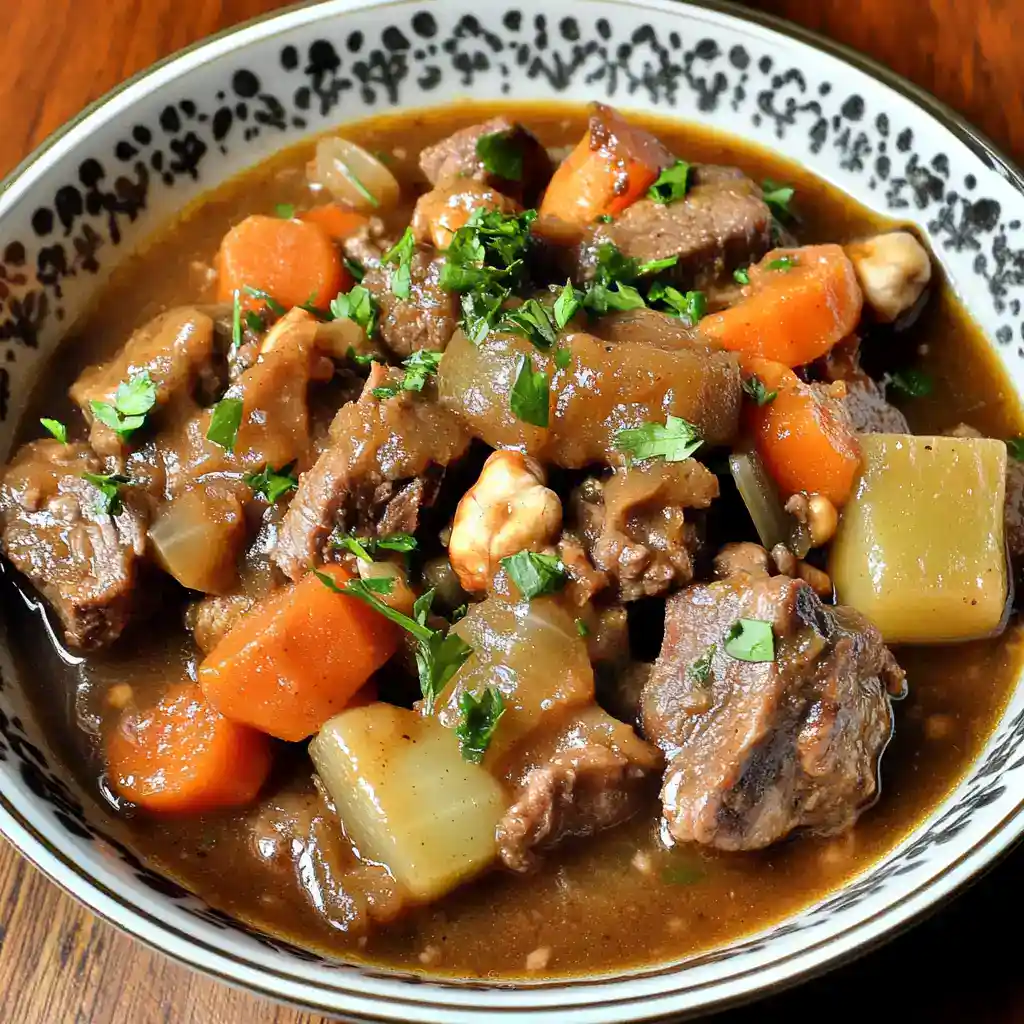
Tender, slow-simmered beef and carrot stew with potatoes, diced tomatoes, and thyme in a rich beef broth — classic cold-weather comfort food that gets better as it simmers.
Prep Time: 15 minutes | Cook Time: 2 hours | Total Time: 2 hours 15 minutes | Servings: 4
Ingredients
- 1 lb beef stew meat (chuck), cubed
- 2 tbsp olive oil
- 1 onion, chopped
- 3 cloves garlic, minced
- 4 carrots, peeled and sliced into 1/2-inch coins
- 2 potatoes, diced into 1-inch pieces
- 1 can (14 oz) diced tomatoes with liquid
- 4 cups beef broth
- 1 tsp dried thyme
- Salt and pepper, to taste
Instructions
- Heat olive oil in a large pot or Dutch oven over medium-high heat. Pat beef dry and brown in batches without crowding, 2 to 3 minutes per side. Remove and set aside.
- In the same pot, add onion and garlic. Cook until translucent, 3 to 4 minutes, scraping up browned bits.
- Add sliced carrots and diced potatoes. Stir for 2 to 3 minutes to coat in aromatics.
- Return beef to pot. Add diced tomatoes, beef broth, thyme, salt, and pepper.
- Bring to a boil, then immediately reduce to low. Cover and simmer for 1.5 to 2 hours, stirring occasionally, until beef is fork-tender.
- Taste and adjust seasoning. Serve hot.
Nutrition Information (Per Serving)
- Calories: 370
- Carbohydrates: 32g
- Protein: 28g
- Fat: 14g
- Fiber: 5g
- Sodium: 720mg
- Vitamin A: 12,400 IU (248% DV)
- Iron: 3.8mg (21% DV)
- Potassium: 980mg (21% DV)
Note: Nutrition estimates are based on 4 servings. Values will vary based on the beef cut and broth brand used.
Notes
- Pat the beef dry before browning — surface moisture creates steam rather than sear.
- Brown in batches without crowding — crowded beef steams gray instead of developing a flavorful crust.
- Don’t drain the diced tomatoes — the liquid adds flavor and body to the broth.
- Keep the simmer gentle — small, occasional bubbles, not a rolling boil.
Storage Tips
- Refrigerator: Store in an airtight container for up to 4 days. Flavor improves overnight.
- Reheating: Warm on the stovetop over medium-low heat with a splash of broth to loosen.
- Freezer: Freeze in portions for up to 3 months. Thaw overnight in the fridge before reheating.
- The stew thickens in the fridge — always add a splash of liquid when reheating.
Serving Suggestions
- With thick slices of crusty bread or dinner rolls for soaking up the broth
- Over buttered egg noodles for a heartier, more filling meal
- With a simple green salad for a light counterpoint to the richness
- With a glass of red wine — the same you’d use in the wine variation
Mix It Up (Recipe Variations)
Red Wine: Add 1 cup dry red wine after browning beef; reduce by half before adding broth.
Herb-Rich: Add a bay leaf, fresh rosemary, and thyme sprigs; remove before serving.
Parsnip: Replace one potato with two diced parsnips for a sweeter, more complex root vegetable base.
Guinness: Replace 1 cup broth with dark stout for an Irish-style stew with a malty, darker broth.
What Makes This Recipe Special
The four carrots in this beef and carrot stew aren’t incidental — they’re structural. As the carrots simmer for 1.5 to 2 hours, they release their natural sugars into the broth, gradually sweetening and enriching the liquid in a way that raw carrot juice or tomato sweetness alone can’t replicate. This slow caramelization in the broth creates a background sweetness that rounds out the savory beef and thyme and produces the characteristic depth of a properly simmered stew. Combined with the collagen from the chuck meat converting to gelatin, the result is a broth that’s naturally thickened, naturally sweetened, and deeply satisfying without any added starches or cream.
