
Why does braised chicken taste so much better than roasted chicken? I’ve thought about this a lot, and I think the answer is the sauce — the way bone-in chicken thighs slowly release their juices into the tomatoes and bell peppers, creating something that’s greater than any individual component. My first taste of chicken cacciatore was at a friend’s grandmother’s house when I was twenty-two, and I spent years trying to recreate it in my own kitchen. The olives were what I kept forgetting — and once I added them back in, everything finally clicked. That briny, slightly bitter note against the sweet peppers and rich tomato sauce is what makes this dish taste so completely Italian.
Here’s the Thing About This Recipe
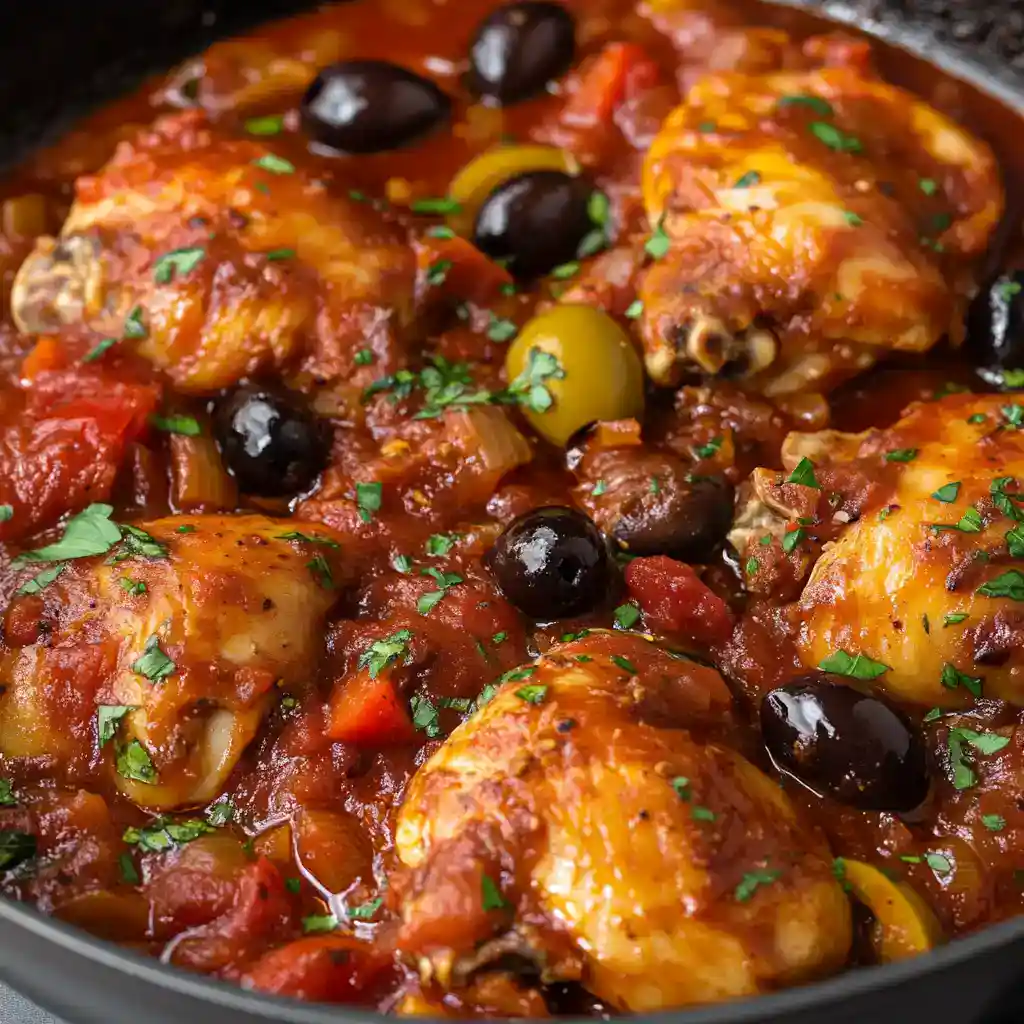
What makes this chicken cacciatore with olives work where other braised chicken dishes feel heavy or one-dimensional is the layered base of aromatics that builds before the chicken ever goes back in the pan. The onion, garlic, and bell peppers create a sweet, fragrant foundation; the tomatoes add acid and body; and the olives added at the end contribute brininess that cuts through the richness without overwhelming the other flavors. Around here, we’ve figured out that bone-in, skin-on chicken thighs are non-negotiable for this recipe — the bone enriches the broth, the fat from the skin bastes the meat throughout the braise, and thighs stay moist through 30 to 35 minutes of simmering where breast meat would dry out completely. It’s honestly that simple.
What You’ll Need (And My Shopping Tips)
Bone-in, skin-on chicken thighs are the cut that makes chicken cacciatore what it is. The bone adds collagen and flavor to the braising liquid, and the skin, when properly browned before braising, adds richness and a pleasant texture. Chicken cacciatore — which translates to “hunter’s chicken” in Italian — traditionally used whatever protein was available to hunters, but chicken thighs became the standard because their fat and collagen create the best braised result. Don’t substitute breasts — they will be dry and fibrous after 30 minutes in simmering liquid.
For the black olives, pitted Kalamata olives produce the best flavor — they’re tangier and more complex than regular canned black olives, with a meaty texture that holds up to the braise without disappearing. Standard canned black olives work in a pinch but lack the sharpness that makes the olive element so important to the dish’s overall balance. I learned this the hard way after using canned olives and wondering why the recipe felt slightly flat (happens more than I’d like to admit that I take shortcuts on the olives and immediately regret it).
Bell peppers — using one red and one yellow rather than two of the same color is worth the small extra effort. Red peppers are sweeter, yellow peppers have a slightly tangy note, and together they create a more layered vegetable flavor in the sauce than two identical peppers would. Slice them into strips about 1/4 inch wide so they soften properly during the simmer.
Dried oregano and basil together are the herb pairing that signals Italian braised dishes immediately — oregano adds a slightly peppery, earthy note and basil adds the floral sweetness that makes the tomato sauce taste distinctly Italian. If you have fresh basil, add it at the end of cooking rather than with the dried oregano, which can go in with the tomatoes.
Let’s Make This Together
Season the chicken thighs on both sides with salt and pepper. Heat olive oil in a large, deep skillet or Dutch oven over medium-high heat. Add the chicken skin-side down and let it sear undisturbed for 4 to 5 minutes until the skin is deeply golden and releases easily from the pan. Flip and sear the other side for 3 minutes. Here’s where I used to rush — I’d flip too early and the skin would tear and stick. Let it release naturally. Remove the chicken and set aside.
In the same pan with all the drippings, add the chopped onion and minced garlic over medium heat. Sauté for 3 to 4 minutes, scraping up the browned bits from the chicken. Add the sliced red and yellow bell peppers and cook for 4 to 5 minutes until they begin to soften and the edges start to caramelize slightly.
Pour in the diced tomatoes with their liquid and the chicken broth. Add the dried oregano and basil, stir to combine. Return the browned chicken thighs to the pan, nestling them into the sauce. Cover and simmer over low heat for 30 minutes until the chicken is fully cooked and tender.
Add the black olives and simmer uncovered for an additional 5 minutes. The sauce will reduce slightly and the olives will warm through and release their briny quality into the surrounding sauce. Taste and adjust seasoning. Scatter fresh parsley over the top and serve.
For another classic Italian-inspired braised chicken dish worth trying, check out this Slow-Cooked Steak with Mushrooms from Station Recipes — a deeply savory braise that uses the same low-and-slow technique in a completely different direction.
If This Happens, Don’t Panic
Chicken skin is soft instead of golden? The pan wasn’t hot enough when the chicken went in, or it was flipped too early. A properly seared skin releases naturally — if it sticks, it’s not ready. The skin will soften somewhat during the covered braise, but a well-seared start produces a much better final result.
Sauce is too thin after 30 minutes? Remove the lid and simmer uncovered for an additional 5 to 10 minutes to reduce. The combination of tomatoes and chicken drippings should concentrate into a fairly thick, glossy sauce — if it’s still thin after 10 minutes uncovered, increase the heat slightly to medium-low.
Chicken is dry? Breast meat was used instead of thighs, or the simmer was too vigorous. With bone-in thighs and a gentle simmer, dry chicken is very unusual. If using breasts, check at 20 minutes — they can overcook quickly.
Olives taste too salty? The olives weren’t rinsed before adding. Rinse canned olives thoroughly, or taste your Kalamata olives before adding — particularly salty batches can be briefly soaked in water for 10 minutes to reduce their saltiness.
Ways to Mix It Up
White Wine Chicken Cacciatore: Add 1/2 cup of dry white wine to the pan after the bell peppers and let it reduce by half before adding the tomatoes. The wine adds acidity and complexity that makes the sauce taste notably more sophisticated.
Mushroom Chicken Cacciatore: Add 8 oz of sliced cremini mushrooms with the bell peppers. The mushrooms add an earthy, meaty depth that complements the olive’s brininess beautifully and makes this an even more substantial one-pan meal.
Spicy Cacciatore: Add 1/4 to 1/2 teaspoon of crushed red pepper flakes with the herbs. The gentle heat builds through the braise and adds a warming note that’s characteristic of many Southern Italian variations.
Capers and Olives: Add 2 tablespoons of capers with the olives at the end. Capers bring a sharper, brinier punch than olives and create a sauce that tastes even more distinctly Mediterranean and complex.
What Makes This Recipe Special
Cacciatore derives from the Italian word for hunter — caccia — and the dish developed as a rustic Italian countryside preparation using whatever protein hunters brought home, braised with local vegetables, herbs, and whatever wine was available. The version that became most iconic uses chicken braised in a tomato-pepper-olive sauce, and it spread through Italian immigrant communities to become one of the most recognized Italian-American dishes of the 20th century. Learn more about the origins and regional variations of chicken cacciatore in Italian cooking and how it evolved through different regional traditions. This chicken cacciatore with olives honors the classic preparation — bone-in chicken, tomatoes, peppers, herbs, and briny olives — in a recipe that’s fast enough for a weeknight but impressive enough for company.
Questions I Always Get
Can I use boneless chicken thighs instead of bone-in for this cacciatore?
Boneless thighs work but produce a less rich sauce — the bone adds collagen and flavor to the braising liquid that boneless thighs can’t replicate. Reduce the cooking time to 20 to 25 minutes if using boneless. The result is still very good, just slightly less complex.
Can I make chicken cacciatore with olives ahead of time?
Yes — it actually improves overnight. The chicken continues to absorb the sauce and the flavors meld further. Cool completely, refrigerate for up to 3 days, and reheat covered on the stovetop over low heat with a splash of broth if needed.
Is this chicken cacciatore recipe beginner-friendly?
The technique is very approachable — brown chicken, build sauce in the same pan, return chicken and simmer. The most important skill is letting the chicken sear properly without rushing it. If you can brown chicken and simmer a sauce, you can make excellent cacciatore.
What’s the best pasta to serve with chicken cacciatore?
Pappardelle or tagliatelle — wide, flat pasta that holds the chunky sauce well. Rigatoni and penne are also good choices because the sauce gets inside the tubes. Avoid thin pasta like spaghetti or angel hair, which gets lost in the chunky vegetable and chicken pieces.
Can I freeze chicken cacciatore with olives?
Yes — freeze without pasta for up to 3 months. Olives can become slightly softer in texture after freezing but the flavor holds well. Thaw overnight in the fridge and reheat covered on the stovetop. Add fresh parsley after reheating for brightness.
Why add the olives at the end instead of the beginning?
Olives braised for the full cooking time become overly soft, lose their texture, and their brininess becomes too dominant in the sauce. Adding them in the last 5 minutes preserves their texture, keeps their flavor distinct rather than fully absorbed into the sauce, and allows their saltiness to season the dish gently rather than overwhelm it.
One Last Thing
Chicken cacciatore with olives is one of those dishes that tastes deeply traditional and carefully crafted even though the technique is genuinely accessible. The combination of browned chicken, sweet peppers, tomatoes, and briny olives in one pan produces something that feels like real Italian cooking — not complicated, not fussy, just honest ingredients treated well. Make it on a Sunday afternoon and serve it over pappardelle with crusty bread alongside. You’ve got this.
Print
Chicken Cacciatore with Olives
Description
Tender braised chicken cacciatore with olives — bone-in thighs simmered with bell peppers, tomatoes, oregano, and black olives in a rich Italian-style sauce. Classic Sunday comfort ready in under an hour.
Prep Time: 10 minutes | Cook Time: 45 minutes | Total Time: 55 minutes | Servings: 4
Ingredients
- 2 lbs chicken thighs, bone-in and skin-on
- 1 tsp salt
- 1/2 tsp black pepper
- 2 tbsp olive oil
- 1 onion, chopped
- 3 cloves garlic, minced
- 1 red bell pepper, sliced into strips
- 1 yellow bell pepper, sliced into strips
- 1 can (14 oz) diced tomatoes with liquid
- 1/2 cup chicken broth
- 1 tsp dried oregano
- 1 tsp dried basil
- 1/2 cup pitted black olives (Kalamata preferred)
- Fresh parsley, chopped, for garnish
Instructions
- Season chicken thighs on both sides with salt and pepper.
- Heat olive oil in a large, deep skillet over medium-high heat. Sear chicken skin-side down for 4 to 5 minutes until deeply golden, then flip and sear 3 minutes. Remove and set aside.
- In the same pan, add onion and garlic. Sauté 3 to 4 minutes, scraping up browned bits.
- Add sliced bell peppers. Cook 4 to 5 minutes until beginning to soften.
- Pour in diced tomatoes, chicken broth, oregano, and basil. Stir to combine.
- Return chicken to the skillet, nestling into the sauce. Cover and simmer over low heat for 30 minutes.
- Add black olives and simmer uncovered for 5 more minutes.
- Taste and adjust seasoning. Garnish with fresh parsley and serve hot.
Nutrition Information (Per Serving)
- Calories: 420
- Carbohydrates: 14g
- Protein: 36g
- Fat: 24g
- Fiber: 4g
- Sodium: 780mg
- Vitamin C: 90mg (100% DV)
- Iron: 3.2mg (18% DV)
Note: Nutrition estimates are based on 4 servings without pasta or bread. Values will vary based on the chicken size and olive brand used.
Notes
- Let the chicken release naturally from the pan before flipping — forced early flipping tears the skin.
- Bone-in, skin-on thighs are essential — boneless breast will dry out, and boneless thighs produce a less rich sauce.
- Add olives only in the last 5 minutes — extended braising makes them soft and too dominant in the sauce.
- Kalamata olives produce a noticeably better result than standard canned black olives.
Storage Tips
- Refrigerator: Store in an airtight container for up to 3 days. Flavor improves overnight.
- Reheating: Warm covered on the stovetop over low heat with a splash of broth if needed.
- Freezer: Freeze without pasta for up to 3 months. Thaw overnight in the fridge.
- Add fresh parsley only when serving — never before storing.
Serving Suggestions
- Over wide pappardelle or rigatoni pasta
- With crusty Italian bread for soaking up the sauce
- Over soft polenta for a heartier, more rustic presentation
- With a simple arugula salad dressed with lemon and olive oil alongside
Mix It Up (Recipe Variations)
White Wine: Add 1/2 cup dry white wine after the peppers; reduce by half before adding tomatoes.
Mushroom: Add sliced cremini mushrooms with the bell peppers for earthy depth.
Spicy: Add crushed red pepper flakes with the herbs for a Southern Italian heat.
Capers and Olives: Add 2 tbsp capers with the olives for a sharper, more intensely briny finish.
What Makes This Recipe Special
Searing the chicken thighs in olive oil before building the sauce creates two essential elements simultaneously: a deeply golden skin that provides textural contrast and rendered fat, and the fond — the caramelized drippings left in the pan — that forms the savory foundation of the entire sauce. When the onions, garlic, and bell peppers are added to that fond-coated pan and cooked down, they absorb those concentrated chicken and olive oil flavors from the very start rather than simply sitting in an unbasted sauce. This is why cacciatore made in a single pan tastes fundamentally richer and more integrated than a version where the sauce is built separately and the chicken is added to it — the flavors are intertwined from the first moment of cooking.
