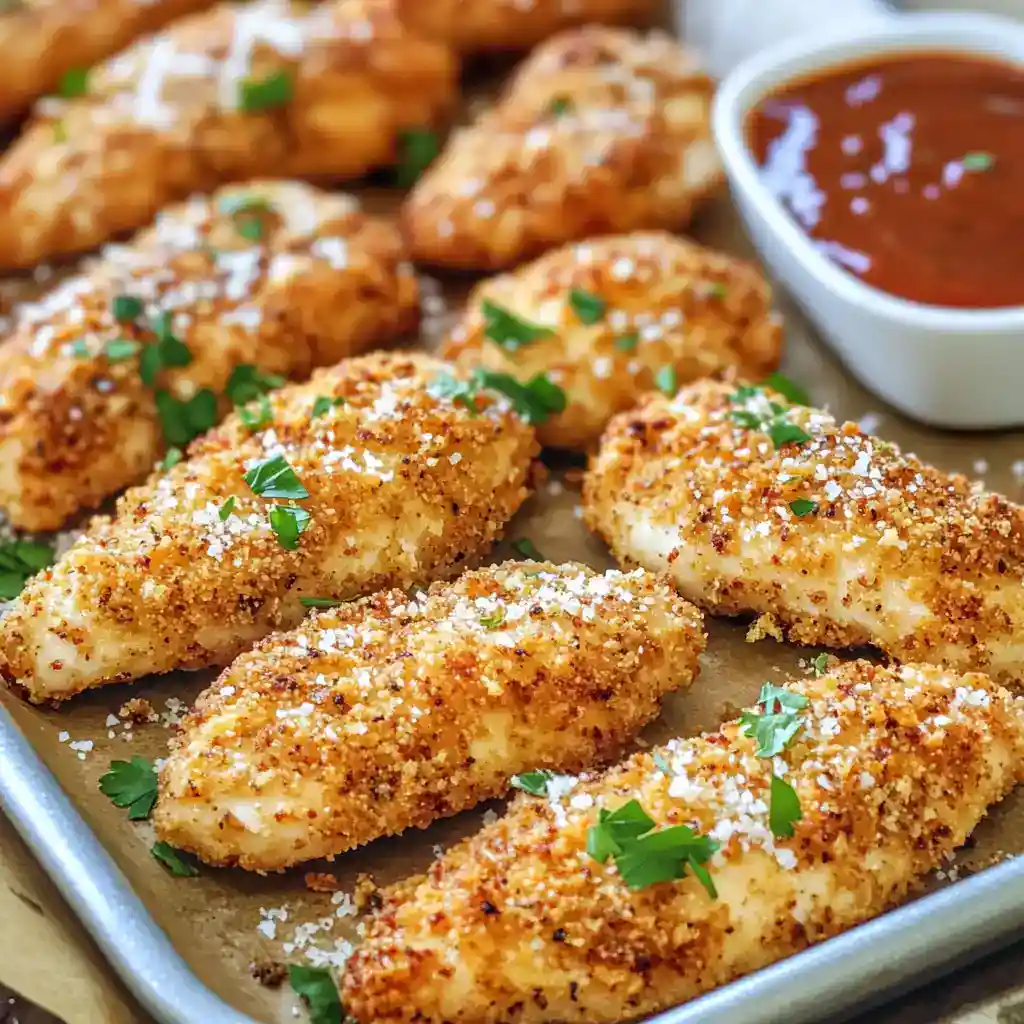
Ever wonder why homemade chicken tenders never seem as crispy as the fried ones from restaurants? I used to think getting that perfect golden crunch required a deep fryer until I discovered this foolproof baked chicken tenders recipe. Now I make these every week, and honestly, my kids think I’m some kind of kitchen wizard (and they have no idea these are way healthier than the fast-food version they used to beg for at drive-throughs).
Here’s the Thing About This Recipe
The secret to crispy baked chicken tenders isn’t drowning them in oil or using some fancy air fryer. What makes this work is the double coating technique with eggs and a perfectly seasoned breadcrumb mixture loaded with Parmesan cheese, which creates that restaurant-quality crunch in a regular oven. I learned the hard way that most baked chicken recipes end up soggy and disappointing because they skip crucial steps. This version takes about 30 minutes total, feeds a family of four easily, and makes your kitchen smell like the best kind of comfort food. It’s honestly that simple—no special equipment needed, just a baking sheet and ingredients you probably already have.
What You’ll Need (And My Shopping Tips)
Good chicken tenders are worth grabbing from the fresh meat section—look for ones that are roughly the same size so they cook evenly (I learned this after serving half-raw, half-overcooked tenders more times than I’d like to admit). Don’t cheap out on your breadcrumbs either; panko breadcrumbs create extra crunch, but regular Italian-style breadcrumbs work great too if that’s what you have.
The Parmesan cheese is your secret weapon here—it adds so much flavor and helps the coating get extra crispy and golden. I always use freshly grated Parmesan from the deli counter because it melts better and tastes way more intense than the pre-grated stuff, though the convenience of pre-shredded works fine when you’re in a rush. For the eggs, room temperature ones beat up fluffier and coat the chicken better, but cold eggs straight from the fridge work too.
Don’t skip the paprika—it adds that gorgeous color and subtle smokiness that makes these baked chicken tenders look like they came from a restaurant. If you want to learn more about chicken cuts and how to use them, there’s actually a huge variety beyond just tenders. Around here, I’ve discovered that organic chicken tenders are meatier and more tender, but standard tenders work perfectly fine and are way more budget-friendly.
Let’s Make This Together
Start by cranking your oven to 400°F and lining a baking sheet with parchment paper. Here’s where I used to mess up—don’t skip the parchment paper or your baked chicken tenders will stick like crazy and you’ll lose half the coating when you try to get them off the pan. If you don’t have parchment, spray the pan really well with cooking spray.
Now for the fun part—set up your breading station with two shallow dishes. In the first dish, beat those eggs until they’re smooth and slightly frothy. In the second dish, mix together your breadcrumbs, Parmesan, garlic powder, paprika, salt, and black pepper. Here’s my secret: I use a fork to really mix the breadcrumb mixture so the cheese and spices are evenly distributed. I learned this trick from my neighbor who used to work in a restaurant, and it makes such a difference in getting consistent flavor.
Here’s the technique that changed everything for me: pat your chicken tenders dry with paper towels first. Wet chicken won’t hold the coating well, and you’ll end up with sad, bare spots. Dip each tender into the beaten eggs, letting any excess drip off, then press it into the breadcrumb mixture on both sides. Really press it in—don’t be shy about it. The more coating you pack on, the crispier your baked chicken tenders will be.
Place the coated tenders on your prepared baking sheet, leaving a little space between each one so air can circulate. Don’t crowd them or they’ll steam instead of getting crispy. Slide them into your preheated oven and bake for 20-25 minutes, flipping them halfway through if you remember (I honestly forget half the time and they’re still great). You’ll know they’re done when the coating is golden brown and crispy, and the internal temperature hits 165°F if you’re checking with a thermometer.
Let them rest for just a couple minutes before serving so the juices redistribute and the coating sets up. The whole process takes maybe 10 minutes of hands-on work, then your oven does the rest. If you love easy weeknight dinners, these pair amazingly with homemade French fries for a complete meal kids actually eat.
When Things Go Sideways (And They Will)
Coating falling off in the oven? You probably didn’t press the breadcrumbs firmly enough or your chicken was too wet when you started. In reality, I’ve learned to really squeeze out any excess egg and pack on that breadcrumb coating like I’m building armor. If a few spots come off, just add extra sauce when serving and no one will notice.
Baked chicken tenders came out dry and tough? If this happens (and it will if you overcook them), don’t panic—chicken tenders cook fast, so start checking at 18 minutes instead of waiting the full 25. Every oven has its own personality, and thin tenders can go from perfect to overcooked in just a few minutes. I always set a timer for 20 minutes now and check from there.
Coating isn’t crispy enough? You might need to flip them halfway through baking, or your oven temperature might be off. Give them an extra 3-5 minutes and keep watching. Some ovens run cooler than others, so trust your eyes—if they’re pale instead of golden, they need more time. Every baking sheet conducts heat differently too, so darker pans will crisp faster than shiny ones.
When I’m Feeling Creative
Around game days, I’ll make Buffalo Chicken Tenders by tossing the finished tenders in hot sauce and serving them with ranch or blue cheese dressing for dipping. When I’m feeling fancy, I create Herb-Crusted Chicken Tenders by adding a tablespoon of Italian seasoning and some lemon zest to the breadcrumb mixture for a brighter, fresher flavor.
For my friends who need gluten-free options, I’ve successfully made these with gluten-free breadcrumbs or even crushed cornflakes, which actually get super crispy and add a slight sweetness. The spicy version is as easy as adding a teaspoon of cayenne pepper to the coating mixture—my husband loves these with extra heat. If you want them extra indulgent, try Parmesan-Ranch Tenders by mixing a packet of ranch seasoning into the breadcrumbs.
What Makes This Recipe Special
This recipe creates crispy baked chicken tenders through a combination of techniques that mimic deep frying without the mess and excess oil. The Parmesan cheese in the coating doesn’t just add flavor—it actually helps create that golden-brown crust because the cheese browns beautifully in high heat. The technique of using beaten eggs as a binding agent creates a tacky surface that holds breadcrumbs better than milk or buttermilk alone.
What sets this apart from other baked chicken recipes is the high oven temperature combined with the cheese-enriched coating, which creates real crispiness instead of just a dry, cardboard-like texture. The science of breading and frying shows that proper coating technique is crucial for texture, and we’re applying those same principles without the deep fryer. I’ve discovered through making these countless times that pressing the coating firmly onto the chicken and baking at 400°F creates the perfect balance of crispy exterior and juicy interior.
Things People Ask Me About This Recipe
Can I make these baked chicken tenders ahead of time?
You can bread them ahead and refrigerate for up to 4 hours before baking, which actually helps the coating stick better. Just don’t bake them until you’re ready to eat—reheated chicken tenders are never as crispy as fresh ones, though they’re still pretty good.
What’s the best dipping sauce for homemade chicken tenders?
Honey mustard is my family’s favorite, but ranch, barbecue sauce, buffalo sauce, or even ketchup all work great. I usually put out a few options and let everyone choose their own adventure.
Can I use chicken breast instead of tenders for this recipe?
Totally! Just slice chicken breasts into strips about the same size as tenders. They might need an extra 5 minutes in the oven since they’re thicker, so check the internal temperature to be sure.
How do I know when the chicken tenders are fully cooked?
The coating should be golden brown and crispy, and the internal temperature should hit 165°F on a meat thermometer. If you don’t have a thermometer, cut into the thickest one—the meat should be white all the way through with no pink, and the juices should run clear.
Are these baked chicken tenders kid-friendly?
These are insanely kid-friendly! They’re basically homemade chicken nuggets in tender form. My kids eat these without complaint, which is saying something. The mild seasoning works for picky eaters, but you can reduce the garlic powder if your kids are super sensitive.
What’s the best way to reheat leftover chicken tenders?
Reheat them in a 375°F oven for about 10 minutes to get the coating crispy again. Microwaving makes them soggy, and nobody wants that. They’ll never be quite as crispy as fresh, but the oven method gets pretty close.
Before You Head to the Kitchen
I couldn’t resist sharing this because baked chicken tenders are one of those recipes that makes weeknight dinners so much easier and healthier without sacrificing the crispy, delicious texture everyone craves. The best part is watching your family devour these and ask for seconds, knowing you made something way better than takeout. Trust me on this one—once you nail this recipe, you’ll never buy frozen chicken tenders again.
Print
Baked Chicken Tenders
Description