
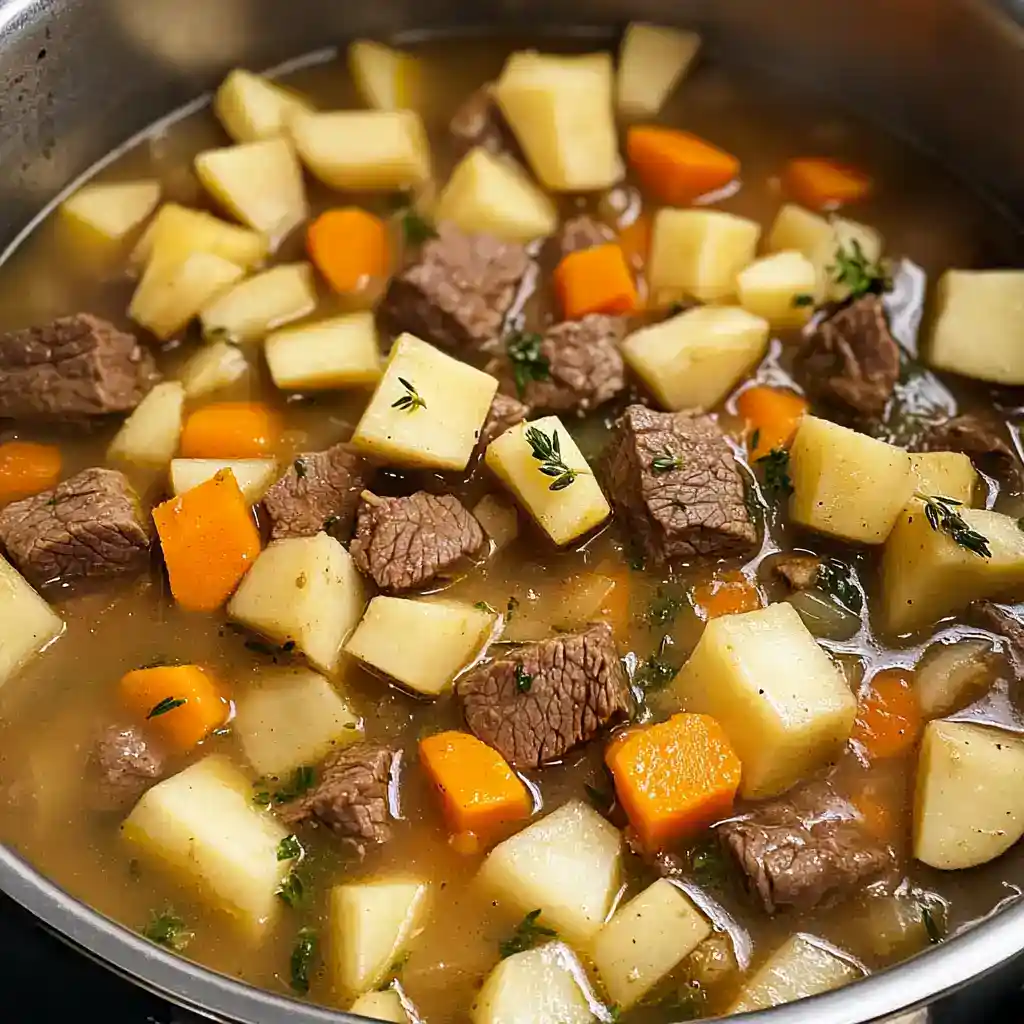
Have you ever tasted something that made you understand why people have been cooking it for centuries? That’s beef and parsnip soup — one of those dishes that feels ancient and elemental in the best possible way. The first time I made this, I was skeptical about parsnips. I’d always thought of them as pale, boring carrots. But slow-simmered in beef broth with herbs, parsnips transform into something sweet, nutty, and genuinely special. My dad, who is particular about his soups, finished his bowl and asked for the recipe. From him, that’s basically a standing ovation.
Here’s the Thing About This Recipe
What makes this beef and parsnip soup work where other root vegetable soups can taste muddy or one-dimensional is the parsnips themselves — they have a sweet, slightly spicy quality that carrots can’t match, and they become incredibly tender during the long simmer without falling apart completely. Around here, we’ve figured out that the combination of thyme and rosemary is the perfect herb pairing for beef and parsnips: thyme adds earthy depth, rosemary brings a piney, aromatic note, and together they create a warmth that makes the soup taste like something you’d get at a farmhouse table in the countryside. The long, gentle simmer is what transforms tough stew meat into fork-tender pieces and allows the parsnips to release their natural sweetness into the broth. It’s honestly that simple.
What You’ll Need (And My Shopping Tips)
Beef stew meat from the chuck section is the right cut for this beef and parsnip soup — it has the marbling and connective tissue that breaks down beautifully over a long braise, creating tender meat and a naturally rich broth. Chuck beef cubed into 1-inch pieces is what most stores sell as “beef stew meat,” and it’s perfect here. Lean cuts like round stay tough and dry no matter how long you simmer them.
Parsnips should be firm, smooth-skinned, and creamy white. Small to medium parsnips (about the size of a large carrot) are sweeter and more tender than very large ones, which can have a woody core. Peel thoroughly — the skin is tough and slightly bitter — and chop into 1-inch pieces so they cook evenly with the beef. Fresh parsnips are essential for the sweet, nutty result. I’ve used parsnips that sat in the crisper for two weeks and the flavor was noticeably sharper and less sweet (happens more than I’d like to admit that I use old vegetables and wonder why the dish tastes off).
Beef broth should be good quality — the soup is simple enough that weak broth produces a noticeably flat result. Taste your broth before using it. If it’s bland from the container, the soup will be bland. Better Than Bouillon beef base or homemade stock are both excellent.
Dried thyme and rosemary together create the herb backbone of this soup — thyme adds earthiness, rosemary adds aromatic depth. If you have fresh herbs, add them in the last 20 minutes of cooking to preserve their brightness. A bay leaf added with the broth also deepens the flavor beautifully.
Let’s Make This Together
Heat olive oil in a large pot or Dutch oven over medium-high heat. Pat the beef cubes dry with a paper towel — wet beef steams instead of browns. Brown the beef in batches without crowding the pot, 2 to 3 minutes per side, until each piece has a good sear. Here’s where the flavor foundation starts: proper browning creates fond (browned bits) on the bottom of the pot that becomes part of the broth. Gray, steamed beef contributes significantly less depth.
Remove the beef and set aside. Add the chopped onion and minced garlic to the pot with all the drippings. Cook for about 3 to 4 minutes until the onion is translucent, scraping up the browned bits from the bottom.
Add the chopped parsnips and carrots and cook for 5 minutes, stirring occasionally. This brief sauté begins to caramelize the vegetables slightly and releases their natural sugars.
Pour in the beef broth and return the beef to the pot. Add the dried thyme, rosemary, salt, and pepper. Bring to a boil, then immediately reduce heat to low. Cover and simmer gently for about 1 hour, stirring occasionally, until the beef is fork-tender and the parsnips are completely soft.
Taste and adjust salt and pepper before serving. The long simmer concentrates the flavors, so you may need less additional seasoning than you expect.
For another excellent root vegetable soup in the same tradition, check out this Beef and Turnip Stew from Station Recipes — a close cousin that explores a different root vegetable with the same slow-braise technique.
If This Happens, Don’t Panic
Beef is tough after 1 hour? The cut was too lean or the heat was too high. Chuck needs a gentle simmer — small bubbles breaking the surface, not a rolling boil. Drop to the lowest heat setting and give it another 30 minutes. The beef should pull apart easily with a fork when ready.
Parsnips taste bitter? They were old, very large, or not peeled completely. Fresh, small to medium parsnips are sweetest. Peel deeply to remove all the skin, which can be bitter. A small pinch of sugar can help balance residual bitterness.
Broth is too thin? Simmer uncovered for 10 to 15 minutes to reduce and concentrate. The vegetables should naturally thicken the broth slightly as they cook down. Mashing a few parsnip pieces against the side of the pot and stirring them back in also helps.
Soup tastes flat? The beef wasn’t browned properly, or the broth quality is low. Add a small splash of Worcestershire sauce or a squeeze of lemon juice to brighten. Fresh herbs stirred in at the end also help.
Ways to Mix It Up
Creamy Beef and Parsnip Soup: Use an immersion blender to partially blend the soup, leaving some chunks for texture. Stir in 1/2 cup of heavy cream in the last 5 minutes. The result is richer and more velvety — genuinely restaurant-quality.
Bacon Beef and Parsnip Soup: Cook 4 slices of chopped bacon in the pot first, remove, and brown the beef in the bacon fat. Add the cooked bacon back with the broth. The smokiness adds a dimension that makes this feel more complex.
Herbed Beef and Parsnip Soup: Add a bay leaf, a sprig of fresh thyme, and a sprig of fresh rosemary with the broth. Remove before serving. The additional herbs create a more aromatic, layered soup.
Barley Beef and Parsnip Soup: Add 1/2 cup of pearl barley with the broth. The barley absorbs the beef flavor and adds body and texture that makes this heartier and more filling.
What Makes This Recipe Special
Parsnips have been cultivated in Europe for over 2,000 years and were a staple root vegetable long before potatoes arrived from the New World. Beef and parsnip soup in various forms appears across Northern European cooking traditions — particularly in British, Irish, and Scandinavian cuisines — as one of the most fundamental cold-weather dishes. The combination developed out of practicality: inexpensive ingredients slowly simmered into something warming and sustaining. Learn more about the history of chuck beef and how this working-cattle cut became central to soups and stews worldwide. This beef and parsnip soup connects to that long tradition — honest ingredients, patient technique, and a result that’s been feeding people well for generations.
Questions I Always Get
What do parsnips taste like in this soup?
Slow-cooked parsnips become sweet, nutty, and slightly earthy — they taste like a sweeter, more aromatic carrot with a hint of celery. They’re completely different from their sharp, raw state and genuinely delicious in soup.
Can I use carrots instead of parsnips?
You can, but the soup becomes a standard beef and vegetable soup rather than this specific parsnip version. Parsnips have a unique sweetness and nuttiness that makes this soup distinctive. Try a 50/50 mix if you’re hesitant about all parsnips.
Is this beef and parsnip soup recipe beginner-friendly?
Very — the technique is brown, add vegetables, add broth, simmer. The main skills are browning the beef in batches without crowding and keeping the heat low enough during the simmer. If you can do those two things, you’ll make excellent soup.
Can I make beef and parsnip soup in a slow cooker?
Yes — brown the beef and sauté the aromatics on the stovetop first, then transfer everything to the slow cooker and cook on low for 7 to 8 hours. The flavor is excellent and the beef becomes very tender.
How do I store and reheat beef and parsnip soup?
Refrigerate in an airtight container for up to 4 days. The soup improves overnight as the flavors meld. Reheat on the stovetop over medium heat, adding a splash of broth if it thickened too much. It freezes well for up to 3 months.
What can I serve with beef and parsnip soup?
Crusty bread for soaking up the broth is traditional and excellent. A simple green salad provides a light counterpoint. The soup itself is a complete meal with protein and vegetables already in the pot.
One Last Thing
Beef and parsnip soup is the kind of recipe that reminds you why simple, slow-cooked food has endured across centuries. The sweet parsnips, the tender beef, the herb-scented broth — it’s deeply satisfying in a way that feels both comforting and nourishing. Make it on a cold Sunday afternoon and eat well all week. You’ve got this.
Print
Beef and Parsnip Soup
Description
Sweet, earthy beef and parsnip soup with tender chuck beef, sweet parsnips, carrots, and herbs in a rich beef broth — winter comfort ready in about 90 minutes.
Prep Time: 15 minutes | Cook Time: 1 hour 15 minutes | Total Time: 1 hour 30 minutes | Servings: 6
Ingredients
- 1 lb beef stew meat (chuck), cubed into 1-inch pieces
- 2 parsnips, peeled and chopped into 1-inch pieces
- 1 onion, chopped
- 2 carrots, peeled and chopped into 1-inch pieces
- 2 cloves garlic, minced
- 6 cups beef broth
- 1 tsp dried thyme
- 1 tsp dried rosemary
- Salt and pepper, to taste
- 2 tbsp olive oil
Instructions
- Heat olive oil in a large pot over medium-high heat. Pat beef dry and brown in batches without crowding, 2 to 3 minutes per side. Remove and set aside.
- Add onion and garlic to the pot. Cook 3 to 4 minutes until onion is translucent, scraping up browned bits.
- Add parsnips and carrots. Cook 5 minutes, stirring occasionally.
- Pour in beef broth and return beef to pot. Add thyme, rosemary, salt, and pepper.
- Bring to a boil, then reduce heat to low. Cover and simmer for about 1 hour, stirring occasionally, until beef is fork-tender.
- Taste and adjust seasoning. Serve hot.
Nutrition Information (Per Serving)
- Calories: 240
- Carbohydrates: 16g
- Protein: 20g
- Fat: 10g
- Fiber: 4g
- Sodium: 680mg
- Vitamin A: 3,800 IU (76% DV)
- Vitamin C: 18mg (20% DV)
- Iron: 2.8mg (16% DV)
Note: Nutrition estimates are based on 6 servings. Values will vary based on the beef cut and broth brand used.
Notes
- Pat beef dry before browning — surface moisture creates steam instead of sear.
- Brown in batches without crowding — crowded beef turns gray instead of developing flavor.
- Use fresh parsnips — old parsnips can be bitter rather than sweet.
- Keep the simmer gentle — small bubbles, not a rolling boil.
Storage Tips
- Refrigerator: Store in an airtight container for up to 4 days. Flavor improves overnight.
- Reheating: Warm on the stovetop over medium heat with a splash of broth to loosen.
- Freezer: Freeze in portions for up to 3 months. Thaw overnight before reheating.
- The soup may thicken as it sits — add liquid when reheating.
Serving Suggestions
- With crusty bread or dinner rolls for soaking up the broth
- As a complete one-pot meal
- With a simple green salad for a balanced plate
- In deep bowls with extra fresh herbs on top
Mix It Up (Recipe Variations)
Creamy: Partially blend with an immersion blender; stir in heavy cream in the last 5 minutes.
Bacon: Cook chopped bacon first; brown beef in bacon fat and add bacon back with broth.
Herbed: Add a bay leaf and fresh herb sprigs; remove before serving.
Barley: Add pearl barley with the broth for extra body and heartiness.
What Makes This Recipe Special
Parsnips undergo a remarkable transformation during the hour-long simmer in beef and parsnip soup. Raw parsnips contain complex sugars and starches that taste sharp and vegetal, but extended cooking at gentle temperatures breaks down these compounds into simple sugars, releasing the parsnip’s natural sweetness while softening its structure completely. The result is a vegetable that tastes fundamentally different from its raw state — sweet, nutty, and aromatic rather than sharp and bitter. This is why parsnips work so beautifully in long-simmered soups and stews: they need time and low heat to fully convert their starches and reveal their true flavor potential, which happens perfectly during the same hour-long braise that tenderizes the beef.
