
Ever wonder why some lemon bars turn out perfectly tangy and creamy while others are either mouth-puckeringly sour or bland and boring? I used to think making classic lemon bars required some kind of pastry school precision until I discovered this foolproof recipe. Now I make these bright, sweet-tart treats for every potluck and bake sale, and honestly, they disappear faster than anything else I bring (which is pretty satisfying considering the first time I tried, I baked the crust way too long and it turned into a rock-hard base that nobody could bite through without breaking a tooth).
Here’s the Thing About This Recipe
What makes authentic lemon bars work so beautifully is the balance between a buttery, shortbread-style crust and a tangy-sweet lemon custard filling that sets perfectly without being rubbery or weeping. I learned the hard way that you can’t just dump lemon juice on any crust and call it done—the proportions of eggs, sugar, and lemon juice matter enormously for getting that signature texture. These classic American dessert bars use simple ingredients to create something that tastes way more impressive than the effort required. It’s honestly that simple once you understand the importance of not overbaking either layer, and no special pans or fancy equipment needed beyond a basic baking dish.
What You’ll Need (And My Shopping Tips)
Good fresh lemons are essential here—I grab bright yellow, firm lemons that feel heavy for their size because they’re juicier. Don’t cheap out on bottled lemon juice for this recipe because the flavor is noticeably different and lacks that bright, fresh zing (happens more than I’d like to admit when I convince myself it won’t matter and then regret it immediately after tasting). You’ll need about 2-3 medium lemons for both the juice and zest.
Unsalted butter should be softened to room temperature for the crust—I set mine out about 30 minutes before baking. Fresh eggs should also be room temperature for the filling because they incorporate more smoothly. Powdered sugar (also called confectioners’ sugar) is used in both the crust and for dusting the top—it dissolves easily and gives you that classic bakery look.
All-purpose flour works perfectly here—no need to overthink it with cake flour or anything fancy. Granulated white sugar is standard for the filling. I always zest my lemons before juicing them because it’s nearly impossible to zest a juiced lemon half. For more details on choosing and working with fresh lemons, check out this guide to citrus from Food Network.
Let’s Make This Together
Start by cranking your oven to 350°F and greasing a 9×9-inch baking pan thoroughly. Here’s where I used to mess up—I’d barely grease it and the bars would stick when I tried to cut them. Use butter or baking spray and get those corners really well, or line the pan with parchment paper for foolproof removal.
Make the crust first: In a mixing bowl, combine 1 cup flour, 1/2 cup powdered sugar, and the softened butter. Mix with a fork or your hands until it looks like coarse crumbs and holds together when squeezed. The mixture should be crumbly but not dry. Press this firmly and evenly into the bottom of your prepared pan—I use the bottom of a measuring cup to pack it down uniformly.
Slide into the oven and bake for 20 minutes until it’s set and just barely starting to turn golden at the edges. Don’t overbake or it’ll be too hard and dark. While the crust bakes, make your filling so everything’s ready to go.
In another bowl, whisk together the eggs and granulated sugar until well combined and slightly lighter in color. Add 2 tablespoons of flour (this helps the filling set properly), fresh lemon juice, and lemon zest. Here’s my secret: whisk vigorously for about a minute to make sure everything’s completely smooth with no flour lumps. The mixture should be pale yellow and smell incredibly lemony.
When the crust comes out of the oven, immediately pour the lemon filling over the hot crust. Don’t let the crust cool first—pouring the filling onto a warm crust helps everything bind together properly. I learned this trick from bakery owners who swear by the hot-crust method.
Return the pan to the oven and bake for another 20 minutes until the filling is set—it should no longer jiggle in the center when you gently shake the pan, though it might still look slightly soft. The edges will be set and possibly slightly puffed. Don’t be me—I used to overbake thinking they weren’t done, and ended up with rubbery, tough filling instead of that silky custard texture.
Let the bars cool completely in the pan on a wire rack. This takes at least 2 hours at room temperature, or you can speed it up by refrigerating for about an hour once they’ve cooled slightly. Once completely cool, dust generously with powdered sugar through a fine-mesh sieve for that classic bakery look.
Cut into squares with a sharp knife, wiping the blade clean between cuts for the prettiest bars. For another classic dessert bar that uses similar techniques, try these Chocolate Brownies that have the same easy bar cookie format.
If This Happens, Don’t Panic
Crust turned too dark or hard? You baked it too long or your oven runs hot. In reality, I’ve learned to pull the crust when it’s just set and barely starting to color. This is totally fixable next time—just watch it carefully and maybe reduce the temperature by 25°F if your oven runs hot.
Filling didn’t set and stayed liquid? Don’t panic—you didn’t bake it long enough, or you might have forgotten the 2 tablespoons of flour in the filling. If this happens (and it might), pop it back in the oven for another 5-10 minutes and check again. The flour is crucial for helping the custard set.
Bars stuck to the pan? You didn’t grease well enough or tried to cut them before they cooled completely. Always let them cool fully and use parchment paper for easy removal. I line my pan with parchment now with overhang on two sides—makes removal foolproof.
Filling tastes too sour or too sweet? Lemon bars are supposed to be tangy, but if they’re making your mouth pucker, add an extra tablespoon of sugar next time. If they’re too sweet, increase the lemon juice by a tablespoon.
When I’m Feeling Creative
Lime Bars: When I’m feeling tropical, I swap the lemon juice and zest for fresh lime. The flavor is slightly different but equally delicious—more floral and less sharp.
Meyer Lemon Bars: Use Meyer lemons instead of regular lemons for a sweeter, more aromatic version. Around winter when Meyer lemons are in season, I make these exclusively.
Lemon Blueberry Bars: Add 1/2 cup fresh blueberries scattered over the crust before pouring the lemon filling. The berries burst and create gorgeous purple streaks through the yellow filling.
Coconut Lemon Bars: Add 1/2 cup shredded coconut to the crust mixture for tropical flair. My aunt requests this version every single time.
Why This Works So Well
These lemon bars capture the essence of classic American dessert bars that became popular in the mid-20th century when lemon desserts were having a major moment in American baking. While the exact origin is debated, lemon bars as we know them likely emerged from home kitchens and community cookbooks in the 1960s, combining the traditional lemon curd concept with an easy bar cookie format. What sets homemade lemon bars apart from bakery versions is the fresh lemon flavor and control over sweetness—many commercial versions are either too sweet or use artificial lemon flavoring. The technique of baking the crust first ensures it stays crisp and doesn’t get soggy from the wet filling, while pouring the filling onto a hot crust creates proper adhesion between the layers. The history of lemon desserts shows how citrus-based sweets evolved from European lemon tarts to become an American baking staple.
Things People Ask Me About This Recipe
Can I make these lemon bars ahead of time?
Absolutely! They actually taste better the next day after flavors meld. Make them up to 2 days ahead, store covered in the refrigerator, and dust with powdered sugar right before serving. The sugar will dissolve if you dust too early, so wait until the last minute.
What if my lemons aren’t very juicy?
Roll them firmly on the counter before cutting, or microwave for 10-15 seconds to help release the juices. You need about 1/4 cup of juice, which is usually 2-3 lemons. In a pinch, you could supplement with a tiny bit of bottled lemon juice, but fresh is definitely better.
Can I use a different size pan?
This recipe is designed for 9×9 inches, which gives you nice thick bars. You could use an 8×8 for thicker bars (add 5 minutes to baking time) or a 9×13 for thinner bars (reduce baking time by 5 minutes).
Is this recipe beginner-friendly?
Totally. If you can mix ingredients and press dough into a pan, you’ve got this. There’s no tricky techniques or precise timing—just two simple layers that come together beautifully. My college roommate makes these and they turn out perfect every time.
Why do my lemon bars have a weird texture?
The most common issues are: overbaking (makes them rubbery), not letting them cool completely before cutting (makes them gummy), or forgetting the flour in the filling (makes them not set properly).
How do I get clean cuts?
Let the bars cool completely, use a sharp knife, and wipe it clean between each cut. Some people chill them first for even cleaner cuts, though room temperature bars taste better.
Why I Had to Share This
I couldn’t resist sharing this because lemon bars are one of those universally loved desserts that look impressive but are secretly easy to make, and they’re perfect for any occasion from summer picnics to winter holidays. The best baking days are when you pull these golden bars from the oven, watch them set perfectly, and serve them to people who think you spent hours making something fancy. You’ve totally got this.
Print
Lemon Bars
Description
Buttery shortbread crust topped with tangy-sweet lemon custard and dusted with powdered sugar—these easy lemon bars are the perfect balance of tart and sweet.
Prep Time: 15 minutes | Cook Time: 40 minutes | Cool Time: 2 hours | Total Time: 2 hours 55 minutes | Servings: 16 bars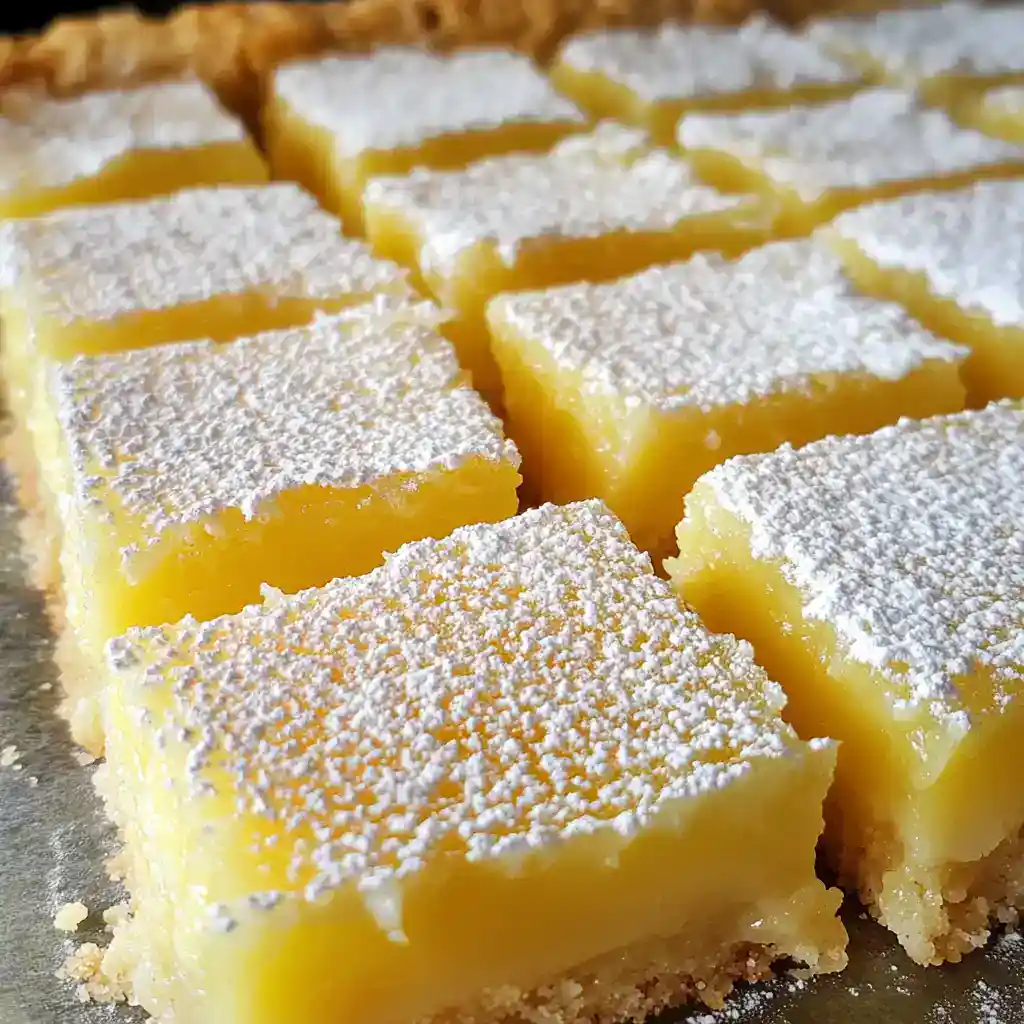
Ingredients
For the Crust:
- 1 cup all-purpose flour
- 1/2 cup powdered sugar (confectioners’ sugar)
- 1/2 cup unsalted butter, softened to room temperature
For the Lemon Filling:
- 2 large eggs, room temperature
- 1 cup granulated sugar
- 2 tablespoons all-purpose flour (essential for setting)
- 1/4 cup fresh lemon juice (from about 2–3 lemons)
- 1 tablespoon lemon zest (from about 1–2 lemons)
For Topping:
- Powdered sugar, for dusting
Instructions
- Crank your oven to 350°F and grease a 9×9-inch baking pan thoroughly with butter or baking spray. Get those corners really well, or line with parchment paper for foolproof removal.
- Make the crust: In a mixing bowl, combine 1 cup flour, 1/2 cup powdered sugar, and softened butter. Mix with a fork or your hands until the mixture is crumbly and holds together when squeezed. It should look like coarse sand.
- Press this mixture firmly and evenly into the bottom of your prepared pan. Use the bottom of a measuring cup to pack it down uniformly so it’s compact and even.
- Bake the crust for 20 minutes until it’s set and just barely starting to turn golden at the edges. Don’t overbake or it’ll be too hard and dark.
- While the crust bakes, make your filling: In a bowl, whisk together eggs and granulated sugar until well combined and slightly lighter in color—about 1 minute of vigorous whisking.
- Add 2 tablespoons flour, fresh lemon juice, and lemon zest to the egg mixture. Whisk thoroughly for about another minute until completely smooth with no flour lumps. The mixture should be pale yellow and smell amazing.
- When the crust comes out of the oven, immediately pour the lemon filling over the hot crust. Don’t let it cool first—the hot crust helps everything bind together.
- Return the pan to the oven and bake for an additional 20 minutes until the filling is set. It shouldn’t jiggle in the center when you gently shake the pan, though it might still look slightly soft. The edges may be slightly puffed.
- Remove from the oven and let cool completely in the pan on a wire rack. This takes at least 2 hours at room temperature, or refrigerate for about 1 hour once slightly cooled.
- Once completely cool, dust the top generously with powdered sugar through a fine-mesh sieve for that classic bakery look.
- Cut into 16 squares with a sharp knife, wiping the blade clean between cuts for the prettiest bars. Serve at room temperature or chilled.
Nutrition Information (Per Bar):
- Calories: 140
- Carbohydrates: 22g
- Protein: 2g
- Fat: 6g
- Fiber: 0.5g
- Sodium: 45mg
- Vitamin C: 8% DV
These lemon bars provide a burst of vitamin C from fresh lemons while the eggs add quality protein. Enjoy as a special treat!
Notes:
- Use fresh lemon juice and zest for the best flavor—bottled juice doesn’t taste the same.
- Zest lemons before juicing them—it’s nearly impossible to zest a juiced lemon.
- Room temperature butter and eggs work better for smooth mixing.
- Pour the filling onto the hot crust, not a cooled one, for proper adhesion.
- Don’t overbake the filling—it should be just set, not firm or rubbery.
- Let bars cool completely before cutting for clean slices.
- Dust with powdered sugar right before serving—it dissolves if done too early.
Storage Tips:
Store lemon bars covered in the refrigerator for up to 4 days. They actually taste better the next day after flavors meld. Don’t dust with powdered sugar until right before serving as it dissolves into the lemon layer over time. These freeze okay for up to 2 months wrapped tightly, though the texture changes slightly—best enjoyed fresh or refrigerated.
Serving Suggestions:
- Classic Style: Simply serve dusted with powdered sugar
- Tea Party: Cut into small squares for elegant afternoon tea service
- Garnished: Top each bar with a thin lemon slice or fresh berry
- Plated Dessert: Serve with a dollop of whipped cream and fresh mint
Mix It Up (Recipe Variations):
- Lime Bars: Replace lemon juice and zest with fresh lime for a tropical twist
- Meyer Lemon Bars: Use Meyer lemons for a sweeter, more aromatic version
- Lemon Blueberry Bars: Scatter 1/2 cup fresh blueberries over crust before adding filling
- Coconut Lemon Bars: Add 1/2 cup shredded coconut to the crust mixture
What Makes This Recipe Special:
These classic lemon bars use the traditional technique of baking the crust first to ensure it stays crisp and doesn’t get soggy from the wet filling. The method of pouring the custard onto a hot crust creates proper adhesion between layers while the small amount of flour in the filling helps it set to that perfect creamy texture without becoming rubbery. Fresh lemon juice and zest provide bright, authentic citrus flavor that bottled juice can’t replicate.
