
Ever wonder why most hummus flavors feel like variations on the same theme while some combinations make you rethink what’s possible? I used to think making portable kiwi hummus was just a weird internet trend until I discovered this foolproof recipe that actually works. Now my family requests this bright green, tangy-sweet spread for lunches and snacks, and I’m pretty sure my coworkers think I’ve lost my mind bringing neon green hummus to the office (if only they knew how many times I made bland, gritty hummus before learning the secret to creamy, smooth texture).
Here’s the Thing About This Recipe
What makes this portable kiwi hummus work is the unexpected combination of tart kiwi with creamy chickpeas—the fruit adds natural sweetness and vibrant color without making this taste like dessert. I learned the hard way that you can’t just throw any fruit into hummus and expect magic; kiwi’s tangy profile and softer texture blend seamlessly with traditional Middle Eastern flavors. This fusion snack brings together classic hummus technique with innovative fruit pairing for something that’s both familiar and completely surprising. It’s honestly that simple: good chickpeas, ripe kiwis, quality tahini, and a food processor that can blend everything silky smooth.
What You’ll Need (And My Shopping Tips)
Good canned chickpeas are worth rinsing thoroughly—look for brands with firm, plump chickpeas, not mushy ones falling apart in the can (I learned this after buying the cheapest brand three times and wondering why my hummus was grainy). You’ll need one 15-ounce can, which is the standard size.
For the star ingredient, grab ripe kiwis that give slightly when you press them but aren’t mushy or overly soft. You’ll need four medium kiwis, which sounds like a lot but they blend down significantly. Don’t cheap out on rock-hard kiwis that’ll never ripen properly—been there, done that, regretted it (happens more than I’d like to admit when I’m being impatient).
For the classic hummus base, you’ll need tahini (sesame seed paste—get the good stuff from the Middle Eastern section, not the separated, oil-slicked jar that’s been sitting on the shelf for years), fresh garlic, lemon juice, olive oil, and ground cumin. The quality of your tahini makes a huge difference in the final texture and flavor.
Fresh lemon juice is non-negotiable—the bottled stuff tastes flat and won’t give you that bright, tangy punch this needs. Salt and pepper round out the seasoning.
For serving, grab pita bread (I like the pocket kind for portable lunches) or vegetable sticks like carrots, celery, bell peppers, and cucumber. If you’re curious about the nutritional powerhouse that is the kiwi, Wikipedia has fascinating information about this fuzzy fruit native to China that’s now grown worldwide and packed with vitamin C.
Let’s Make This Together
Start by draining and rinsing your chickpeas thoroughly under cold water. Here’s where I used to mess up: I’d skip the rinsing and wonder why my hummus tasted metallic and weird from the canning liquid. Rinse until the water runs clear.
Peel your kiwis—I use a vegetable peeler or a small knife to remove the fuzzy skin—and chop them into chunks. The chunks don’t need to be perfect since you’re blending everything anyway.
In your food processor (a blender can work but a food processor gives better texture), combine the drained chickpeas, chopped kiwis, tahini, minced garlic (start with what the recipe calls for—you can always add more), lemon juice, olive oil, cumin, salt (I start with about 1/2 teaspoon), and pepper (about 1/4 teaspoon).
Now for the fun part—blend until completely smooth, scraping down the sides as needed to ensure even mixing. This takes longer than you think—probably 2-3 minutes of continuous processing. Here’s my secret: I let it run for a full minute, scrape down, let it run another minute, scrape down, and repeat until it’s silky smooth with no grainy texture.
Check the consistency. Traditional hummus should be creamy and spreadable, not thick like peanut butter or thin like soup. If your portable kiwi hummus is too thick, add water a tablespoon at a time (or more olive oil if you want it richer) and blend again until you reach the desired consistency. I learned this trick from my Lebanese friend who taught me that the right texture is crucial for good hummus.
Taste and adjust seasoning. You’ll probably need more salt, maybe more lemon juice for brightness, or another clove of garlic for punch. Don’t be shy—hummus needs generous seasoning to taste great.
Transfer the kiwi hummus to a portable container (I use small mason jars or those divided lunch containers with lids). The vibrant green color is absolutely stunning and makes this Instagram-worthy.
Garnish with thin kiwi slices arranged on top for presentation. If you’re looking for another creative hummus variation, try this Roasted Red Pepper Hummus that uses similar blending techniques.
Serve with pita bread cut into triangles or vegetable sticks for a delicious and unique snack on the go. This packs beautifully for lunches, picnics, or road trips (I learned this from my meal-prep obsessed neighbor who always has the most interesting lunch containers).
When Things Go Sideways (And They Will)
Hummus turned out grainy and not smooth? You didn’t blend it long enough, or your tahini was old and separated. In reality, I’ve learned to blend for at least 2-3 full minutes and to use fresh, well-stirred tahini. This is fixable by adding a bit more liquid and blending longer.
Tastes too sweet or fruit-forward? You probably used overripe kiwis or didn’t add enough salt and lemon juice to balance the sweetness. If this happens, add more lemon juice, salt, and a pinch more cumin to bring back that savory hummus flavor. This is totally fixable with seasoning adjustments.
Color turned brown instead of bright green? The kiwis were too ripe or you let it sit too long before storing. Kiwis oxidize like avocados—make this fresh and store it in an airtight container to preserve that gorgeous green color. Add a thin layer of olive oil on top to prevent browning.
Too thick and pasty? Add more liquid (water, lemon juice, or olive oil) a tablespoon at a time while blending. Hummus should be creamy and spreadable, not thick enough to stand a spoon in. Don’t panic—this is easily fixed.
Ways to Mix It Up
Spicy Kiwi Hummus: When I want some heat, I’ll add 1/4 teaspoon cayenne pepper or a pinch of red pepper flakes to the blend for a sweet-spicy combination that’s addictive.
Herb Kiwi Hummus: Add 1/4 cup fresh cilantro or mint leaves to the food processor for an even brighter, more herbaceous version. Around summer, this becomes my go-to for picnics.
Honey Kiwi Hummus: Drizzle 1 tablespoon of honey into the blend for a slightly sweeter version that works great as a fruit dip or dessert hummus.
Protein-Packed Kiwi Hummus: Add 2 tablespoons of Greek yogurt to the blend for extra creaminess and protein—perfect for post-workout snacks.
What Makes This Recipe Special
This portable kiwi hummus represents modern fusion cooking at its most creative—taking a traditional Middle Eastern staple and reimagining it with unexpected ingredients. Hummus has been made in the Levant region for centuries, traditionally with chickpeas, tahini, garlic, and lemon juice. The addition of fruit to hummus isn’t entirely unprecedented (dessert hummus with chocolate or sweet variations have become popular), but kiwi specifically brings something unique to the table. The fruit’s natural acidity complements the lemon juice rather than fighting it, while its soft texture blends seamlessly without adding graininess. The vibrant green color comes entirely from the kiwi—no food coloring needed—making this visually striking and totally natural. What makes this recipe particularly special for modern eating is its portability: packed in small containers with veggies or pita, it’s a complete, nutritious snack that travels well for lunches, picnics, road trips, or hiking. The combination of plant-based protein from chickpeas, healthy fats from tahini and olive oil, and vitamin C from kiwi creates a surprisingly balanced snack. The history of hummus shows it’s been consumed in various forms across the Middle East for centuries, proving that this ancient dish continues to evolve and adapt to new culinary ideas.
Things People Ask Me About This Recipe
Does this portable kiwi hummus really taste good, or is it just a gimmick?
It genuinely tastes good! The kiwi adds a subtle tangy-sweetness that complements the savory chickpeas without making it taste like dessert. It’s unexpected but balanced. If you’re skeptical, try a half batch first, but most people are pleasantly surprised.
How long does kiwi hummus stay fresh?
Store in an airtight container in the fridge for up to 4 days. Like guacamole, the color will start to brown after a day or two due to oxidation, but you can minimize this by pressing plastic wrap directly onto the surface or adding a thin layer of olive oil on top.
Can I use frozen kiwi instead of fresh?
You can, but thaw and drain them very well first. Frozen kiwi releases a lot of liquid when thawed, which can make your hummus too thin. Fresh kiwi gives better texture and flavor control.
Is this actually portable, or will it leak everywhere?
It’s very portable if you use the right container—mason jars with tight lids, those leak-proof lunch containers, or even squeeze bottles work great. The consistency is thick enough that it won’t slosh around, making it perfect for packing lunches.
Can I make this without a food processor?
A high-powered blender can work, though you might need to add more liquid to get it blending smoothly. An immersion blender is trickier but possible if you work in batches. A regular blender or food processor really is best for achieving that silky smooth texture.
What if my kids won’t eat green hummus?
Call it “superhero hummus” or “dinosaur dip” and let them help make it—kids are more likely to try foods they’ve helped prepare. The flavor is mild and slightly sweet, which most kids actually prefer over traditional garlicky hummus.
Before You Head to the Kitchen
I couldn’t resist sharing this portable kiwi hummus because it’s the recipe that taught me to stop being afraid of unusual food combinations. The best hummus moments are when someone takes a skeptical bite, their eyes widen with surprise, and they inevitably say “wait, this is actually really good!” You don’t need professional culinary training or fancy equipment—just good ingredients, a food processor, and the confidence to try something different.
Print
Portable Kiwi Hummus
Description
This vibrant portable kiwi hummus combines creamy chickpeas with tangy-sweet kiwi fruit for an unexpectedly delicious fusion snack that’s perfect for lunch boxes, picnics, and on-the-go eating—proving that traditional hummus can handle creative, fruity twists.
Prep Time: 10 minutes | Cook Time: 0 minutes | Total Time: 10 minutes | Servings: 8 (about 2 cups)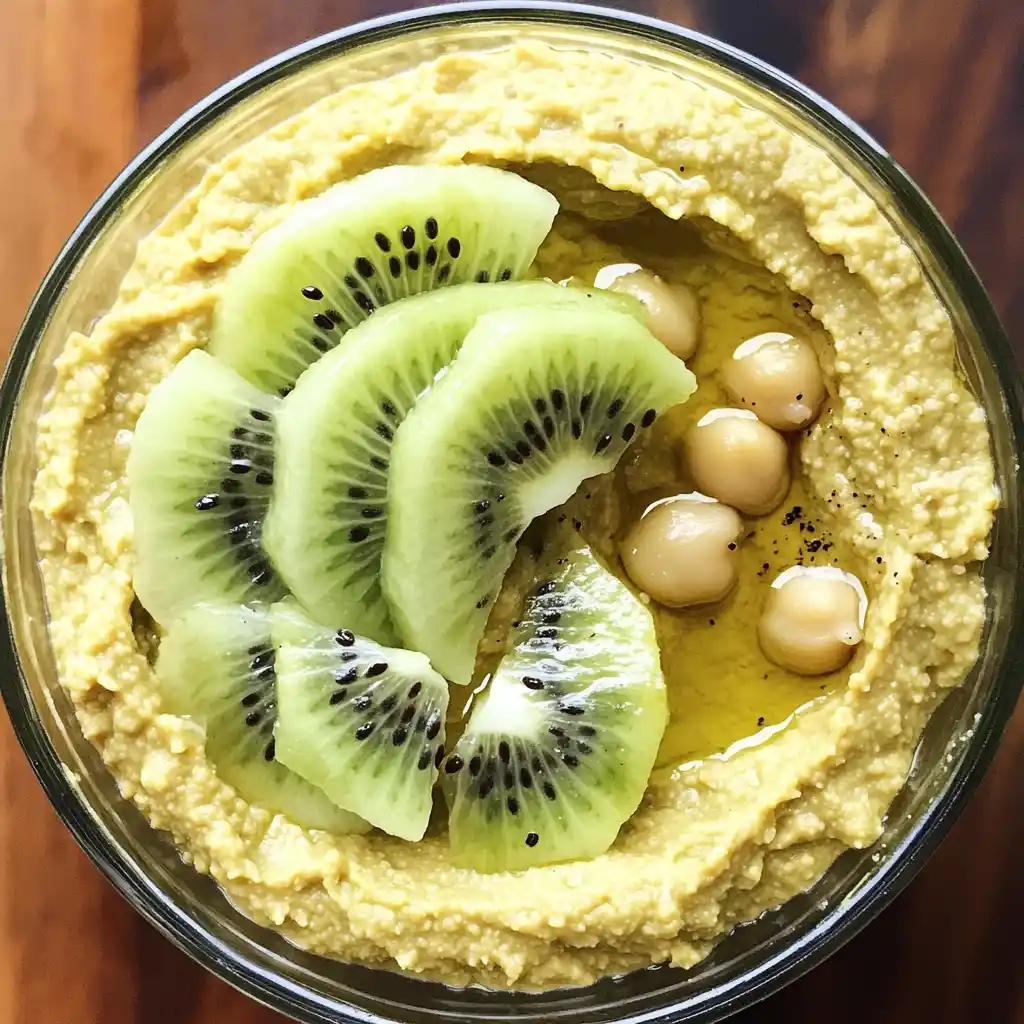
Ingredients
For the Kiwi Hummus:
- 15 oz canned chickpeas, drained and rinsed thoroughly (rinse until water runs clear)
- 4 medium kiwis, peeled and chopped (look for ripe but not mushy kiwis)
- 1/4 cup tahini (well-stirred—the good stuff from the Middle Eastern section)
- 2 cloves garlic, minced (adjust to taste—start here, add more if you love garlic)
- 3 tbsp fresh lemon juice (about 1 large lemon—bottled won’t cut it)
- 2 tbsp olive oil (plus more for drizzling on top)
- 1/2 tsp ground cumin
- Salt and pepper, to taste (start with 1/2 tsp salt, 1/4 tsp pepper)
For Serving:
- Kiwi slices, for garnish (makes it look Instagram-worthy)
- Pita bread, cut into triangles
- Vegetable sticks (carrots, celery, bell peppers, cucumber)
Instructions
- Drain and rinse your chickpeas thoroughly under cold water until the water runs clear. This removes that metallic canned taste and excess sodium.
- Peel your kiwis using a vegetable peeler or small knife to remove the fuzzy skin, then chop into chunks (they don’t need to be perfect since you’re blending).
- In a food processor, combine the rinsed chickpeas, chopped kiwis, tahini, minced garlic, lemon juice, olive oil, cumin, salt, and pepper.
- Blend for 2-3 minutes until completely smooth and creamy, scraping down the sides every 30-60 seconds to ensure even mixing. This takes longer than you think—be patient for that silky texture.
- Check the consistency. If the hummus is too thick and pasty, add water a tablespoon at a time (or more olive oil for richness) and blend again until you reach a creamy, spreadable consistency.
- Taste and adjust seasoning—you’ll probably need more salt, maybe more lemon juice for brightness, or another clove of garlic for punch. Hummus needs generous seasoning to shine.
- Transfer the vibrant green kiwi hummus to portable containers (small mason jars or divided lunch containers work great). For longer storage, drizzle a thin layer of olive oil on top to prevent browning.
- Garnish with thin kiwi slices arranged on top for beautiful presentation.
- Serve with pita bread triangles or vegetable sticks for a delicious, portable snack that travels well to work, school, picnics, or road trips.
Nutrition Information (Per Serving, 1/4 cup):
- Calories: 135
- Carbohydrates: 16g
- Protein: 5g
- Fat: 6g
- Fiber: 4g
- Sodium: 180mg
- Vitamin C: 45% DV
- Iron: 8% DV
- Folate: 15% DV
This portable kiwi hummus combines plant-based protein from chickpeas, healthy fats from tahini, and exceptional vitamin C from kiwi for a surprisingly balanced snack.
Notes:
- Rinse chickpeas thoroughly until water runs clear—this removes the metallic taste and improves texture.
- Blend for a full 2-3 minutes for silky smooth hummus—rushing this step leaves you with grainy texture.
- Use ripe but firm kiwis—overripe ones make the hummus too sweet and can cause browning.
- Fresh lemon juice is essential—bottled lemon juice tastes flat and won’t give the brightness you need.
- Store in airtight containers to preserve that gorgeous green color and prevent oxidation.
Storage Tips:
Store in an airtight container in the fridge for up to 4 days. The color will start to brown slightly after a day or two due to oxidation (like guacamole), but it’s still perfectly safe and tasty. To minimize browning, press plastic wrap directly onto the surface of the hummus or add a thin layer of olive oil on top before sealing. Don’t freeze this—the texture gets grainy and watery when thawed, and the vibrant color dulls significantly.
Serving Suggestions:
- Lunch Box Star: Pack in small containers with pita triangles and veggie sticks for a complete, portable lunch
- Party Platter: Serve in a bowl surrounded by colorful vegetables and pita chips for a conversation-starting appetizer
- Sandwich Spread: Use instead of mayo or mustard on wraps and sandwiches for a creamy, nutritious boost
- Breakfast Toast: Spread on whole grain toast topped with sliced tomatoes and cucumber for a savory breakfast
Mix It Up (Recipe Variations):
Spicy Kiwi Hummus: Add 1/4 teaspoon cayenne pepper or a pinch of red pepper flakes for a sweet-spicy combination that’s unexpectedly addictive.
Herb Kiwi Hummus: Blend in 1/4 cup fresh cilantro or mint leaves for an even brighter, more herbaceous version perfect for summer.
Honey Kiwi Hummus: Drizzle 1 tablespoon of honey into the blend for a slightly sweeter dessert hummus that works great as a fruit dip.
Greek Kiwi Hummus: Add 2 tablespoons of Greek yogurt for extra creaminess, tanginess, and protein—perfect for post-workout snacks.
What Makes This Recipe Special:
This portable kiwi hummus showcases creative fusion cooking that respects traditional Middle Eastern techniques while embracing unexpected modern ingredients. The natural acidity of kiwi complements rather than fights the lemon juice, while the fruit’s soft texture blends seamlessly for smooth, creamy results. The vibrant green color is entirely natural, making this visually striking without artificial additives.
