
Ever wonder why homemade empanadas taste so much better than frozen ones but seem impossibly complicated to make? I used to think crafting authentic vegetable empanadas required generations of Latin American cooking knowledge until I discovered this foolproof recipe. Now I make batches for freezing and pull them out whenever I need an impressive appetizer or quick dinner, and honestly, even my meat-loving husband requests these over traditional beef empanadas (which is saying something considering the first time I tried, my dough was so tough you could use it as a frisbee, and I nearly gave up on homemade empanadas forever).
Here’s the Thing About This Recipe
What makes authentic empanadas work so beautifully is the balance between flaky, tender pastry that’s sturdy enough to hold filling without breaking and a flavorful vegetable mixture that’s moist but not so wet it makes everything soggy. I learned the hard way that you can’t just stuff any dough with any filling and expect magic—the dough needs to be properly made with cold butter, and the filling needs to be cooked and cooled so excess moisture evaporates. These Latin American handheld pastries use simple vegetables and spices to create something way more satisfying than you’d expect from a meatless dish. It’s honestly that simple once you understand the importance of cold ingredients for the dough and properly seasoned filling, and no special equipment needed beyond basic kitchen tools.
What You’ll Need (And My Shopping Tips)
Good all-purpose flour is all you need for the dough—nothing fancy required. Cold unsalted butter is crucial here—I cut it into cubes and stick it back in the fridge until I’m ready to use it. Don’t cheap out on room-temperature butter because you need that cold fat to create flaky layers in the pastry (happens more than I’d like to admit when I forget to plan ahead and try to rush it). The butter should be straight from the refrigerator, firm and cold to the touch.
Fresh vegetables make a huge difference—crisp bell peppers, firm zucchini, and sweet corn create texture contrast that canned vegetables just can’t match. I grab whatever color bell pepper looks best at the store. Fresh garlic beats jarred every time for this savory filling. Cumin and chili powder are essential for that characteristic Latin American flavor—if your spices smell like nothing, replace them because old spices won’t give you that warmth and depth.
Shredded cheddar cheese adds creaminess and helps bind the filling, though you could use Monterey Jack or a Mexican cheese blend. I always make extra filling because it’s delicious on its own and can be used for tacos or quesadillas. For more details on empanada traditions across Latin America, check out this guide to empanadas from Food Network.
Let’s Make This Together
Start with the dough because it needs to chill. In a large bowl, whisk together flour and salt. Add those cold butter cubes and use a pastry cutter, two knives, or your fingers to work the butter into the flour until the mixture looks like coarse crumbs with some pea-sized butter pieces remaining. Here’s where I used to mess up—I’d overwork it trying to get it perfectly uniform, but those butter pieces are what create flakiness.
Gradually add cold water, a tablespoon at a time, mixing with a fork until the dough just comes together. It should hold when squeezed but not be wet or sticky. Shape it into a disc (not a ball—a disc chills faster), wrap tightly in plastic wrap, and refrigerate for at least 30 minutes. Don’t skip this rest time—it relaxes the gluten and keeps the butter cold so your pastry stays flaky.
While the dough chills, make your filling. Heat olive oil in a large skillet over medium heat and sauté the chopped onion and minced garlic until translucent and fragrant, about 3-4 minutes. Add the diced bell pepper, zucchini, and corn kernels. Cook for about 8-10 minutes, stirring occasionally, until the vegetables are tender but not mushy. Here’s my secret: I let the vegetables cook until any released moisture evaporates so the filling isn’t watery.
Stir in cumin, chili powder, salt, and pepper. Taste it and adjust seasoning—it should be flavorful on its own because the dough is fairly neutral. Remove from heat and let it cool completely before assembling. I learned this trick from empanada vendors who insist that hot filling makes the dough tough and hard to work with.
Preheat your oven to 375°F and line a baking sheet with parchment paper. On a well-floured surface, roll out your chilled dough to about 1/8 inch thickness. Use a round cutter (about 4-5 inches in diameter) to cut circles. I use a bowl or small plate if I don’t have a cutter—whatever works. Gather scraps, re-roll once, and cut more circles.
Place a heaping tablespoon of the cooled vegetable mixture on one half of each circle, leaving about a 1/2-inch border. Don’t be me—I used to overstuff them and they’d burst open in the oven, creating a mess. Top the filling with a small pinch of shredded cheese.
Brush the edges with egg wash (beaten egg mixed with water), then fold the dough over to create a half-moon shape. Press the edges together firmly, then crimp with a fork to seal completely. This double seal—pressing then crimping—ensures they don’t open during baking.
Place the assembled empanadas on your prepared baking sheet, spacing them about an inch apart. Brush the tops with egg wash for that gorgeous golden color. You can cut a small slit in the top of each to let steam escape, though it’s optional.
Bake for 20-25 minutes until they’re golden brown and the dough looks cooked through. Let them cool on the pan for about 5 minutes before transferring to a wire rack. For another Latin American handheld favorite, try these Black Bean Quesadillas that use similar fillings.
If This Happens, Don’t Panic
Dough too crumbly and won’t come together? You didn’t add enough water, or your butter was too warm. In reality, I’ve learned to add water gradually until the dough just holds when squeezed. This is totally fixable—add more cold water, one teaspoon at a time.
Empanadas burst open during baking? Don’t panic—you overfilled them, didn’t seal the edges well enough, or the filling was too hot when you assembled them. If this happens (and it will when you’re learning), eat the broken ones first and adjust your technique for the next batch.
Dough turned tough and hard? You overworked it when mixing, didn’t keep ingredients cold enough, or overbaked them. The dough should be tender and flaky, not hard like crackers. Handle it gently and keep everything as cold as possible.
Filling leaked out everywhere? Your seal wasn’t tight enough or you skipped the egg wash. Always press the edges together first, then crimp with a fork, and use that egg wash like glue to help it stick.
When I’m Feeling Creative
Spicy Vegetable Empanadas: When I’m feeling bold, I add diced jalapeños to the filling and increase the chili powder. Around game days, these spicy versions disappear even faster than the regular ones.
Sweet Potato Black Bean: Replace zucchini with diced sweet potato and add black beans to the filling. The sweet potato makes them heartier and more filling—perfect for a main course.
Spinach and Feta: Swap the vegetables for sautéed spinach, feta cheese, and sun-dried tomatoes for Mediterranean-inspired empanadas. My vegetarian friends request these every time.
Breakfast Empanadas: Fill with scrambled eggs, cheese, and sautéed vegetables for morning versions that reheat beautifully. I make a batch every Sunday for grab-and-go breakfasts.
Why This Works So Well
These vegetable empanadas capture the essence of traditional Latin American empanadas that vary across countries and regions—from Argentina’s beef empanadas to Chile’s seafood versions to the vegetarian options found throughout the continent. Empanadas have been part of Latin American cuisine since Spanish colonization brought wheat flour and the concept of filled pastries to the Americas, where they evolved with local ingredients and flavors. What sets homemade empanadas apart from frozen store-bought versions is the fresh, flaky pastry and customizable filling without preservatives or artificial ingredients. The technique of keeping butter cold and not overworking the dough creates layers that puff and crisp in the oven, while properly seasoned and cooled filling ensures maximum flavor without sogginess. The cultural history of empanadas shows how these portable pastries became beloved across Latin America and beyond, with each region developing its own signature fillings and preparation methods.
Things People Ask Me About This Recipe
Can I make these vegetable empanadas ahead of time?
Absolutely! Assemble them completely, place on a baking sheet, and freeze until solid. Transfer frozen empanadas to freezer bags for up to 3 months. Bake straight from frozen, adding 5-10 minutes to the baking time. I always make double batches specifically for freezing.
What if I don’t have time to make the dough?
Use store-bought pie dough or empanada discs (found in the freezer section at Latin markets). It won’t be quite as flaky as homemade, but it’s a huge time-saver and still tastes great. No judgment—we all take shortcuts sometimes.
Can I fry these instead of baking?
Yes! Heat oil to 350°F and fry empanadas for 3-4 minutes per side until golden brown. They’ll be richer and more indulgent than baked versions. I do half baked, half fried sometimes because variety is fun.
Is this recipe beginner-friendly?
The dough takes a bit of practice to get right, but the filling is simple. Your first batch might look wonky, but they’ll taste amazing. By your third or fourth empanada, you’ll have the folding technique down. My teenage daughter makes these for her friends now.
What other vegetables can I use?
Pretty much anything! Mushrooms, spinach, sweet potatoes, carrots, peas—all work great. Just make sure to cook out excess moisture so the filling isn’t watery. I rotate through different vegetable combinations based on what’s in season.
How do I know when they’re done?
They should be golden brown all over with no pale, doughy-looking spots. The bottom should be as golden as the top. If unsure, cut one open to check—the pastry should be cooked through, not raw or doughy inside.
Why I Had to Share This
I couldn’t resist sharing this because vegetable empanadas prove that meatless food can be absolutely crave-worthy and satisfying, plus they’re perfect for meal prep and feeding crowds. The best empanada nights are when you pull a tray of golden, crispy pastries from the oven, bite into that flaky crust to reveal the flavorful filling, and realize you’ve created something that rivals any restaurant. You’ve totally got this.
Print
Vegetable Empanadas
Description
Flaky, golden pastry filled with seasoned vegetables and cheese—these easy vegetable empanadas are perfect for appetizers, snacks, or a satisfying meatless meal.
Prep Time: 30 minutes | Chill Time: 30 minutes | Cook Time: 35 minutes | Total Time: 1 hour 35 minutes | Servings: 12 empanadas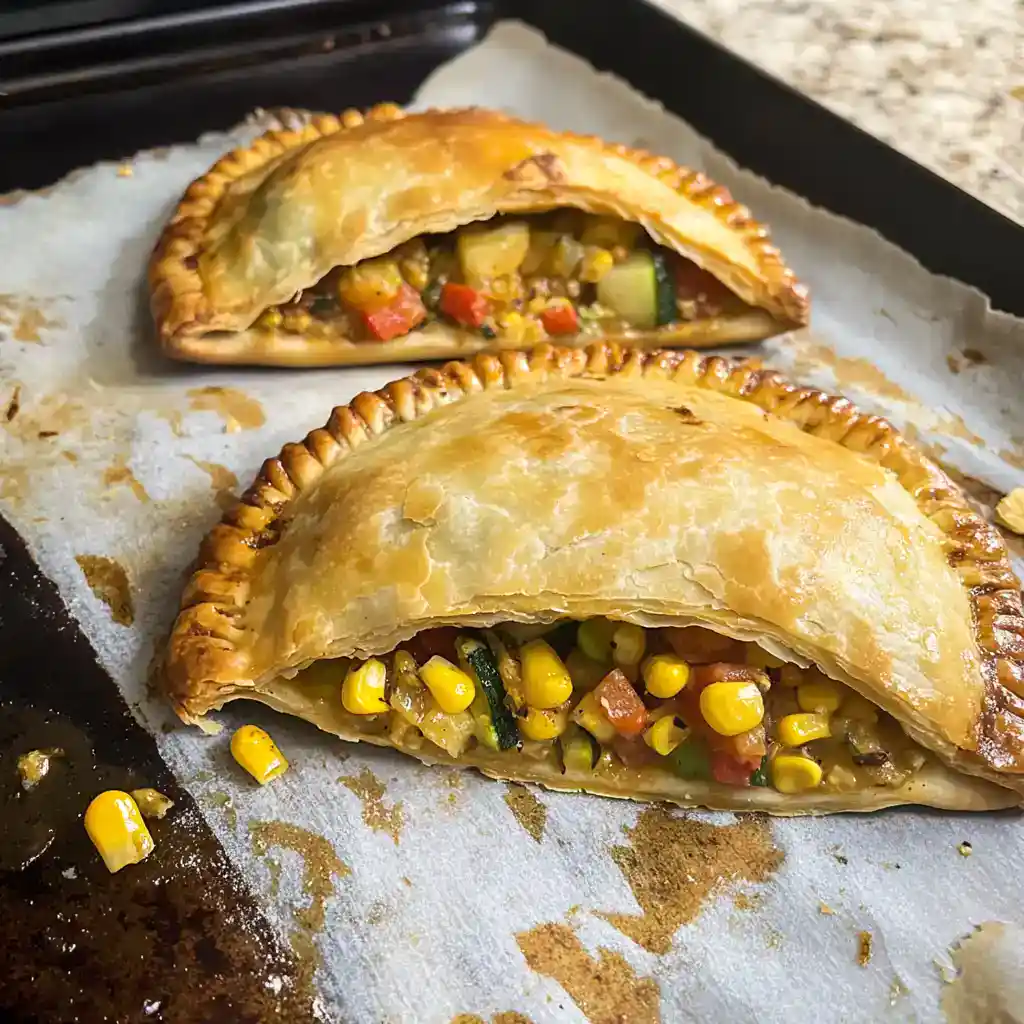
Ingredients
For the Dough:
- 2 cups all-purpose flour (plus extra for rolling)
- 1/2 teaspoon salt
- 1/2 cup unsalted butter, cold and cubed into small pieces
- 1/3 cup cold water (plus more if needed)
For the Filling:
- 1 tablespoon olive oil
- 1 small onion, finely chopped
- 2 cloves garlic, minced
- 1 small bell pepper, diced (any color)
- 1 medium zucchini, diced small
- 1 cup corn kernels (fresh, frozen, or canned and drained)
- 1 teaspoon ground cumin
- 1/2 teaspoon chili powder
- Salt and pepper to taste
- 1/2 cup shredded cheddar cheese (or Mexican cheese blend)
For Assembly:
- Egg wash (1 large egg beaten with 1 tablespoon water)
Instructions
- Make the dough: In a large bowl, whisk together flour and salt. Add cold butter cubes and use a pastry cutter, two knives, or your fingers to work the butter into the flour until the mixture looks like coarse crumbs with some pea-sized butter pieces remaining.
- Gradually add cold water, one tablespoon at a time, mixing with a fork until the dough just comes together when squeezed. It should be cohesive but not wet or sticky. You might need slightly more or less water depending on humidity.
- Shape the dough into a disc (not a ball), wrap tightly in plastic wrap, and refrigerate for at least 30 minutes while you make the filling. This rest time is crucial for flaky pastry.
- Make the filling: Heat olive oil in a large skillet over medium heat. Add chopped onion and minced garlic, sautéing for 3-4 minutes until translucent and fragrant.
- Add diced bell pepper, zucchini, and corn kernels. Cook for 8-10 minutes, stirring occasionally, until vegetables are tender and any released moisture has evaporated. You want a dry filling, not soupy.
- Stir in cumin, chili powder, salt, and pepper. Taste and adjust seasoning—it should be flavorful on its own. Remove from heat and let cool completely before assembling. Hot filling makes the dough tough to work with.
- Preheat your oven to 375°F and line a large baking sheet with parchment paper.
- On a well-floured surface, roll out the chilled dough to about 1/8 inch thickness. Use a 4-5 inch round cutter (or a small bowl/plate) to cut circles. Gather scraps, re-roll once, and cut more circles. You should get about 12 circles.
- Place a heaping tablespoon of cooled vegetable filling on one half of each circle, leaving about a 1/2-inch border. Don’t overstuff or they’ll burst. Top with a small pinch of shredded cheese.
- Brush the edges of the dough with egg wash. Fold the dough over to create a half-moon shape, pressing the edges together firmly. Crimp the edges with a fork to seal completely—this double seal prevents opening during baking.
- Place assembled empanadas on the prepared baking sheet, spacing them about an inch apart. Brush the tops with egg wash for that gorgeous golden color. You can cut a small slit in the top of each to vent steam if desired.
- Bake for 20-25 minutes until golden brown all over with no pale spots. The bottoms should be as golden as the tops.
- Let cool on the pan for 5 minutes, then transfer to a wire rack. Serve warm or at room temperature with your favorite salsa, guacamole, or sour cream for dipping.
Nutrition Information (Per Empanada):
- Calories: 185
- Carbohydrates: 21g
- Protein: 5g
- Fat: 9g
- Fiber: 2g
- Sodium: 180mg
- Vitamin C: 20% DV
- Vitamin A: 10% DV
These vegetable empanadas provide fiber and vitamins from fresh vegetables with quality carbohydrates from the pastry. They’re a satisfying meatless option packed with flavor.
Notes:
- Keep butter cold throughout the process for the flakiest pastry. If your kitchen is hot, chill the bowl and tools too.
- Don’t overmix the dough—those butter pieces create flaky layers.
- The filling must be completely cool before assembling or the dough will be tough to work with.
- Don’t overfill the empanadas or they’ll burst open during baking.
- Press edges together firmly, then crimp with a fork for a secure seal.
- Egg wash is essential for both sealing and getting that golden-brown color.
Storage Tips:
Store baked empanadas in an airtight container in the refrigerator for up to 3 days. Reheat in a 350°F oven for 10 minutes to restore crispness. Don’t microwave—it makes them soggy. Freeze assembled unbaked empanadas on a baking sheet until solid, then transfer to freezer bags for up to 3 months. Bake from frozen, adding 5-10 minutes to the baking time.
Serving Suggestions:
- Classic Style: Serve with salsa, guacamole, and sour cream for dipping
- Meal Option: Pair with a simple salad and rice for a complete dinner
- Party Appetizer: Make mini versions using a smaller cutter for bite-sized party food
- Breakfast: Serve alongside scrambled eggs and hot sauce for brunch
Mix It Up (Recipe Variations):
- Spicy Version: Add diced jalapeños to the filling and increase chili powder
- Sweet Potato Black Bean: Replace zucchini with diced sweet potato and add black beans
- Spinach Feta: Use sautéed spinach, feta cheese, and sun-dried tomatoes for Mediterranean flavor
- Breakfast Empanadas: Fill with scrambled eggs, cheese, and sautéed vegetables
What Makes This Recipe Special:
These vegetable empanadas use traditional Latin American pastry-making techniques that create flaky, tender dough through cold butter and minimal handling. The method of keeping ingredients cold and not overworking the dough ensures layers that puff and crisp in the oven, while the properly seasoned and cooled filling provides maximum flavor without making the pastry soggy. This homemade version lets you control ingredients and customize fillings for dietary preferences.
