
Ever wonder why restaurant hash always has those perfectly crispy edges while your homemade version turns out mushy and bland? I used to think making café-quality potato hash was some kind of professional secret until I figured out the one crucial step most recipes skip. Now my family devours this colorful vegetable potato hash every weekend, and honestly, I’m pretty sure my neighbor thinks I’m running a secret breakfast spot (if only she knew how many soggy, undercooked attempts I made before discovering the trick to golden, crispy potatoes).
Here’s the Thing About This Hash
What makes this vegetable potato hash work is cooking the potatoes first before adding the other vegetables—this ensures they get properly crispy instead of steaming in a crowded pan. I learned the hard way that throwing everything in at once creates a wet, mushy mess where nothing browns properly. The paprika isn’t just there for color; it adds this smoky depth that makes the whole dish taste more complex and interesting. Around here, we’ve figured out that high heat and patience are your best friends—resist the urge to constantly stir, and let those potatoes develop a golden crust. It’s honestly that simple—no fancy techniques, just smart timing and temperature control.
What You’ll Need (And My Shopping Tips)
Good potatoes are worth choosing carefully—Yukon golds are my absolute favorite for hash because they get crispy on the outside while staying creamy inside. I learned this after using russet potatoes three times and ending up with either mush or rocks (happens more than I’d like to admit). Waxy potatoes like red potatoes also work beautifully and hold their shape better than starchy varieties.
For the vegetables, I always grab an extra bell pepper because someone inevitably wants more color and sweetness in their serving. Fresh zucchini should be firm and not spongy—if it bends easily, it’s past its prime and will release too much water into your hash. The onion adds sweetness and helps bind everything together, so don’t skip it even if you think you don’t like onions.
Fresh garlic makes a huge difference here—those pre-minced jars just don’t have the same punch. I always have extra parsley on hand because the fresh green garnish makes this look restaurant-worthy and adds a bright, herbal note that balances the richness. You can learn more about selecting the best potatoes for different cooking methods and why waxy versus starchy varieties matter for achieving the texture you want.
Let’s Make This Together
Start by dicing your potatoes into roughly 1/2-inch cubes—and here’s where I used to mess up: making them too big means they won’t cook through, too small means they turn to mush. Aim for consistency so everything cooks evenly. If you want extra crispy potatoes (and trust me, you do), pat those diced potatoes dry with a kitchen towel before cooking. Moisture is the enemy of crispiness.
Heat your olive oil in a large skillet over medium-high heat until it shimmers—this is crucial. Cold oil means soggy potatoes. Now for the fun part: add just the potatoes first and spread them in a single layer. Here’s my secret: don’t touch them for a solid 3-4 minutes. I know it’s tempting to stir, but letting them sit undisturbed creates that golden crust everyone loves.
After about 5 minutes total, when the potatoes have some color on them but aren’t fully cooked, add your diced bell pepper, onion, zucchini, and minced garlic. I learned this trick from a diner cook who told me that vegetables release moisture, so you need the potatoes to get a head start on browning before the other ingredients join the party.
Stir everything together and continue cooking for 8-10 minutes, stirring occasionally but not constantly. You want to give the vegetables time to develop some color too. Here’s what I’ve learned: if your pan gets too crowded and things start steaming instead of browning, increase the heat slightly or cook in two batches.
Sprinkle in the paprika, salt, and pepper, and stir well to coat everything evenly. The paprika hitting the hot pan creates this amazing toasted spice aroma that makes your whole kitchen smell incredible. Cook for another 2-3 minutes to let all those flavors meld together and deepen.
Remove from heat and shower it with freshly chopped parsley. The bright green against the golden vegetables looks absolutely stunning. If you’re craving more hearty breakfast sides, check out this Sweet Potato Hash with Eggs that uses similar crispy-edge techniques.
If This Happens, Don’t Panic
Potatoes turned out mushy instead of crispy? You probably added too many vegetables at once or didn’t let them cook undisturbed long enough. In reality, I’ve learned to cook the potatoes alone first until they’re almost done, then add the other vegetables. If this happens (and it will), next time use higher heat and don’t crowd the pan—give everything room to breathe.
Everything sticking to the pan? This usually means you need more oil or your pan wasn’t hot enough when you started. Don’t panic—add another tablespoon of olive oil and use a metal spatula to gently scrape up the stuck bits (that’s where the flavor is!). I always make sure my pan is properly heated now before adding anything.
Vegetables cooking unevenly? Some pieces are dark while others are still pale? You probably cut your vegetables in different sizes. This is totally fixable by being more careful with uniform dicing next time. In the moment, just fish out the perfectly cooked pieces and let the rest keep going for another minute or two.
Hash tastes bland even with seasoning? You probably didn’t use enough salt or didn’t season in layers. I always check early now and add salt at different stages—some with the potatoes, more with the vegetables, and a final adjustment at the end. The paprika also helps tremendously, so don’t be shy with it.
When I’m Feeling Creative
Southwestern Hash: When I’m feeling like I need some heat, I’ll add diced jalapeños with the vegetables and swap the paprika for chili powder and cumin. Top with a fried egg, salsa, and avocado slices for a breakfast that’ll wake you up.
Mediterranean Vegetable Hash: Around the summer when tomatoes are perfect, I’ll add cherry tomato halves in the last 2 minutes, swap the paprika for oregano and thyme, and finish with crumbled feta cheese. It tastes like a Greek vacation on a plate.
Sweet Potato and Kale Hash: Swap half the regular potatoes for diced sweet potatoes and throw in a big handful of chopped kale in the last 3 minutes of cooking. The earthy greens and sweet potatoes create this nutrient-packed combination my health-conscious sister requests every visit.
Loaded Breakfast Hash: Add cooked, crumbled breakfast sausage or crispy bacon bits in the last minute of cooking, top with shredded cheddar cheese, and serve with fried eggs on top. This turns it into a complete breakfast that’ll keep you full all morning.
What Makes This Recipe Special
This vegetable potato hash stands out because it uses the restaurant technique of cooking ingredients separately based on their cooking times, then bringing them together at the end. Professional kitchens have been using this method for decades because it ensures every ingredient is perfectly cooked—crispy potatoes, tender-crisp vegetables, and nothing mushy or raw.
The method of letting potatoes cook undisturbed before stirring is crucial for developing that golden crust. When you constantly move potatoes around, they steam instead of sear, which prevents browning. This isn’t just about looks—those caramelized edges create complex flavors through the Maillard reaction that make the difference between good hash and great hash. You can learn more about hash cooking techniques and history and how this simple one-pan dish has been a breakfast staple across cultures for generations.
Things People Ask Me About This Hash
Can I make this vegetable potato hash ahead of time?
Sort of! You can dice all your vegetables the night before and store them separately in airtight containers in the fridge—this makes morning prep super quick. However, I don’t recommend cooking the hash completely ahead because reheated hash loses that crispy texture. If you do make it ahead, reheat in a hot skillet with a little oil to re-crisp the edges instead of using the microwave.
What if I don’t have fresh garlic for this hash?
Don’t stress about this part—you can use 1/2 teaspoon garlic powder instead, or just skip it entirely and add a pinch more paprika or some onion powder. Fresh garlic adds great flavor, but the dish is still delicious without it. I’ve made this countless times when I realized I was out of fresh garlic.
How do I get the potatoes really crispy?
Here’s what I’ve learned: pat them completely dry before cooking, don’t crowd the pan (use a bigger skillet or cook in batches), use high enough heat, and resist stirring for the first few minutes. The water on wet potatoes turns to steam, which prevents browning. Also, letting them sit undisturbed creates contact with the hot pan, which is where the magic happens.
Can I use frozen vegetables for this hash?
I wouldn’t recommend it because frozen vegetables contain too much moisture and will make your hash soggy instead of crispy. Fresh vegetables are really important here for texture and flavor. However, you could use frozen diced potatoes if you thaw and dry them really well first—though fresh always tastes better.
Is this vegetable potato hash good for meal prep?
Yes and no. You can prep all the ingredients ahead, but I recommend cooking it fresh each time to maintain that crispy texture. If you do need to make it ahead for the week, cook it fully, let it cool, and store in airtight containers for up to 4 days. Reheat in a hot skillet with oil to re-crisp rather than microwaving.
What’s the best pan for making hash?
A large cast iron skillet or heavy-bottomed stainless steel pan works best because they retain heat well and create excellent browning. Non-stick pans work okay but don’t develop quite as much color and crispy edges. Whatever you use, make sure it’s big enough that vegetables aren’t piled on top of each other.
Before You Head to the Kitchen
I couldn’t resist sharing this vegetable potato hash recipe because it’s one of those versatile sides that works for breakfast, lunch, or dinner and makes you look like you really know your way around a kitchen. The best hash mornings are when you get those perfect golden-brown edges and everyone fights over the crispiest pieces. Trust me on this one—once you nail the technique, you’ll be making this weekly.
Print
Vegetable Potato Hash
Description
A colorful, crispy vegetable potato hash with golden-brown edges, tender vegetables, and smoky paprika—this versatile one-pan dish works as a hearty breakfast side, light vegetarian main, or satisfying dinner accompaniment.
Prep Time: 10 minutes | Cook Time: 18 minutes | Total Time: 28 minutes | Servings: 4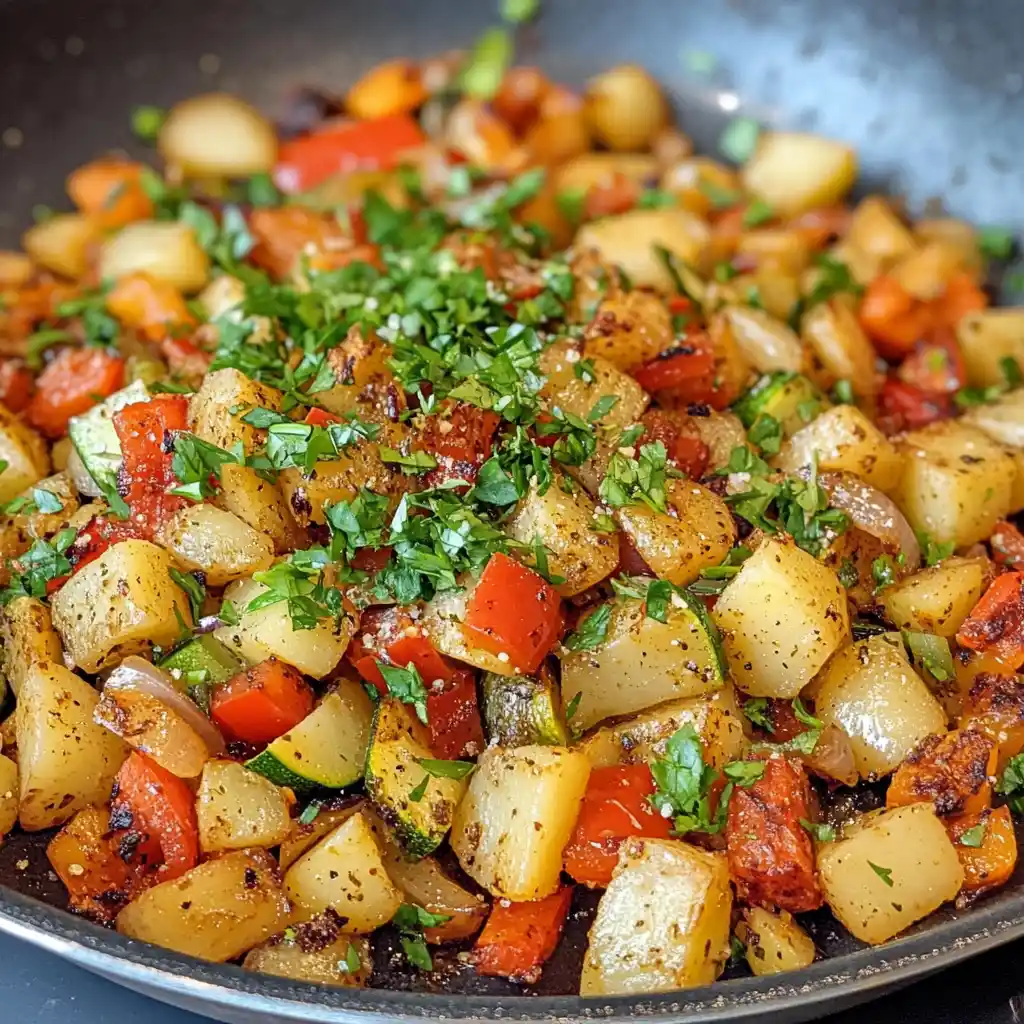
Ingredients
- 2 medium Yukon gold potatoes, diced into 1/2-inch cubes (about 2 cups)
- 1 bell pepper, any color, diced (red or yellow adds nice sweetness and color)
- 1 small onion, diced (yellow or white onions work great)
- 1 medium zucchini, diced into 1/2-inch pieces
- 2 cloves fresh garlic, minced (don’t skip this—the flavor is worth it)
- 2 tablespoons olive oil (plus more if needed for extra crispiness)
- 1/2 teaspoon smoked paprika (regular paprika works too, but smoked adds depth)
- Salt and freshly ground black pepper to taste (be generous with the salt)
- Fresh parsley, chopped, for garnish (about 2 tablespoons)
Instructions
- Start by dicing all your vegetables into roughly 1/2-inch cubes so they cook evenly. Pat the diced potatoes dry with a kitchen towel or paper towels—this step is crucial for getting them crispy instead of steaming.
- Heat the olive oil in a large skillet (cast iron is ideal) over medium-high heat until it shimmers. You want the pan hot before adding anything so the potatoes sear instead of stick.
- Add just the diced potatoes to the hot pan and spread them in a single layer. Here’s the hard part: don’t touch them for 3-4 minutes. Resist the urge to stir—letting them sit undisturbed creates those golden-brown crispy edges everyone loves.
- After about 5 minutes total, when the potatoes have some nice color and are starting to get tender but aren’t fully cooked, add the diced bell pepper, onion, zucchini, and minced garlic to the skillet. The potatoes need a head start before the moisture from other vegetables joins the pan.
- Stir everything together and continue cooking for 8-10 minutes, stirring occasionally but not constantly. You want to give the vegetables time to develop some color and soften while the potatoes finish cooking through.
- Sprinkle the paprika, salt, and pepper over everything and stir well to coat evenly. The paprika hitting the hot pan creates an amazing toasted aroma that adds smoky depth to the whole dish.
- Continue cooking for another 2-3 minutes, stirring occasionally, to let all those flavors meld together and the vegetables to get tender with slightly crispy edges.
- Remove the skillet from heat, taste and adjust seasoning if needed (hash always needs more salt than you think), and shower it with freshly chopped parsley for a pop of color and fresh flavor.
- Serve hot as a delicious side dish for breakfast with eggs, as a light vegetarian main course topped with a fried egg, or as a hearty dinner accompaniment. This is absolutely delicious any time of day!
Nutrition Information (Per Serving):
- Calories: 145
- Carbohydrates: 22g
- Protein: 3g
- Fat: 7g
- Fiber: 4g
- Sodium: 15mg (plus what you add in salt)
- Vitamin C: 70% DV (from bell peppers and potatoes)
- Vitamin A: 15% DV (from bell peppers and zucchini)
- Potassium: 18% DV (from potatoes and vegetables)
This hash is loaded with fiber from vegetables, vitamin C for immune support, and potassium for heart health—all while being naturally low in calories and completely plant-based.
Notes:
- Dry those potatoes: Moisture is the enemy of crispiness. Take the extra 30 seconds to pat them dry—it makes a huge difference in texture.
- Don’t crowd the pan: If your skillet isn’t big enough for everything to sit in a single layer, cook in two batches. Crowded vegetables steam instead of brown.
- Let them sit: The biggest mistake people make is stirring too often. Let the vegetables sit undisturbed for a few minutes at a time to develop color.
- Heat matters: If your vegetables are cooking too fast and burning, lower the heat slightly. If they’re not browning, increase it. Every stove is different.
- Season in layers: Add some salt with the potatoes, more with the vegetables, and adjust at the end. Layered seasoning creates better overall flavor.
- Fresh parsley counts: Don’t skip the fresh herb garnish—it adds brightness and makes the dish look and taste more refined.
Storage Tips:
Store leftover vegetable potato hash in an airtight container in the refrigerator for up to 4 days. Reheat in a hot skillet with a tablespoon of olive oil to restore some of that crispy texture—don’t microwave it or the potatoes will turn mushy and sad. You can also freeze cooked hash in freezer bags for up to 2 months, though the texture won’t be quite as crispy when reheated. The best approach is to prep all your diced vegetables ahead and store them separately, then cook fresh hash in about 20 minutes whenever you want it.
Serving Suggestions:
- Classic breakfast plate: Serve alongside fried or scrambled eggs, toast, and fresh fruit for a complete, satisfying breakfast that covers all the food groups.
- Brunch hash bowl: Top the hash with a fried egg, sliced avocado, hot sauce, and a dollop of sour cream or Greek yogurt for a filling brunch bowl.
- Light vegetarian dinner: Make this the main course served with a simple green salad and crusty bread for an easy, healthy weeknight dinner.
- Taco filling: Use as a filling for breakfast tacos or burritos with scrambled eggs, cheese, and salsa wrapped in warm tortillas.
Mix It Up (Recipe Variations):
Southwestern Potato Hash: Add 1 diced jalapeño with the vegetables, swap paprika for 1/2 teaspoon each chili powder and cumin, and top with fried eggs, salsa, shredded cheese, and avocado slices for a Tex-Mex breakfast feast.
Mediterranean Vegetable Hash: Add 1/2 cup halved cherry tomatoes in the last 2 minutes, swap paprika for 1/2 teaspoon dried oregano and thyme, and finish with crumbled feta cheese and a squeeze of lemon juice for bright, Greek-inspired flavors.
Sweet Potato and Kale Hash: Replace half the potatoes with diced sweet potatoes and add 2 cups chopped kale in the last 3 minutes of cooking. The combination of sweet potatoes and earthy greens creates a nutrient-dense powerhouse breakfast.
Loaded Breakfast Hash: Add 1/2 cup cooked, crumbled breakfast sausage or crispy bacon bits in the last minute of cooking, top with shredded cheddar cheese, and serve with fried eggs on top for a complete, hearty breakfast that’ll keep you full until lunch.
What Makes This Recipe Special:
This vegetable potato hash uses the professional kitchen technique of cooking ingredients separately based on their cooking times, then combining them at the perfect moment. This ensures crispy potatoes, tender-crisp vegetables, and nothing mushy or undercooked. The method of letting potatoes cook undisturbed before stirring allows them to develop golden-brown crusts through the Maillard reaction—the chemical process that creates complex, savory flavors when proteins and sugars brown. This isn’t just a cooking technique; it’s the difference between amateur hash and restaurant-quality results.
