
Ever wonder why wonton soup from Chinese restaurants always tastes so much better than the versions you try making at home? I used to think making authentic wonton soup required some kind of secret culinary technique until my friend’s grandmother showed me this foolproof recipe during a cooking lesson. Now I make these delicate little dumplings every month, and honestly, my family thinks I’ve been secretly taking cooking classes (and I’m pretty sure my husband would eat this for breakfast, lunch, and dinner if I’d let him).
Here’s the Thing About This Recipe
The secret to authentic wonton soup isn’t using fancy equipment or hard-to-find ingredients. What makes this Chinese comfort food work is the perfect balance of tender chicken filling seasoned with ginger, garlic, and sesame oil, wrapped in thin wonton wrappers and served in a flavorful broth with fresh vegetables. I learned the hard way that store-bought frozen wontons just don’t compare—they’re usually tough, skimpy on filling, and taste nothing like the real deal. This version takes about 45 minutes total, with most of that time spent wrapping wontons (which is actually kind of therapeutic once you get the hang of it). It’s honestly that simple—no special skills needed, just a little patience and some basic folding technique.
What You’ll Need (And My Shopping Tips)
Good wonton wrappers are worth hunting down in the refrigerated section of Asian grocery stores—don’t grab egg roll wrappers or spring roll wrappers thinking they’re the same (I learned this after making giant, thick wontons that were all wrapper and no filling). Don’t cheap out on your ground chicken either; I prefer using ground chicken thighs instead of breast meat because they’re juicier and more flavorful, though regular ground chicken works fine.
The water chestnuts add that signature crunchy texture you get in restaurant wontons—you can find them canned in the Asian food aisle. Fresh ginger is essential here; the jarred stuff just doesn’t give you that bright, zingy flavor we need. I always grab an extra package of wonton wrappers because they tear sometimes, and it’s annoying to run out mid-wrapping. For the broth, use good-quality chicken broth or stock—this is your flavor base, so it matters. If you want to learn more about wonton history and variations, there’s actually fascinating cultural significance behind these little dumplings.
Around here, I’ve found that baby bok choy is easier to work with than regular bok choy, and shiitake mushrooms add that umami depth that makes wonton soup taste authentic (happens more than I’d like to admit where I substitute regular mushrooms, and it’s just not the same). The sesame oil is used sparingly but adds so much aromatic flavor—a little goes a long way.
Let’s Make This Together
Start by making your filling in a medium bowl. Mix together the ground chicken, finely chopped water chestnuts, minced garlic, grated ginger, chopped green onions, soy sauce, and sesame oil until everything’s well combined. Here’s where I used to mess up—mix it thoroughly but don’t overwork it, or the filling gets dense and tough. You want it just combined so it stays tender when cooked.
Now for the fun part that seems intimidating but really isn’t—wrapping the wontons. Set up a little assembly station with your wonton wrappers, a small bowl of water, and your filling. Here’s my secret: keep the wrappers covered with a damp towel while you work because they dry out fast and become impossible to seal. Place about a teaspoon of filling in the center of each wrapper—don’t overfill or they’ll burst while cooking (trust me on this, I’ve created some spectacular wonton explosions in my pot).
Dip your finger in water and moisten the edges of the wrapper. Fold it over diagonally to create a triangle, pressing firmly to seal and squeezing out any air bubbles. I learned this trick from my friend’s grandmother—bring the two bottom corners of the triangle together and pinch them to create that classic wonton shape. It takes a few tries to get the hang of it, but by wonton number five, you’ll feel like a pro. Don’t stress about making them perfect—even wonky-looking ones taste amazing.
Once all your wontons are wrapped, bring your chicken broth to a gentle simmer in a large pot. Add the chopped bok choy and sliced shiitake mushrooms, then season with salt and pepper to taste. Here’s where timing matters: carefully drop your wontons into the simmering broth one at a time so they don’t stick together. Cook for about 5 minutes or until they float to the top and the filling is cooked through. The wontons will puff up slightly and the wrappers will turn slightly translucent when they’re done.
Ladle the wonton soup into bowls, making sure everyone gets plenty of wontons, vegetables, and that delicious broth. The whole process takes maybe an hour the first time, but speeds up once you get your wrapping technique down. If you love comforting Asian soups, this pairs perfectly with egg drop soup for a complete Chinese restaurant experience at home.
When Things Go Sideways (And They Will)
Wontons falling apart in the broth? You probably didn’t seal the edges well enough or overfilled them. In reality, I’ve learned to really press those edges together and use just a teaspoon of filling per wrapper. If a few break apart, just fish out the wrapper pieces and enjoy the filling that’s now floating in your soup—it still tastes great, it just looks a bit messy.
Wonton soup came out bland? If this happens (and it will if you use low-quality broth), don’t panic, just add more soy sauce, a splash of sesame oil, and some white pepper to the broth. I always taste and adjust the seasoning before adding the wontons now. Every brand of chicken broth has different salt levels, so trust your taste buds.
Filling is too wet and won’t stay in the wrappers? You might have added too much liquid or your water chestnuts weren’t drained well enough. Give the mixture a few minutes to sit so the filling can firm up slightly. Some batches of ground chicken release more moisture than others, so if it looks really wet, add a tablespoon of cornstarch to help bind everything together.
When I’m Feeling Creative
Around the holidays, I’ll make Shrimp Wontons by replacing the chicken with chopped raw shrimp—the filling gets sweeter and more delicate. When I’m feeling fancy, I create Spicy Wonton Soup by adding chili oil and Sichuan peppercorns to the broth for that numbing, tingling heat that’s addictive.
For my friends who want something different, I’ve successfully made Vegetarian Wontons using finely chopped mushrooms, cabbage, and tofu instead of chicken. The gluten-free version is tricky since wonton wrappers are wheat-based, but you can find rice paper wrappers at Asian stores that work as a substitute, though they have a different texture. If you want a heartier meal, try adding cooked rice noodles to make it Wonton Noodle Soup, which is incredibly popular in Hong Kong.
Why This Works So Well
This recipe creates authentic wonton soup by using traditional Chinese cooking techniques and flavor combinations that have been perfected over centuries. The filling mixture of chicken, water chestnuts, ginger, and green onions represents classic Cantonese flavors, while the sesame oil adds that distinctive aroma you associate with Chinese cuisine. The technique of wrapping thin-skinned wontons creates a delicate texture that’s completely different from thicker dumplings like potstickers.
What sets this apart from takeout versions is using fresh ingredients and homemade wontons instead of frozen ones, which means better texture and flavor in every bite. The history of wontons dates back over 2,000 years in Chinese culinary tradition, and this comforting soup remains popular across many regional Chinese cuisines. I’ve discovered through making these dozens of times that the key is not overfilling the wrappers and making sure your broth is well-seasoned before adding the wontons.
Things People Ask Me About This Recipe
Can I make these wontons ahead of time?
Absolutely! Wrap all your wontons and place them on a parchment-lined baking sheet in a single layer. Freeze until solid (about 2 hours), then transfer to a freezer bag for up to 3 months. Cook from frozen by adding an extra 2-3 minutes to the cooking time. I do this all the time for quick weeknight dinners.
What if I can’t find wonton wrappers for this homemade wonton soup?
Check the refrigerated section of Asian grocery stores or larger supermarkets near the tofu and Asian vegetables. Some stores label them as “wonton skins.” In a pinch, you can use gyoza or dumpling wrappers, though they’re slightly thicker and round instead of square.
How do I know when the wontons are fully cooked?
They’ll float to the top of the broth and the wrappers will look slightly translucent instead of opaque. The filling should reach 165°F internally if you’re checking with a thermometer. Usually 5 minutes after they start floating is perfect.
Can I use ground turkey instead of chicken for these wontons?
Totally! Ground turkey works great, though it’s a bit leaner so you might want to add an extra splash of sesame oil to keep the filling moist. Ground beef doesn’t work well because the flavor is too strong for delicate wontons.
Is this wonton soup recipe beginner-friendly?
This is definitely doable for beginners! The hardest part is wrapping wontons, which honestly just takes practice. Even if your first few look weird, they’ll still taste amazing. By the end of wrapping 24 wontons, you’ll have the technique down.
What’s the best way to serve leftover wonton soup?
Store the wontons separately from the broth if possible because they’ll get mushy if they sit in liquid overnight. Reheat the broth, add fresh wontons, and cook for just 2-3 minutes. If they’re already in the broth, reheat gently and eat within a day.
Before You Head to the Kitchen
I couldn’t resist sharing this because wonton soup is one of those recipes that seems intimidating but is actually incredibly rewarding once you try it. The best weeknight dinners are when you pull out a batch of frozen homemade wontons and have restaurant-quality soup on the table in 15 minutes. Trust me on this one—make a double batch of wontons and freeze half for future you to enjoy.
Print
Wonton Soup
Description
This authentic wonton soup features tender chicken-filled dumplings in savory broth with baby bok choy and shiitake mushrooms—just like your favorite Chinese restaurant but made fresh at home.
Prep Time: 30 minutes | Cook Time: 15 minutes | Total Time: 45 minutes | Servings: 4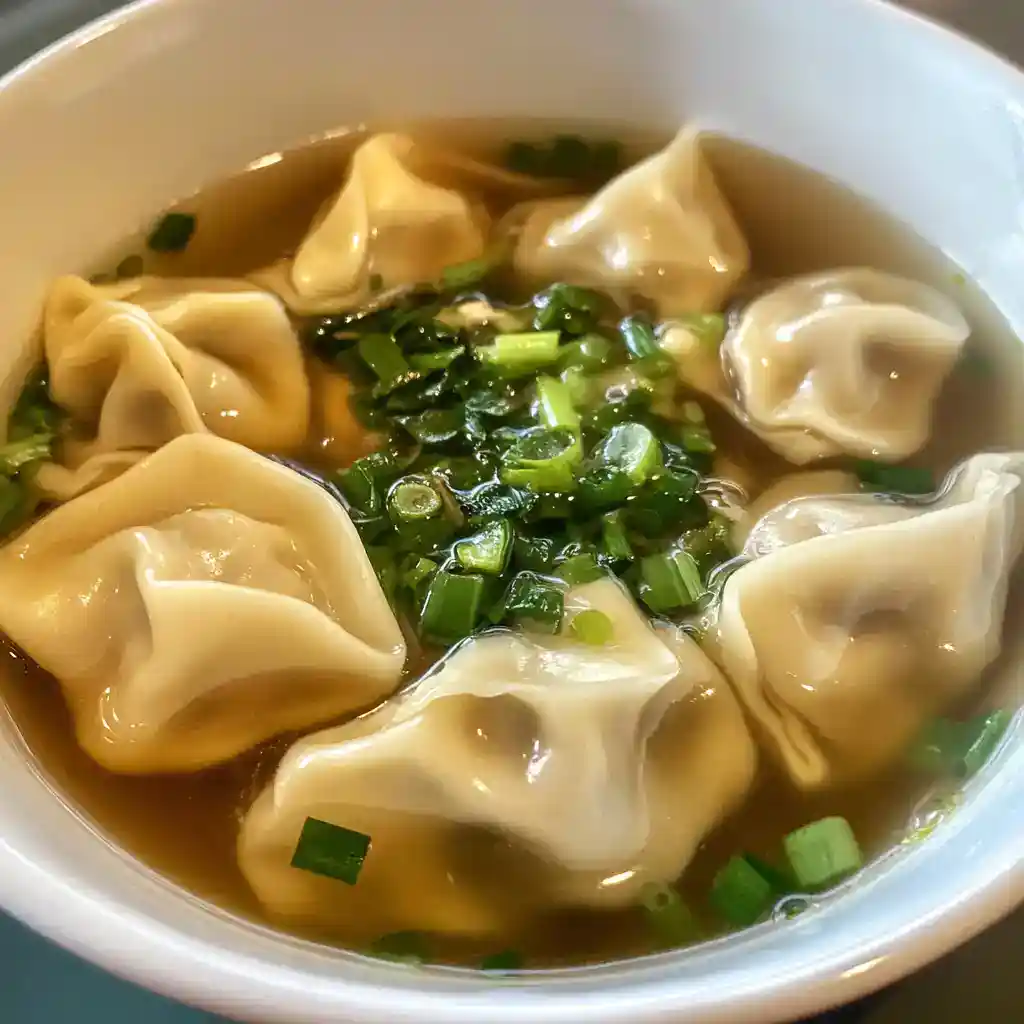
Ingredients
For the Wontons:
- 8 oz ground chicken (thigh meat is juicier, but any ground chicken works)
- 1/4 cup finely chopped water chestnuts (drained well if using canned)
- 2 cloves garlic, minced (fresh is essential here)
- 1 tsp ginger, grated (use a microplane for best results)
- 2 green onions, finely chopped (both white and green parts)
- 1 tbsp soy sauce (low-sodium works great)
- 1/2 tsp sesame oil (a little goes a long way)
- 24 wonton wrappers (keep covered with damp towel while working)
For the Soup:
- 4 cups chicken broth (use good quality—this is your flavor base)
- 1 cup baby bok choy, chopped (regular bok choy works too, just slice it thin)
- 1/2 cup sliced shiitake mushrooms (fresh or dried and rehydrated)
- Salt and pepper, to taste
- Additional chopped green onions for garnish
Instructions
- Make your filling by mixing together the ground chicken, water chestnuts, garlic, ginger, green onions, soy sauce, and sesame oil in a medium bowl until well combined. Don’t overwork it—just mix until everything’s incorporated.
- Set up your wonton wrapping station with wrappers, a small bowl of water, and your filling. Keep those wrappers covered with a damp towel so they don’t dry out. Place about a teaspoon of filling in the center of each wrapper—don’t overfill or they’ll burst (trust me on this).
- Dip your finger in water and moisten all four edges of the wrapper. Fold diagonally to create a triangle, pressing firmly to seal and squeezing out any air bubbles. Bring the two bottom corners together and pinch to create that classic wonton shape. It takes practice, but you’ll get the hang of it quickly.
- In a large pot, bring the chicken broth to a gentle simmer over medium heat. Add the chopped bok choy and sliced mushrooms, then season with salt and pepper to taste. Let it simmer for 2-3 minutes to get those vegetables tender.
- Carefully drop your wontons into the simmering broth one at a time so they don’t stick together. Cook for about 5 minutes or until they float to the top and the wrappers look slightly translucent. The wontons will puff up when they’re done.
- Ladle the wonton soup into bowls, making sure everyone gets plenty of wontons and vegetables. Garnish with extra chopped green onions if you’re feeling fancy. Serve immediately while it’s steaming hot.
Nutrition Information (Per Serving):
- Calories: 245
- Carbohydrates: 28g
- Protein: 18g
- Fat: 6g
- Fiber: 2g
- Sodium: 890mg
- Vitamin A: 35% DV (from the bok choy)
- Iron: 12% DV
This soup provides lean protein from the chicken and excellent vitamins from the fresh vegetables, making it a nutritious and satisfying meal.
Notes:
- Keep wonton wrappers covered with a damp towel while you work or they’ll dry out and crack when you try to fold them.
- Don’t overfill the wontons—about a teaspoon of filling is perfect. Too much and they’ll burst while cooking.
- Make sure to seal the edges really well by pressing firmly. Loose seals = wontons falling apart in the broth.
- If your filling seems too wet, let it sit for a few minutes to firm up, or add a tablespoon of cornstarch.
Storage Tips:
Store leftover wontons separately from the broth if possible because they get mushy sitting in liquid. Keep wontons in an airtight container in the fridge for up to 2 days, and the broth separately for up to 4 days. Freeze uncooked wontons on a parchment-lined baking sheet until solid, then transfer to freezer bags for up to 3 months. Cook frozen wontons directly in simmering broth, adding 2-3 extra minutes to the cooking time.
Serving Suggestions:
- Classic Chinese Meal: Serve with steamed rice and stir-fried vegetables for a complete dinner
- Soup and Appetizer Combo: Pair with pot stickers or spring rolls for a restaurant-style spread
- Light Lunch: Enjoy a smaller portion as a satisfying midday meal
- Sick Day Comfort: This is the ultimate feel-better soup with its warm, soothing broth
Mix It Up (Recipe Variations):
Shrimp Wontons: Replace ground chicken with finely chopped raw shrimp for sweeter, more delicate filling.
Spicy Wonton Soup: Add 1-2 teaspoons chili oil and a pinch of Sichuan peppercorns to the broth for numbing, tingling heat.
Vegetarian Wontons: Use finely chopped mushrooms, cabbage, and crumbled firm tofu instead of chicken for meat-free version.
Wonton Noodle Soup: Add cooked rice noodles or egg noodles to make it heartier, Hong Kong-style.
What Makes This Recipe Special:
This homemade wonton soup uses traditional Cantonese flavor combinations and techniques that have been perfected over centuries of Chinese cooking. The delicate wonton wrappers create a tender texture completely different from thicker dumplings, while the filling mixture of chicken, water chestnuts, ginger, and sesame oil represents authentic Chinese flavors. Making wontons from scratch allows you to control the filling-to-wrapper ratio and ensures fresh, tender dumplings that taste infinitely better than frozen versions.
