
Ever wonder why restaurant frittatas look so impressive and perfectly golden while yours always seem to stick to the pan or come out rubbery? I used to be intimidated by frittatas until I discovered this foolproof zucchini tomato frittata recipe that’s become my secret weapon for everything from weekend brunch to using up garden vegetables. Now my family requests this at least twice a month (which means less food waste and happier people), and my friends think I’m some kind of brunch genius when I show up to potlucks with a gorgeous Italian egg dish that slices into perfect wedges like I actually know what I’m doing.
Here’s the Thing About This Recipe
What makes this zucchini tomato frittata work is how cooking the vegetables first removes excess moisture and concentrates their flavors before adding the eggs, preventing that watery, soggy frittata disaster that ruins so many attempts. I learned the hard way that you can’t just dump raw vegetables and eggs together in a pan and hope for the best. This Italian vegetable frittata uses the classic technique of starting on the stovetop to set the bottom, then finishing in the oven for even cooking all the way through without burning. It’s honestly that simple—sauté vegetables, pour in whisked eggs, cook until edges set, finish in oven, and try not to eat half of it straight from the pan while it’s still too hot.
What You’ll Need (And My Shopping Tips)
Good zucchini makes all the difference—I learned this after using huge, seedy baseball-bat zucchinis three times that released so much water they turned my frittata into soup. You want medium-sized zucchinis (about 6-8 inches long) that feel firm and heavy for their size. The skin should be glossy and free of soft spots. Smaller zucchinis have fewer seeds and less water content, which is exactly what you want here.
The tomato situation is important. Cherry tomatoes are perfect because they’re naturally sweeter and hold their shape during cooking instead of turning to mush. Don’t cheap out on pale, flavorless tomatoes that smell like nothing (happens more than I’d like to admit when I grab whatever’s on sale). Look for deep red cherry tomatoes that smell fruity and sweet—those are the ones that’ll actually add flavor to your vegetable frittata.
For eggs, fresh is absolutely essential. You’re making an egg dish where eggs are the star, so quality matters. Room temperature eggs mix more easily and create fluffier frittatas than cold eggs straight from the fridge, so pull them out about 30 minutes before cooking.
Mozzarella cheese adds creamy, melty goodness. Fresh mozzarella is amazing if you can find it, but regular shredded mozzarella works great too. Just avoid the pre-shredded stuff with too many anti-caking agents—shred from a block yourself for better melting and flavor.
You need an oven-safe skillet for this—cast iron is perfect, but any skillet with a metal handle works. If your skillet has a plastic or wooden handle, it cannot go in the oven and you’ll need to transfer the frittata to a baking dish (which is messier but doable). Check out this comprehensive guide to frittatas if you want to understand the Italian tradition behind this versatile egg dish.
I always grab an extra zucchini because once I’m chopping vegetables, I might as well prep extra for another meal, and having backup means I can make this frittata again when everyone inevitably requests it.
Let’s Make This Together
Start by cranking your oven to 350°F—you want it fully preheated before your frittata is ready to transfer. Here’s where I used to mess up: I’d forget to preheat and end up standing there holding a hot skillet waiting for the oven to heat up. Don’t be me—preheat first.
Heat your olive oil in a 10-inch oven-safe skillet over medium heat. Toss in that diced onion and sauté until it’s translucent and starting to smell sweet, about 3-4 minutes. You want softened, not browned—we’re building a flavor base here.
Add your sliced zucchini to the skillet and cook, stirring occasionally, until they’re slightly softened but still have some bite, about 5 minutes. Here’s my secret: don’t overcrowd the pan or they’ll steam instead of sauté. If your pan seems too full, cook the zucchini in batches. You want some golden edges, not mushy, waterlogged vegetables.
Stir in those halved cherry tomatoes and cook for just 2 minutes more. The tomatoes should soften slightly and release some of their juices, but you don’t want them completely collapsed. This brief cooking concentrates their sweetness and removes just enough moisture.
While the vegetables finish cooking, crack your eggs into a bowl and whisk together with the milk, shredded mozzarella, salt, and pepper. Whisk until everything’s completely uniform and slightly frothy—about 30 seconds of good whisking. The milk adds creaminess and helps the eggs cook more evenly.
Pour that egg mixture right over the vegetables in your skillet, using a spatula to gently distribute everything evenly. Here’s the critical part: cook without stirring for 3-4 minutes until you see the edges starting to set and pull away from the sides slightly. The center will still be very liquidy—that’s exactly what you want before transferring to the oven.
Carefully transfer your skillet to the preheated oven. Use oven mitts because that handle is already hot! Bake for 12-15 minutes, until the frittata is set in the middle but still has a slight jiggle when you shake the pan gently. It will continue cooking from residual heat after you remove it. If you’re looking for another impressive egg dish for brunch, try this Spinach Mushroom Quiche that uses similar techniques.
Remove from the oven (don’t forget the handle is HOT—I’ve burned myself more times than I care to admit) and let it rest for about 5 minutes. This resting time lets the eggs finish setting and makes slicing much cleaner. Garnish with torn fresh basil leaves, which add a gorgeous pop of color and authentic Italian flavor.
Run a knife around the edges to loosen, then slice into wedges like a pie. The frittata should slide right out of the pan if you used enough oil at the beginning.
When Things Go Sideways (And They Will)
Frittata stuck to the pan? You either didn’t use enough oil at the beginning or your pan wasn’t well-seasoned. In reality, I’ve learned to be generous with olive oil and make sure my cast iron is properly seasoned. If this happens (and it will), just scoop it out with a spatula—it’ll still taste delicious even if presentation isn’t Instagram-perfect.
Center came out wet and runny while edges are overcooked? Don’t panic—your oven temperature was probably too high, or you didn’t let the bottom set enough on the stovetop first. This is totally fixable for next time by making sure edges are definitely set before transferring to oven. If the center is still runny after the suggested baking time, just give it 3-5 more minutes.
Vegetables released too much water and made the frittata watery? You probably used huge, seedy zucchinis or didn’t cook the vegetables long enough before adding eggs. The zucchini tomato frittata needs properly sized vegetables that have been cooked enough to release and evaporate excess moisture. Next time, cook vegetables a bit longer before adding eggs.
Frittata puffed up like a soufflé then collapsed? That’s from too high heat or overbeating the eggs. Whisk just until combined and uniform, not until super frothy. The frittata will still taste great, just look a bit deflated.
When I’m Feeling Creative
Mediterranean Frittata: Add 1/4 cup sliced kalamata olives and 2 tablespoons crumbled feta cheese along with the mozzarella. Top with fresh oregano instead of basil. Around the holidays, I’ll add sun-dried tomatoes for extra Mediterranean flair.
Caprese Frittata: Use fresh mozzarella instead of shredded, add extra tomatoes, and finish with a drizzle of balsamic glaze and fresh basil. When I’m feeling fancy, I’ll add fresh burrata on top after baking.
Garden Veggie Frittata: Add bell peppers, mushrooms, and spinach along with the zucchini. This is my go-to when I need to clean out the vegetable drawer and use up everything before it goes bad.
Goat Cheese and Herb Frittata: Replace mozzarella with crumbled goat cheese and add fresh thyme and chives to the egg mixture. The tangy goat cheese takes this to another level of deliciousness.
What Makes This Recipe Special
This zucchini tomato frittata represents the genius of Italian cucina povera—peasant cooking that transforms simple, everyday ingredients into something that feels elegant and special through proper technique rather than expensive components. What sets this recipe apart from basic scrambled eggs is how the frittata format creates a complete meal that’s equally appropriate for breakfast, lunch, or dinner, and can be served hot, warm, or even at room temperature without losing appeal. The technique of cooking vegetables first to remove moisture and develop flavor, then setting the bottom on the stovetop before finishing in the oven, creates the perfect texture—set but still creamy, never rubbery or dry like overcooked scrambled eggs. The combination of zucchini’s mild earthiness, tomatoes’ bright acidity, and mozzarella’s creamy richness creates balanced flavor that doesn’t require heavy sauces or accompaniments. Learn more about the history and versatility of frittatas in Italian cuisine, where this humble egg dish has been feeding families for generations with whatever vegetables were available.
Things People Ask Me About This Recipe
Can I make this zucchini tomato frittata ahead of time?
Absolutely! Frittatas are actually one of the best make-ahead breakfast options. Bake it completely, let it cool, then refrigerate for up to 3 days. Serve it cold, room temperature, or gently reheat individual slices in a skillet or microwave. The flavor actually improves after a day as everything melds together.
What if I don’t have an oven-safe skillet for this Italian frittata?
No worries—start the frittata in your regular skillet on the stovetop, then carefully transfer it to a greased pie dish or baking dish before putting it in the oven. It’s a bit messier but totally works. Just make sure to grease your baking dish really well.
Can I use different vegetables in this vegetable frittata recipe?
Totally! Frittatas are incredibly flexible. Bell peppers, mushrooms, spinach, asparagus, or any combination work beautifully. Just remember to cook vegetables first to remove excess moisture and develop flavor—don’t add raw vegetables directly to the eggs.
How do I know when my frittata is actually done?
The center should still have a slight jiggle when you gently shake the pan, but it shouldn’t be liquidy. It will continue cooking from residual heat after you remove it from the oven. If you insert a knife in the center, it should come out mostly clean with maybe a bit of moisture, not wet egg.
Can I make this dairy-free or lower in calories?
For dairy-free, skip the cheese and milk—use unsweetened almond milk or oat milk instead of dairy milk. The frittata won’t be as creamy but still tastes good. For lower calories, use fewer egg yolks and more egg whites (like 5 whole eggs plus 3 egg whites instead of 8 whole eggs).
Why is my frittata rubbery instead of creamy?
That’s from overcooking, either too high heat or baking too long. Eggs should be just set, not cooked until firm. Pull the frittata when it still has a slight jiggle in the center—it firms up as it cools. Lower oven temperature and shorter baking time will help.
Before You Head to the Kitchen
I couldn’t resist sharing this zucchini tomato frittata because it’s the recipe that transformed me from someone who thought frittatas were intimidating restaurant food into someone who makes them weekly for everything from using up garden vegetables to feeding brunch guests. The best frittata mornings are when I make this on Sunday and have slices ready to grab all week for quick breakfasts or lunches. It’s become our family’s go-to for flexible, delicious eating, and honestly, I hope it becomes yours too.
Print
Zucchini Tomato Frittata
Description
This beautiful zucchini tomato frittata delivers Italian restaurant quality at home with garden-fresh vegetables and creamy eggs—the versatile recipe that works for breakfast, lunch, or dinner!
Prep Time: 10 minutes | Cook Time: 25 minutes | Total Time: 35 minutes | Servings: 6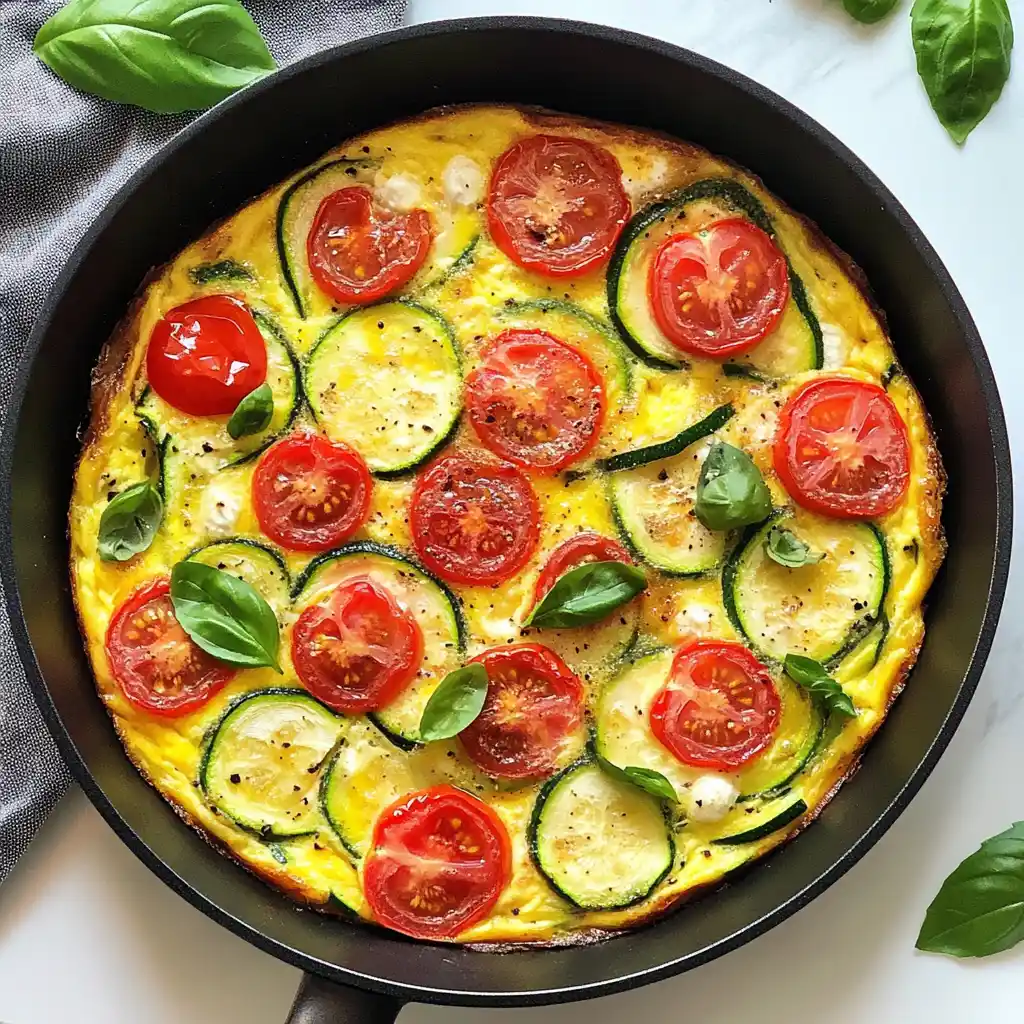
Ingredients
- 2 tbsp olive oil (don’t skimp—it prevents sticking)
- 1 small onion, diced (yellow or white onion work great)
- 2 medium zucchinis, sliced into 1/4-inch rounds (6–8 inches long, not huge)
- 1 cup cherry tomatoes, halved (deep red, fragrant ones)
- 8 large eggs, room temperature works best
- 1/4 cup milk (any kind—dairy, almond, oat)
- 1/2 cup shredded mozzarella cheese (fresh-shredded tastes better)
- Salt and pepper to taste (be generous)
- Fresh basil leaves, for garnish (torn, not chopped)
Instructions
- Crank your oven to 350°F and make sure it’s fully preheated before your frittata is ready to transfer. This is important—don’t skip preheating.
- Heat olive oil in a 10-inch oven-safe skillet over medium heat. Add diced onion and sauté until translucent and starting to smell sweet, about 3-4 minutes. You want softened, not browned.
- Add sliced zucchini to the skillet and cook, stirring occasionally, until slightly softened but still with some bite, about 5 minutes. You want some golden edges, not mushy, waterlogged vegetables.
- Stir in halved cherry tomatoes and cook for just 2 more minutes. The tomatoes should soften slightly and release some juices, but you don’t want them completely collapsed.
- While vegetables finish cooking, crack eggs into a bowl and whisk together with milk, shredded mozzarella, salt, and pepper. Whisk until everything’s completely uniform and slightly frothy—about 30 seconds of good whisking.
- Pour egg mixture right over the vegetables in your skillet, using a spatula to gently distribute everything evenly. Here’s the critical part—cook without stirring for 3-4 minutes until the edges start to set and pull away from the sides slightly. The center will still be very liquidy.
- Carefully transfer your skillet to the preheated oven using oven mitts (that handle is already hot!). Bake for 12-15 minutes, until the frittata is set in the middle but still has a slight jiggle when you shake the pan gently.
- Remove from the oven (don’t forget the handle is HOT!) and let it rest for about 5 minutes. This resting time lets the eggs finish setting and makes slicing much cleaner.
- Garnish with torn fresh basil leaves, run a knife around the edges to loosen, then slice into wedges like a pie. Serve warm, room temperature, or even cold—frittatas are amazingly versatile that way!
Nutrition Information (Per Serving):
- Calories: 185
- Carbohydrates: 6g
- Protein: 12g
- Fat: 13g
- Fiber: 1g
- Sodium: 180mg
- Vitamin A: 15% DV
- Vitamin C: 25% DV
- Calcium: 14% DV
- Iron: 8% DV
This zucchini tomato frittata delivers high-quality protein from eggs for sustained energy, healthy fats for satiety and nutrient absorption, vitamins from fresh vegetables for immune support, and it’s naturally low in carbs—basically a complete, balanced meal in one beautiful pan.
Notes:
- Medium-sized zucchini are crucial—huge ones have too much water and seeds, making the frittata soggy.
- Cook vegetables long enough to remove excess moisture before adding eggs. This prevents watery frittata.
- Let edges set on the stovetop for 3-4 minutes before transferring to oven. This ensures even cooking.
- Room temperature eggs mix more easily and create fluffier frittatas than cold eggs.
- That oven-safe skillet is essential! If your handle is plastic, transfer to a greased baking dish instead.
Storage Tips:
Store leftover zucchini tomato frittata covered in the refrigerator for up to 3 days. Frittatas are amazing because they taste good cold, at room temperature, or gently reheated—unlike scrambled eggs that get rubbery when cold. Reheat individual slices in a skillet over low heat for about 2 minutes per side, or microwave for 30-45 seconds. You can also freeze baked frittata slices wrapped individually in plastic wrap for up to 2 months. Thaw overnight in the fridge and reheat gently. Perfect for meal prep and grab-and-go breakfasts.
Serving Suggestions:
- With Mixed Greens Salad: Dressed simply with lemon vinaigrette
- Alongside Crusty Bread: For mopping up any delicious bits
- Fresh Fruit Platter: Light contrast to the rich, savory frittata
- Roasted Potatoes: For a complete brunch spread
Mix It Up (Recipe Variations):
Mediterranean Frittata: Add 1/4 cup sliced kalamata olives and 2 tablespoons crumbled feta cheese along with the mozzarella. Top with fresh oregano instead of basil for Greek-inspired flavors.
Caprese Frittata: Use fresh mozzarella torn into pieces instead of shredded. Add extra tomatoes and finish with a drizzle of balsamic glaze and loads of fresh basil. Tastes like summer in Italy.
Garden Veggie Frittata: Add 1/2 cup diced bell peppers, 1/2 cup sliced mushrooms, and 1 cup spinach along with the zucchini. Perfect for cleaning out the vegetable drawer and using up everything.
Goat Cheese and Herb Frittata: Replace mozzarella with 1/2 cup crumbled goat cheese. Add 1 tablespoon fresh thyme and 2 tablespoons chopped chives to the egg mixture. The tangy goat cheese takes this to another level.
What Makes This Recipe Special:
This zucchini tomato frittata achieves restaurant-quality results through the classic Italian technique of cooking vegetables first to remove excess moisture and develop flavor, then setting the bottom on the stovetop before finishing in the oven for even cooking all the way through. The versatility of frittatas—equally delicious hot, warm, or cold—makes this perfect for everything from elegant brunch gatherings to practical meal prep, while the simple combination of fresh vegetables, quality eggs, and creamy mozzarella proves that proper technique matters more than expensive ingredients when creating something that feels special and tastes extraordinary.
